Get updates from The Developer straight to your inbox Yes, please!




Women’s Safety Audit Pilots, Greater London for Transport for London and MOPAC with We Made That and UCL Citizen Science Academy
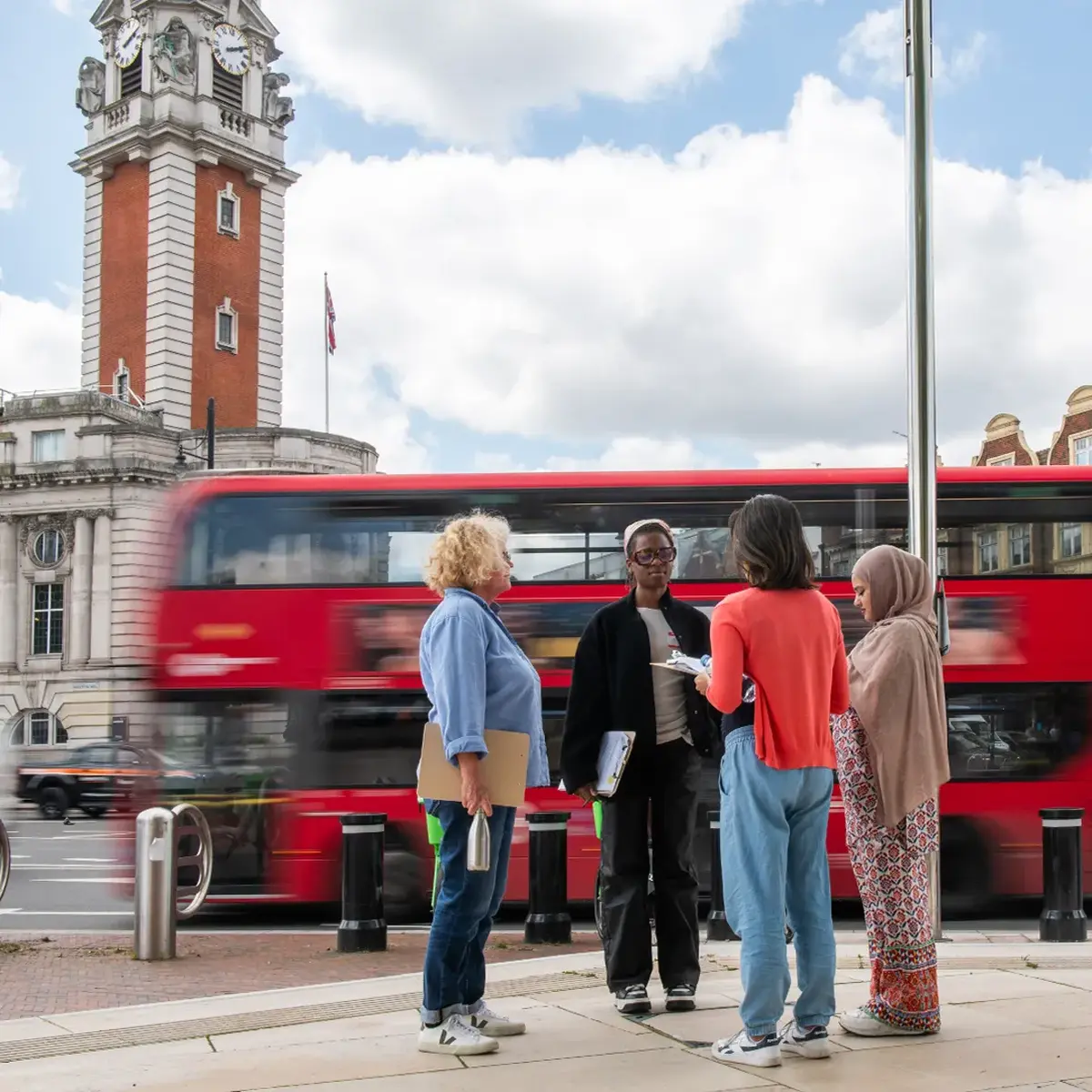
Women’s Safety Audit Pilots, Greater London for Transport for London and MOPAC with We Made That and UCL Citizen Science Academy
Commissioned by Transport for London and the Mayor’s Office for Policing and Crime, We Made That and our supporting expert panel have spent the past year developing a methodology for piloting women’s safety audits across London.
Through an engaged and collaborative process with 47 women, girls, and gender diverse individuals across five pilot locations, as well as an advisory board and the UCL Citizen Science Academy, we developed tools to capture and assess experiences of safety in public spaces.
Describe the context of the community engagement. Why did the engagement take place?
Safety in public spaces is a fundamental right, yet many women, girls, and gender-diverse people in London still feel unsafe in their daily environments. To address this, the Women’s Safety Audit Pilot Project— commissioned by Transport for London (TfL) and the Mayor’s Office for Policing and Crime (MOPAC) — set out to explore how to meaningfully engage these communities and capture their lived experiences and perceptions of safety. The Mayor of London had set out a commitment through the Good Growth by Design programme to address safety in public space. The question was how, and this needed invention. Through collaboration with 47 community researchers across five locations in London, and by working closely with decision-makers, the team tested innovative methods for collecting data on public safety. The goal was not only to understand how women and gender-diverse people experience public spaces, but also to ensure these insights are integrated into future decisions on city-making. Using diverse methods — from interviews and participatory mapping to multi-sensory walks — these researchers conducted 75 audits, directly engaging 117 women, girls, and gender-diverse people. This deep qualitative engagement captured over 1,200 individual insights, not only illuminating critical safety issues but also refining effective methodologies. Findings were directly channelled into five Audits to Actions workshops with local stakeholders, helping to shape decision-making and design processes. Key insights and learnings from this pilot project enables TfL and MOPAC to embed recommendations and new processes for the benefit of London’s communities.
Who did you engage with and how?
We recruited 47 community researchers who, in turn, engaged 117 women, girls, and gender-diverse people across five locations in London. This was part of a year-long development of methodologies for piloting women’s safety audits. We recruited community researchers through social media and local networks, attracting 220 applicants. Interested applicants were invited to complete a survey capturing basic demographics and answers to a few long-form questions. There were no formal prerequisites in terms of educational background or experiences, rather we wanted to work with individuals who were passionate about the topic and interested in the project. Eligibility criteria ensured participants identified as a woman or gender-diverse, were familiar with an audit location, and eligible to work in the UK. We actively prioritised applications from diverse and under-represented communities, using a blind assessment process to ensure a demographically representative cohort across age, background, and ability for each area. Community researchers were paid the London Living Wage for their time, which involved attending in-person training, conducting 1-2 audits in their local area, capturing and recording insights, and attending a reflections session. Utilising a community researcher approach was crucial in ensuring a rich, authentic, and diverse cross-section of voices. Through this project, we heard insights from those ages 17-78 including mums, teenagers, older people, neurodivergent young adults, those who have experienced sexual assault, long-term residents, non-binary individuals, and people experiencing homelessness. This multi-tiered, community-led approach uniquely captured the diverse, lived experiences of safety in London.
Have you continued the conversation? Will the community stay involved?
Our commitment extends beyond the pilot, ensuring sustained engagement and embedding the Women’s Safety Audit as a lasting tool for change. A Learning Symposium held in December 2024 brought together all project participants, from community researchers to key stakeholders, fostering ongoing knowledge exchange and collaborative reflection for future initiatives.
We continue to support community researchers post-project, providing letters of recommendation, career advice, and facilitating additional paid collaboration opportunities. We have also helped those actively involved in their communities advocate for the importance of this approach, acting as a support system when using the audits. Additionally, TfL and MOPAC are vigorously championing the work internally and externally. We have jointly presented at high-profile events like TfL’s Personal Security Summit; and the Women’s Night Safety Summit, ensuring the project’s insights are disseminated to wider professional audiences and key community partners. This ensures the methodology gains broad institutional recognition and adoption. We also created a “How to Guide” and a “Women’s Safety Audit Toolkit” that can be used for safety audits in the future. Such essential resources will distil the pilot’s innovative methodologies and key learnings, empowering other authorities, community organisations, and stakeholders globally to replicate and scale these vital safety audits. This strategic dissemination ensures the community’s invaluable insights continue to drive meaningful, systemic change for a safer London and beyond.
Sign up to our newsletter
Get updates from The Developer straight to your inbox
Thanks to our organisation members
© Festival of Place - Tweak Ltd., 124 City Road, London, EC1V 2NX. Tel: 020 3326 7238