Get updates from The Developer straight to your inbox Yes, please!




Tileyard North, Wakefield for City & Provincial Properties Ltd. with Hawkins\Brown, Civic, Turley, TB&A, re-form landscape architecture, Vey Associates, MA Planning and Opera
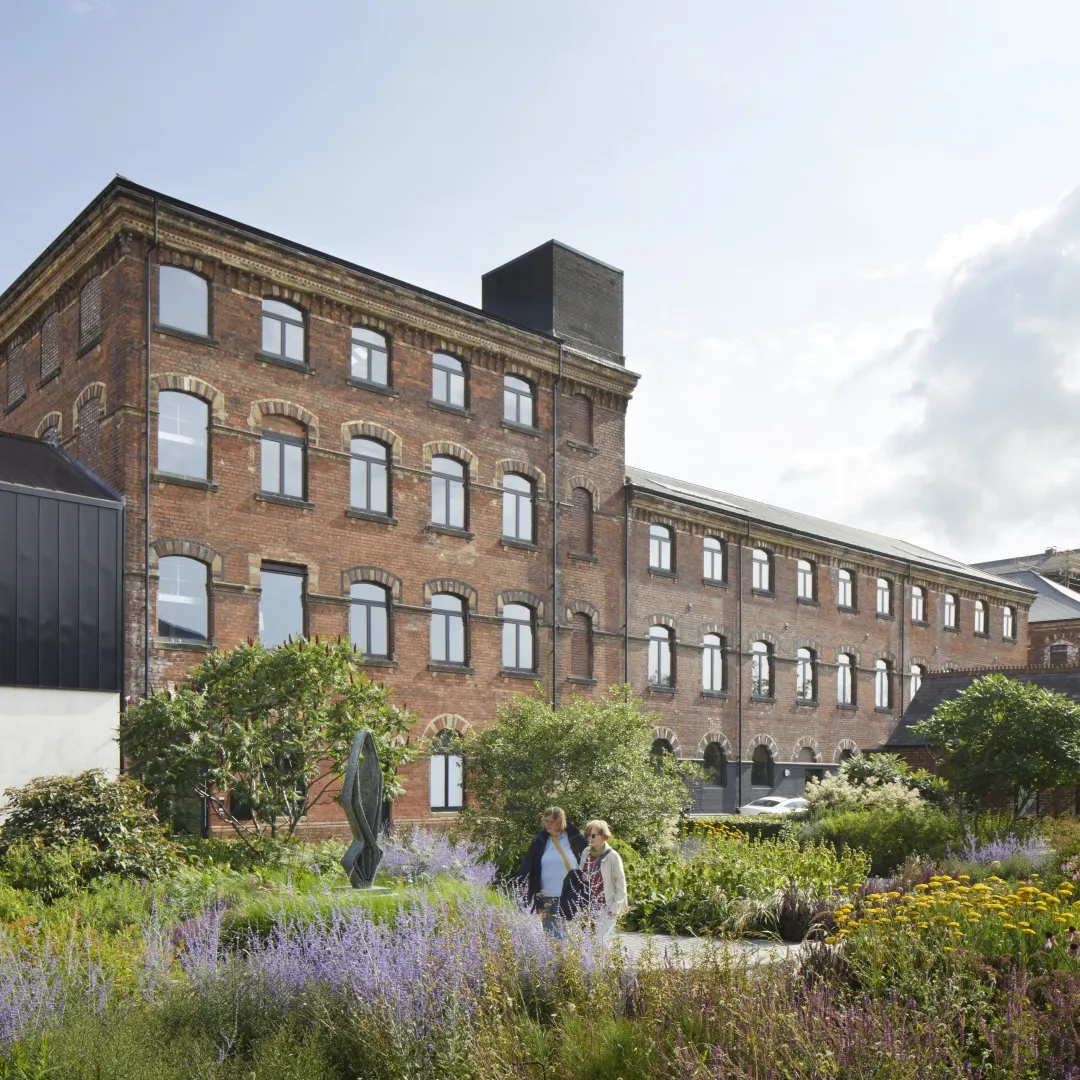
Tileyard North, Wakefield for City & Provincial Properties Ltd. with Hawkins\Brown, Civic, Turley, TB&A, re-form landscape architecture, Vey Associates, MA Planning and Opera
Tileyard North is the final piece of a regeneration masterplan breathing new life into Wakefield’s waterfront, converting several long-derelict Grade II-listed mills into a world-class mixed-use creative and cultural cluster. The fully occupied Phase 1 reimagines four mill buildings, creating a new public square that accommodates a wide range of uses, including recording studios, an event space, and a gin distillery.
Describe the social and environmental context of this project, its neighbourhood and people. What is the purpose of the building? How does this building make an impact in its community?
At 1.25 hectares (135,000 sqft), Tileyard North is the UK’s largest creative industries hub outside London and transforms a long-forgotten industrial liability into a valuable asset for Wakefield, West Yorkshire. Our brief was to provide a home for a music-centred creative campus, one which could bring new life to the derelict Rutland Mills complex on the banks of the River Calder.
Rutland Mills was built in the 1870s by industrialist Isaac Briggs, and a worsted spinning mill operated on the site, with some interruptions, for almost a century. However, the last mill operations on the site ceased in 1970, leaving the listed mill buildings to fall into disrepair. The derelict site formed a barrier between the city centre and the surrounding residential areas. As such, one of the key drivers was to improve connectivity between the two and provide an accessible amenity to the wider community.
The area’s post-industrial regeneration was kick-started by the arrival of the Hepworth Wakefield in 2011, which occupies the site directly adjacent to Rutland Mills. The brief for Tileyard North asked for the project to fill in the ‘missing piece’ of Wakefield’s waterfront, creating a campus that positively links the gallery to the wider waterfront, both spatially and programmatically. The complex is now home to a plethora of small businesses, a distillery, podcasting suites, music recording studios, a café, and a 400-capacity events venue. Phase 2, which has recently been completed, will add a hotel, workspace, and a restaurant with a riverside pier.
The formerly derelict site created a major obstacle between the city centre and surrounding areas, while its regeneration creates new access routes and public realm, stitching the plot back into the urban fabric and inviting the public into an area of the city that has not been accessible since before the 1870s. The campus is car-free, encouraging active travel and use of local transport networks. Wider works to the site include improvements to the turning loop and bus shelter to the east side of the site. This will help to pedestrianise the area and improve safety for those arriving to Tileyard North by bus.
The original complex was built around its connection to the River Calder, with raw wool arriving by boat from north Yorkshire. Over time, the river access had been closed off, so the reinvention of the site has restored the area’s historic connection to the waterfront.
The project prioritised sustainability through decentralised services, installing heat recovery ventilation units for each floor or tenant space to enhance flexibility and control. Energy-efficient systems include low-GWP air source heat pumps, LED lighting with smart controls, and adaptable local HVAC solutions. Building performance was improved by replacing all windows and rooflights, sealing original openings with reclaimed brick, and repairing the external fabric to boost airtightness. Thermal efficiency was enhanced with added roof insulation and high-performance double glazing. Restored buildings now feature mechanical ventilation with heat recovery and openable windows, offering a hybrid of natural and mechanical ventilation for improved user comfort.
Sign up to our newsletter
Get updates from The Developer straight to your inbox
Thanks to our organisation members
© Festival of Place - Tweak Ltd., 124 City Road, London, EC1V 2NX. Tel: 020 3326 7238