Get updates from The Developer straight to your inbox Yes, please!




The Walnuts, Orpington for Redcliff Capital with 2C Architects, SpaceHub, Elliot Wood and AND Consulting
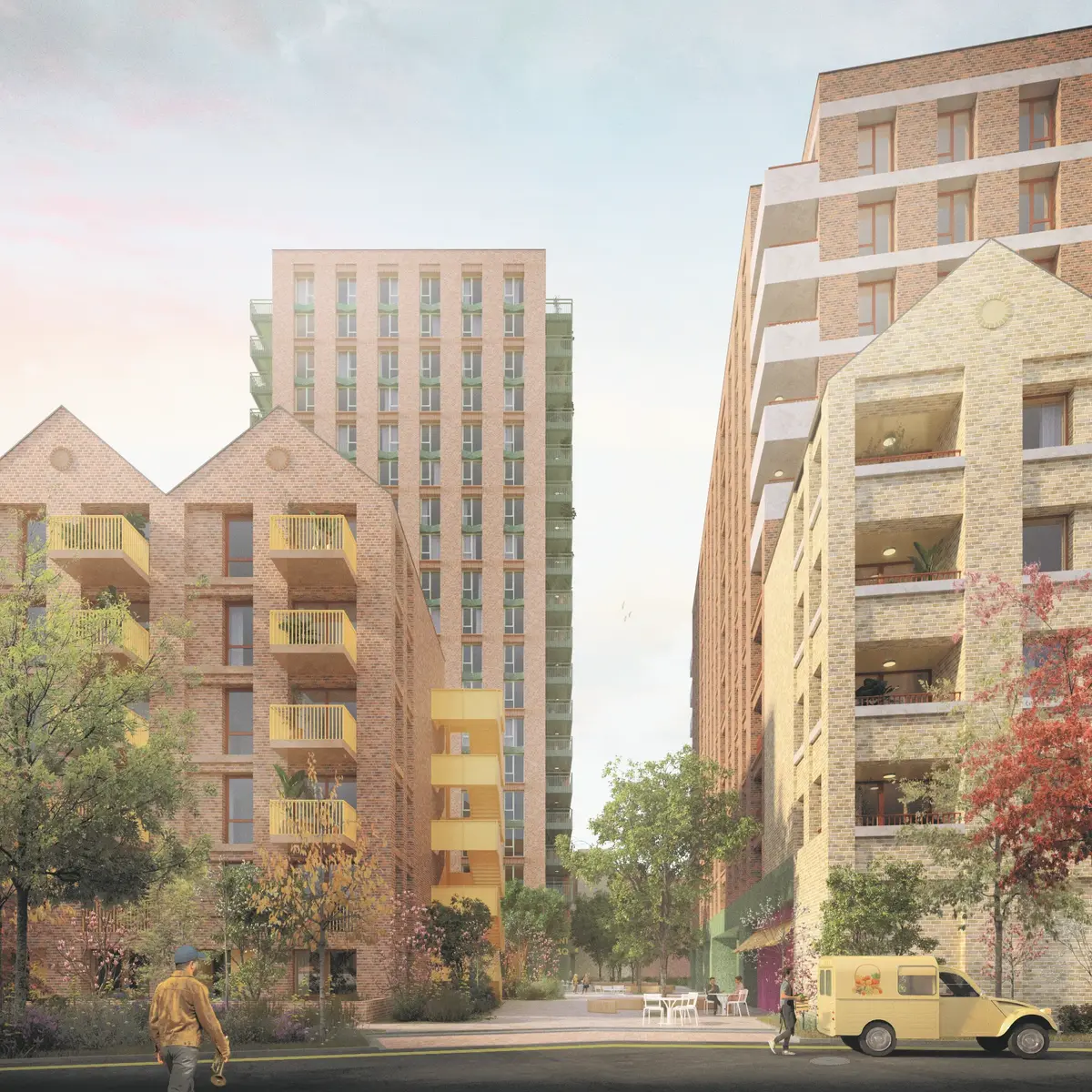
The Walnuts, Orpington for Redcliff Capital with 2C Architects, SpaceHub, Elliot Wood and AND Consulting
The transformational redevelopment of a tired 1970s shopping centre into a vibrant residential quarter in the heart of Orpington town centre. Approximately 500 new homes will sit alongside 25,000 sq ft of retail space designed to accommodate local and independent traders, as well as a new market hall and rooftop community garden. The scheme takes a dual focus, both on creating a lively new neighbourhood and reconnecting isolated areas separated by the original mall.
Describe the context of this project, its neighbourhood and people.
The project sits in the heart of Orpington town centre, on the site of a large format 1970s shopping mall. Orpington sits in the London Borough of Bromley, the largest London borough by area.
And, while technically part of Greater London, Orpington has a distinct character shaped by its historic ties to Kent. During public consultation, many residents described themselves as belonging to Kent rather than London, reinforcing the sense of a town balanced between metropolitan and rural identities. The existing building is a single storey enclosed shopping mall with a largely underused six storey car park above. The centre has two entrances, one addressing the high street on its western side and the other reached through a sequence of external public squares to the south. These public squares were created as part of the original 1970s shopping centre development and now form a network of open spaces that shape how people move through and gather within the town. Orpington’s high street is an eclectic mix of buildings. Well preserved Tudor Renaissance buildings sit alongside weaker post war and contemporary additions. Like many high streets it has experienced decline in recent years due to changing shopping habits, rising operating costs, and wider shifts in how people use town centres.
Please describe your approach to this future place and its mix of uses. How will it function as a vibrant place? How does it knit into, and serve the needs of, the wider area?
Our approach focuses on repairing parts of the town centre that were separated by the original 1970s mall. New routes running north south and east west will reconnect areas that have long been isolated and create a clearer relationship with the town. Improving access to Priory Gardens to the north, a much-loved listed green space, is a central principle. This benefits future residents and strengthens access for the wider community.
We have designed smaller and more adaptable retail units to encourage local and independent businesses by offering affordable and flexible spaces. A new external retail arcade will reinforce the existing shopping offer, with room for small traders alongside a larger unit for an anchor store or grocery retailer. A new market hall beneath the car park supports the established weekend market that brings activity to the public squares.
A hierarchy of public spaces runs through the project. New squares complement the existing southern squares, which will be refurbished to offer more welcoming settings for gatherings, events and daily use. Drawing people through the site is essential, ensuring a critical mass of footfall that supports the shops and keeps public spaces active throughout the day.
The existing car park will be brought back into meaningful use through the creation of a public roof garden with planting and a multi use games area. This adds a new community asset at the centre of the town and strengthens the overall network of public spaces.
Please explain the governance of the project, such as its viability, purpose, motivation and any consultation and community engagement undertaken.
The project is driven by the need to deliver new homes and to reinvigorate the town centre. Bromley, like much of London, has experienced sustained housing pressure, and providing well-designed homes in an accessible town-centre helps meet this need in a responsible way. Simultaneously, the scheme responds to long-standing issues with the existing mall, declining footfall and underused land. There is a clear local desire for better public spaces, safer routes and a town centre that feels active and welcoming throughout the day.
The project is led by a committed client with long-term interest in Orpington, working with a team covering architecture, engineering, sustainability and landscape design. Close coordination with Bromley Council ensures decisions balance viability, good design and long-term social value.
The first stage of community engagement ran for three months and reaching 12,000 people, with over 600 engaging directly online or in person. More than 500 people attended the first two events with 373 feedback forms collected.
Importantly, a demographically representative ‘Walnuts Working Group’ was formed from 94 applicants and took part in two co-design workshops.
74% of respondents agreed the Walnuts should be redeveloped, 55% expressed dissatisfaction with the existing centre. Participants highlighted the need for better shops, sensitivity around height and a desire for more community infrastructure. They requested more greenery, safer and sustainable streets, stronger connections across the town centre and improved access to Priory Gardens. This feedback has shaped the emerging vision and continues to guide the development of the scheme.
Sign up to our newsletter
Get updates from The Developer straight to your inbox
Thanks to our organisation members
© Festival of Place - Tweak Ltd., 124 City Road, London, EC1V 2NX. Tel: 020 3326 7238