Get updates from The Developer straight to your inbox Yes, please!




The Educational Engagement Programme, Greater London for Places for London with Barratt London, Fastned, Grainger, Earls Court Development Company, Helical and Construction Youth Trust
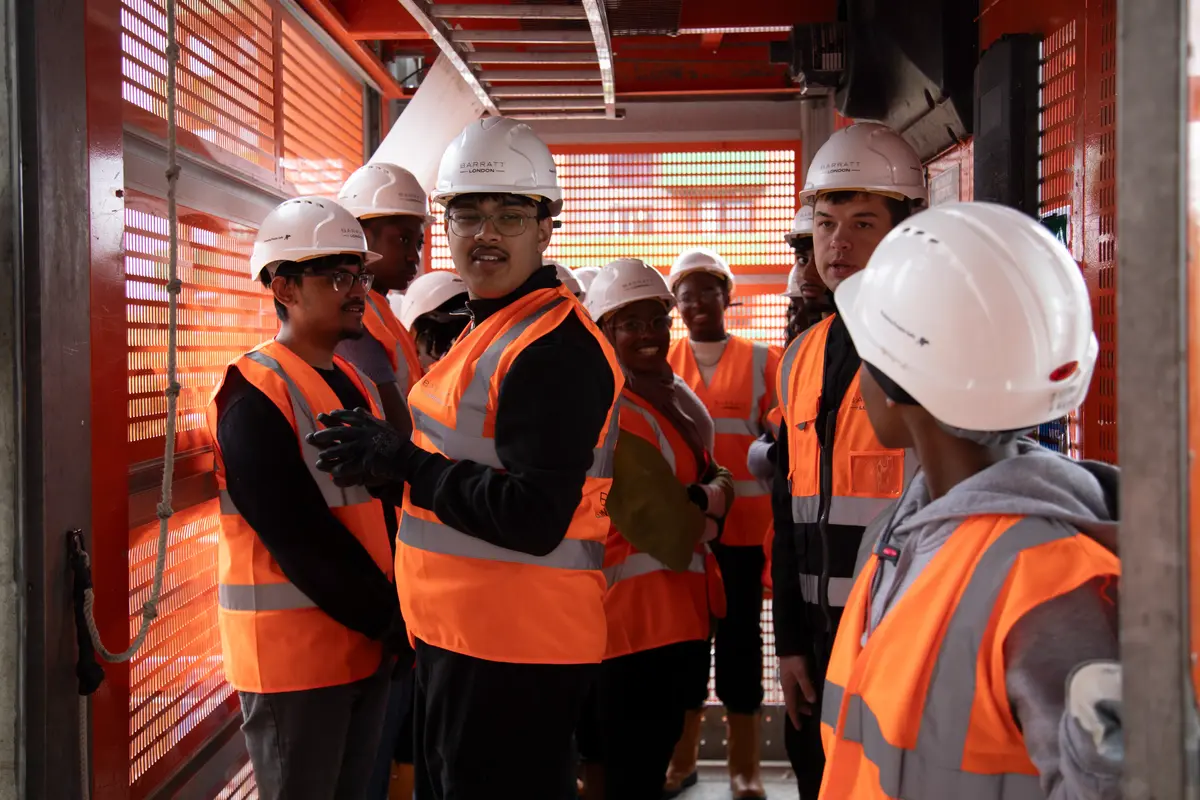
The Educational Engagement Programme, Greater London for Places for London with Barratt London, Fastned, Grainger, Earls Court Development Company, Helical and Construction Youth Trust
The Places for London Skills Academy empowers Londoners to pursue careers in the built environment through impact-driven initiatives. It uses Places for London’s role as a public sector commissioner to unite industry partners and inspire diverse talent to address the skills gaps. Partners including Barratt London, Helical, Earls Court Development Company, Fastned and Grainger support initiatives that upskill Londoners through the Educational Engagement and Skills Programmes. We work with Construction Youth Trust and The Skills Centre, offering training and practical pathways into jobs and apprenticeships.
Describe the context of the community engagement. Why did the engagement take place?
The Educational Engagement Programme, launched in 2021, seeks to use the Places for London development programme to address the skills gap in the built environment sector by inspiring young, diverse talent to join the industry. CITB’s UK Five-Year Outlook (2024–2028) predicts that London needs 26,500 additional workers by 2028, yet the sector struggles to attract and retain young people, women, and people from ethnic minority communities. As a public sector commissioner, we embed commitments into Joint Venture procurement requiring partners to co-invest in the programme. Current partners are Barratt London, Earls Court Development Company, Fastned, Grainger, and Helical. We recognise that having a breadth of industry supporters provides young people with the broadest experience of built environment careers. The programme takes a long-term, impact-driven approach to introducing young Londoners to careers in the built environment. Since 2021, it has reached more than 15,000 young people and supported 139 individuals into built environment outcomes, i.e. apprenticeships, jobs and education. In 2024, we partnered with Construction Youth Trust (CYT) to increase our capacity to engage with young people, delivering in-school employability sessions, intensive coaching for post-16 students, work experience, and design consultation workshops supported by industry volunteers. Through strategic partnerships and targeted outreach, we aim to build a more inclusive, skilled workforce for London’s future.
Complementing our education approach, we have a partnership with The Skills Centre to fund four skills hubs in Stratford, Earls Court, Edgware and Bollo Lane, training and supporting Londoners to access jobs and apprenticeships.
Who did you engage with and how?
To reach young people who are underrepresented in the Built Environment sector and maximise the impact of our programme, we are working with 20 schools close to our developments, prioritising FE colleges, girls’ schools, and schools with high free school meal eligibility and ethnic minority representation.
The partnership funds Construction Youth Trust to deliver in-school sessions for Years 7–13, introducing and inspiring students about the sector, highlighting ‘hidden careers’, and supporting employability skills development. In the first two years of our programme, Construction Youth Trust have facilitated over 1,600 individual sessions, reaching 8,934 students. Evaluation of sessions shows that 84% of students reported improved knowledge of construction and built environment careers. For Year 12–13 students, we provide intensive coaching through a pivotal stage of their academic journey. Since the start of the programme 142 young people have benefitted from this support, 50% of those being women and over 80% coming from ethnic minority backgrounds. We have also facilitated 294 work experience placements for post-16s students. We use our partnerships with secondary schools to hold co-design workshops with female students to design outdoor spaces on our developments. Workshops have been delivered at Ark Wembley, Thomas Tallis, and Ellen Wilkinson School for Girls. Students review sites, discuss their safety concerns, and sketch design ideas. In a follow-up session, Mayor’s Design Advocates provide training to empower students to critique designs and ensure feedback is integrated into final plans. Across our Skills Academy, we have supported 25,000 Londoners through our skills initiatives.
Have you continued the conversation? Will the community stay involved?
We operate under a governance structure that includes termly Steering Group meetings to review performance of the programme, approve pilot projects, and suggest improvements. Teachers and students have also joined Steering Group meetings to share feedback on what works and how we can better support schools. This is particularly important as it means that the beneficiaries of our programme’s voices are amplified to governance, and we are currently considering how to develop youth panels to further enshrine youth voice. Construction Youth Trust (CYT) were selected in part because of their work to be led by youth voice. Each quarter, CYT brings together young people with lived-experience of key issues to discuss them. The theme of each quarterly ‘youth forum’ is identified by CYT’s Board of Trustees, e.g. Q4 2025 will focus on female underrepresentation in construction. Through interviews and focus groups, young people share their insights and recommendations, presenting them directly to CYT’s Board. This direct engagement ensures young people’s voices shape strategic decision-making at CYT and drives meaningful change. For example, when young people highlighted parental misconceptions about apprenticeships as a barrier, CYT introduced parental engagement sessions featuring relatable role models. These sessions then also became a key part of the Educational Engagement Programme. By embedding youth voice into governance and programme design, CYT ensures the conversation continues beyond consultation, keeping the community actively involved. Moreover, our commitment to deliver Playspace workshops in schools close to our new developments ensures young people are continuously involved in our design processes.
Sign up to our newsletter
Get updates from The Developer straight to your inbox
Thanks to our organisation members
© Festival of Place - Tweak Ltd., 124 City Road, London, EC1V 2NX. Tel: 020 3326 7238