Get updates from The Developer straight to your inbox Yes, please!




Tendring and Colchester Borders Garden Community, Colchester for Latimer with Haworth Tompkins, Kjellander Sjoberg, Periscope, Exploration Architecture and Stantec
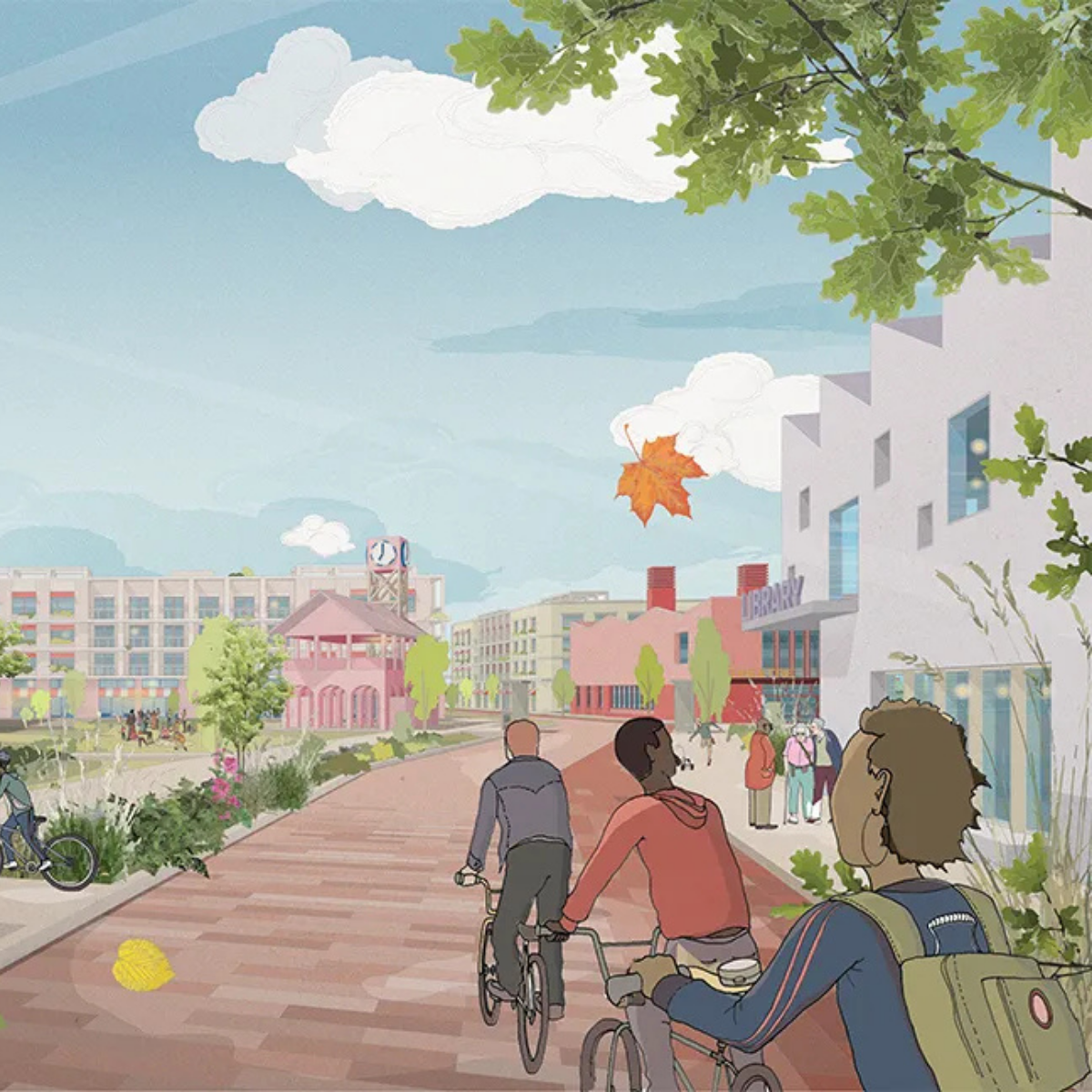
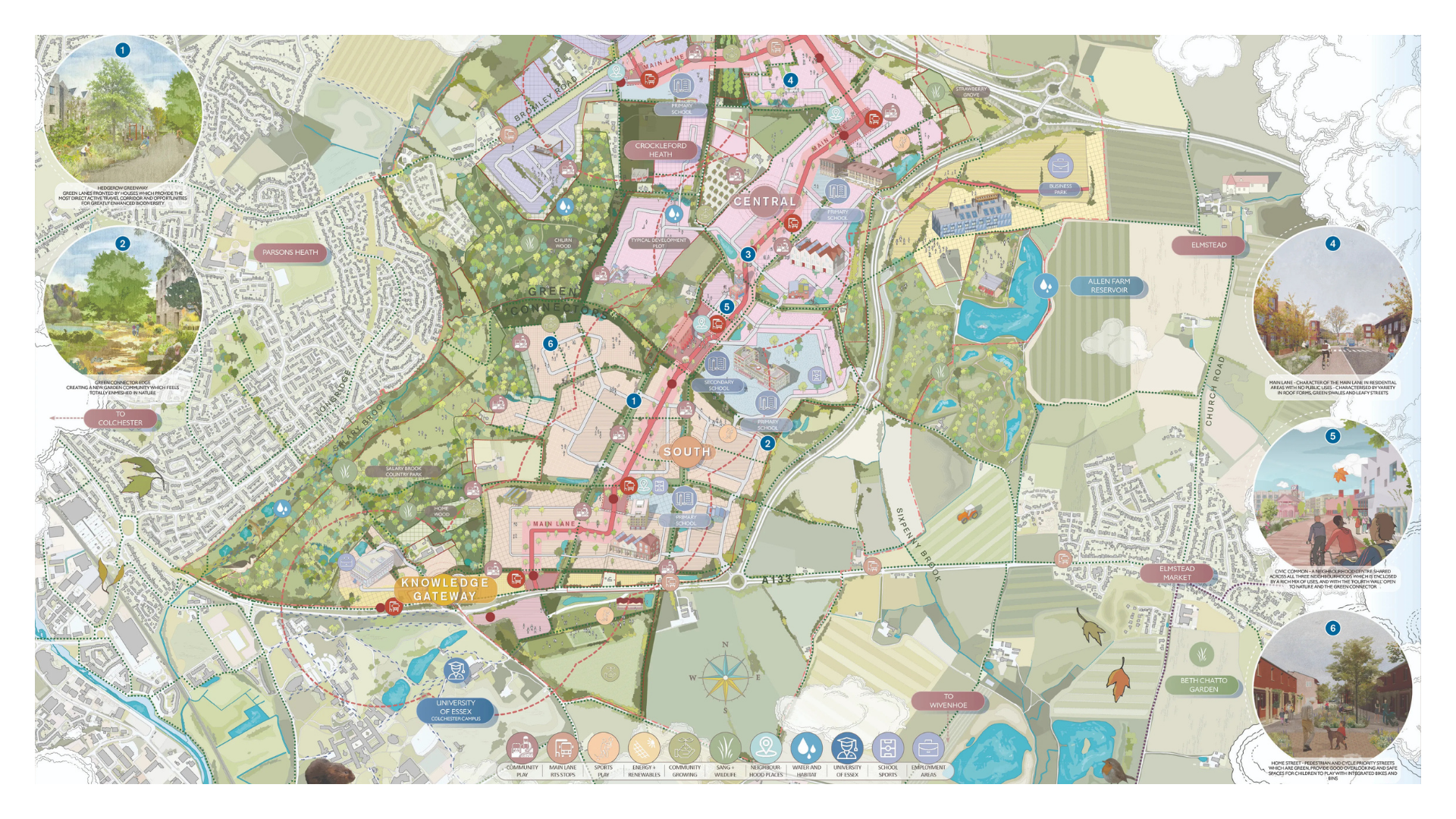
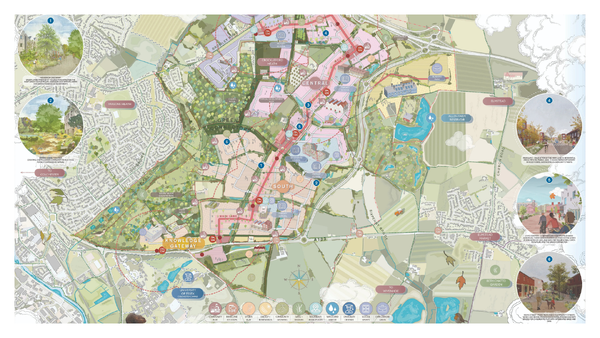
The Tendring and Colchester Border Garden Community, a 715 hectare new garden community east of Colchester, Essex. The project will realise a community of 7,750 new homes delivered across three distinct neighbourhoods across the next 20 years. The three new communities are linked by a Rapid Transport System, the active spine of the site, along which several new public spaces and neighbourhood centres with non-residential uses are arranged, including schools, health facilities, shops, workspace and cultural uses.
Who is on the project?
Lead Masterplanner & Detailed Phase 1 Application Lead - Haworth Tompkins
Strategic Masterplan Lead - Kjellander Sjoberg
Landscape Lead - Periscope
Public Engagement and Local Character - Grounded Practice
Sustainability Lead - Arup
Regenerative Design Lead - Exploration Architecture
Multi-Disciplinary Lead - Stantec
Detailed Phase 1 - Jas Bhalla Works, Bell Phillips and HAT Projects
Youth Engagement - Matt+Fiona
Describe the context of this project, its neighbourhood and people.
The masterplan at Tendring and Colchester Borders Garden Community sits to the east of Colchester, encompassing existing arable land separated into development parcels by hedgerow-framed country lanes. From inception, our approach has been to retain and augment these lanes as part of a car-free green active travel matrix, forming more complete and resilient ecosystems across the site, while using monocultural farming plots, which have been stripped of ecological value from decades of intensive use, for development.
Within this context, three new neighbourhoods are proposed; all linked into Colchester by ‘Main Lane’, the active travel spine of the site and home to a Rapid Transit System. Strategically threaded through each neighbourhood, Main Lane is located to serve as many future residents within 400m or five minutes’ walk as possible. Along its length, several new Neighbourhood Centres are arranged, providing schools, community and cultural uses, health facilities, shops, and workspaces. These sit within a network of active travel routes designed to reduce vehicular dominance and create healthy, sustainable and connected communities – an exemplar template for how New Towns could be brought forward.
The Garden Community has been developed to benefit new and existing communities alike. Within its wider context, the masterplan will provide job creation through the Knowledge Gateway, the entrance to TCBGC from the existing A133, alongside dedicated green space through the establishment of Salary Brook Country Park, whilst also better interfacing with the surrounding communities of Colchester, Wivenhoe, Elmstead Market and Ardleigh through significantly improved walking and cycling connectivity.
Please describe your approach to this future place and its mix of uses. How will it function as a vibrant place? How does it knit into, and serve the needs of, the wider area?
At the centre of Ebenezer Howard’s ‘three magnets’ diagram, the lynchpin of the modern Garden City community, is the provocation; “the people – where will they go?” We are acutely aware that creating a new neighbourhood with a genuine sense of place demands careful introspection and what is placed at the heart of a new community speaks multitudes about our societal values. At the centre of TCBGC is therefore the Civic Common, a space for nature, health and culture, shared by all three neighbourhoods. Located along Main Lane, the Civic Common is home to a Healthcare Hub, a Library, small cultural venues and shops as well as a modern Guildhall.
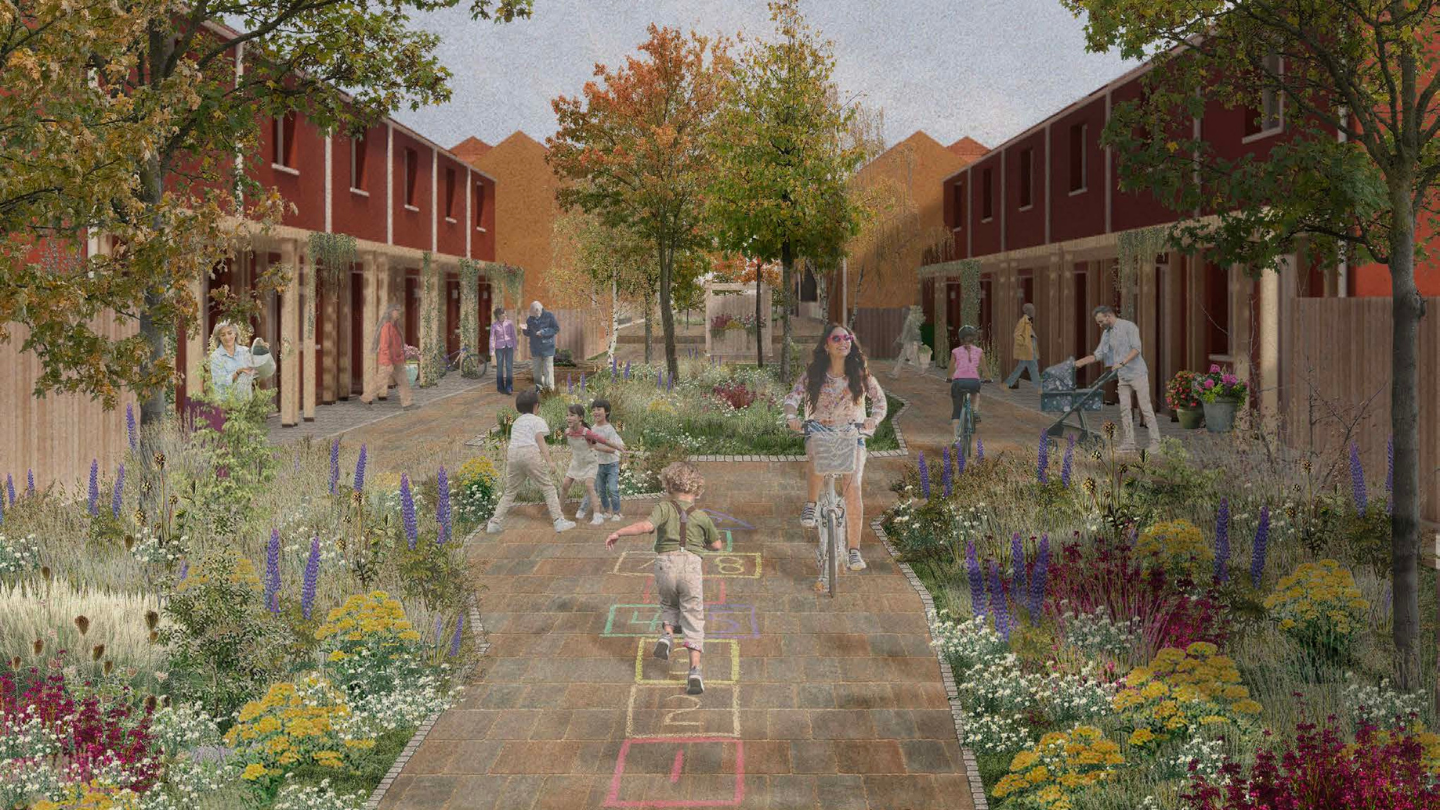
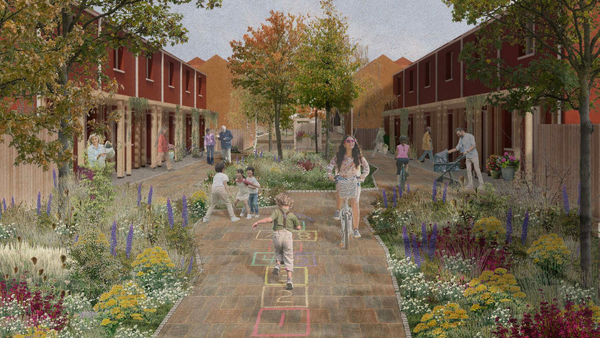
Each Neighbourhood Place provides local day-to-day amenities including primary schools, health hubs, shops and cafes, within 10 minutes’ walk of each home. The character of each Neighbourhood Place reflects the identity and needs of each neighbourhood. With George Monbiot’s motto of “private sufficiency, public luxury” in mind, each residential housing cluster deals with shared gardens, complex servicing requirements including parking and bins, prioritising car-free Home Streets and maximising relationships to existing green infrastructure.
We thought carefully about what the entrance points and edges to the new Garden Community look like; the point at which Main Lane arrives at TCBGC from Colchester is announced through a new ‘Gateway Place’. Delivered as part of Phase 1 of the new Garden Community, it provides flexible employment space, modal shift opportunities and a community space and nursery, as the ‘welcome mat’ to the project.
What is the social and environmental impact of the project? For example, how will the carbon use and material impact of the development be mitigated? What is the sustainability strategy?
TCBGC has been set up to be bold in imagining “the future we want”. Our strategy not only prevents TCBGC’s contribution to planetary degeneration but also supports environmental and socioeconomic regeneration. Our masterplan takes a holistic approach whereby built and natural systems are designed to co-exist and co-evolve over time, delivering positive environmental and social outcomes and ensuring both human and planetary health. For this project, Arup and Exploration Architecture led the creation of a bespoke regenerative framework to establish a thriving, healthy and connected community, full of opportunities.
Some of the regenerative design responses include promoting a shift to sustainable transport through infrastructure including the Rapid Transit System (Main Lane), Mobility Hubs and Parking Barns, ensuring most homes are within 400m of modal change which allows private cars to be minimised. Residential clusters have been based on Robin Dunbar’s principles of social cohesion so that meaningful new communities can best form. Construction will prioritise renewable, reclaimed and bio-based materials that are non-toxic and locally sourced, whilst homes have been designed to generate more electricity than they consume.
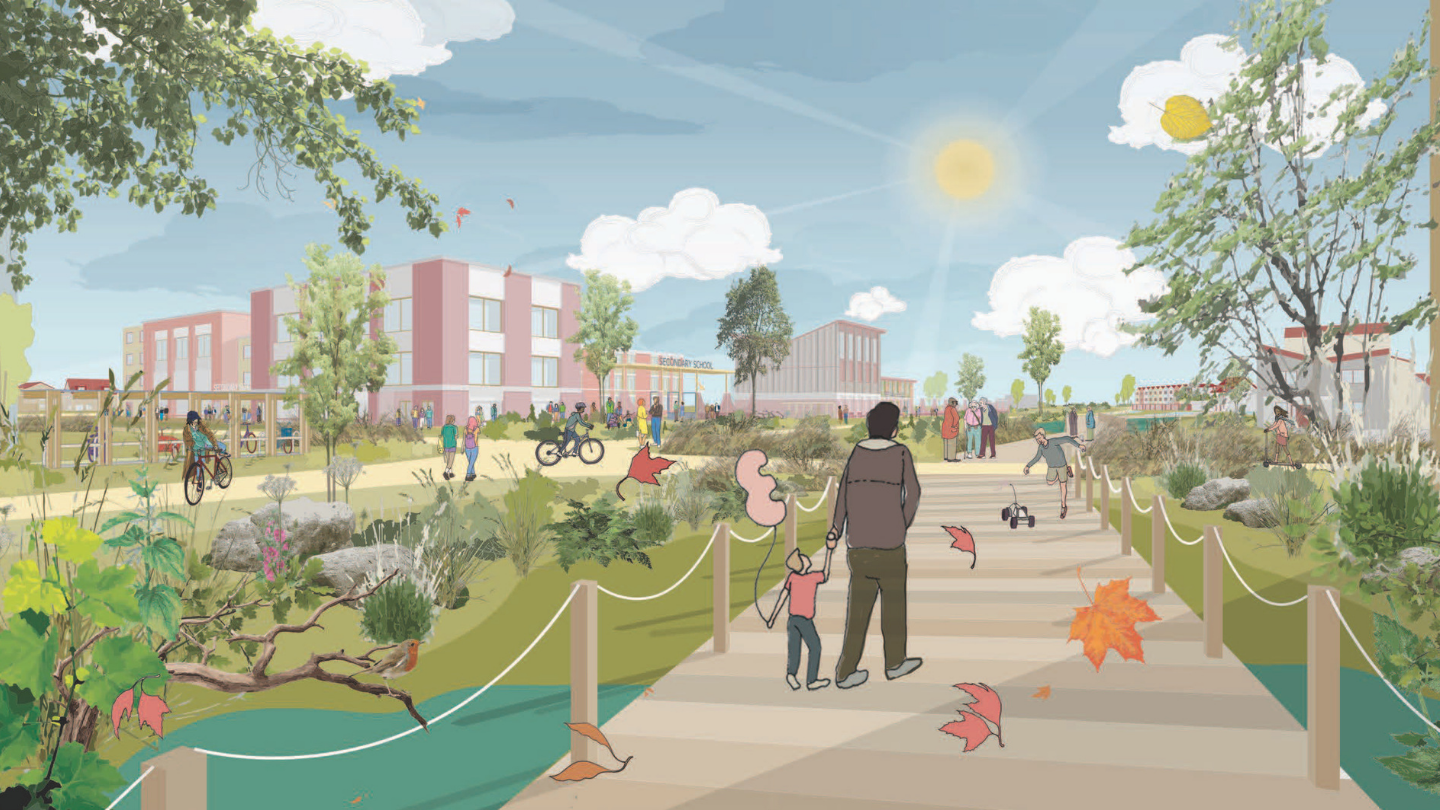
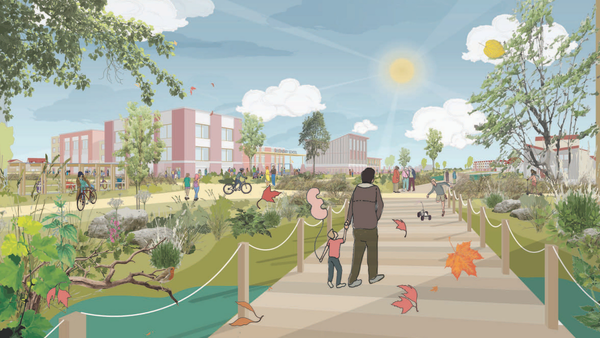
Green and blue infrastructure have been pivotal to the regenerative goals at TCBGC. Existing hedgerows will be preserved as vital ecological corridors and integrated with infrastructure like active travel routes. The Design Code mandates a minimum of 80% tree canopy cover using UK native woody species, whilst water management includes the blue-green ‘Brook Walk’ running east-west across the Garden Community which combines SUDs with play, gathering and food-growing spaces.
Gallery

Sign up to our newsletter
Get updates from The Developer straight to your inbox
Thanks to our organisation members
© Festival of Place - Tweak Ltd., 124 City Road, London, EC1V 2NX. Tel: 020 3326 7238