Get updates from The Developer straight to your inbox Yes, please!




Smithfield, Birmingham for Lendlease and Birmingham City Council with Prior + Partners, Bell Phillips, David Kohn Architects, DP9, dRMM, Field Operations, Haworth Tompkins, Intervention Architecture, Minesh Patel Architects, Ramboll, Speirs Major and WSP
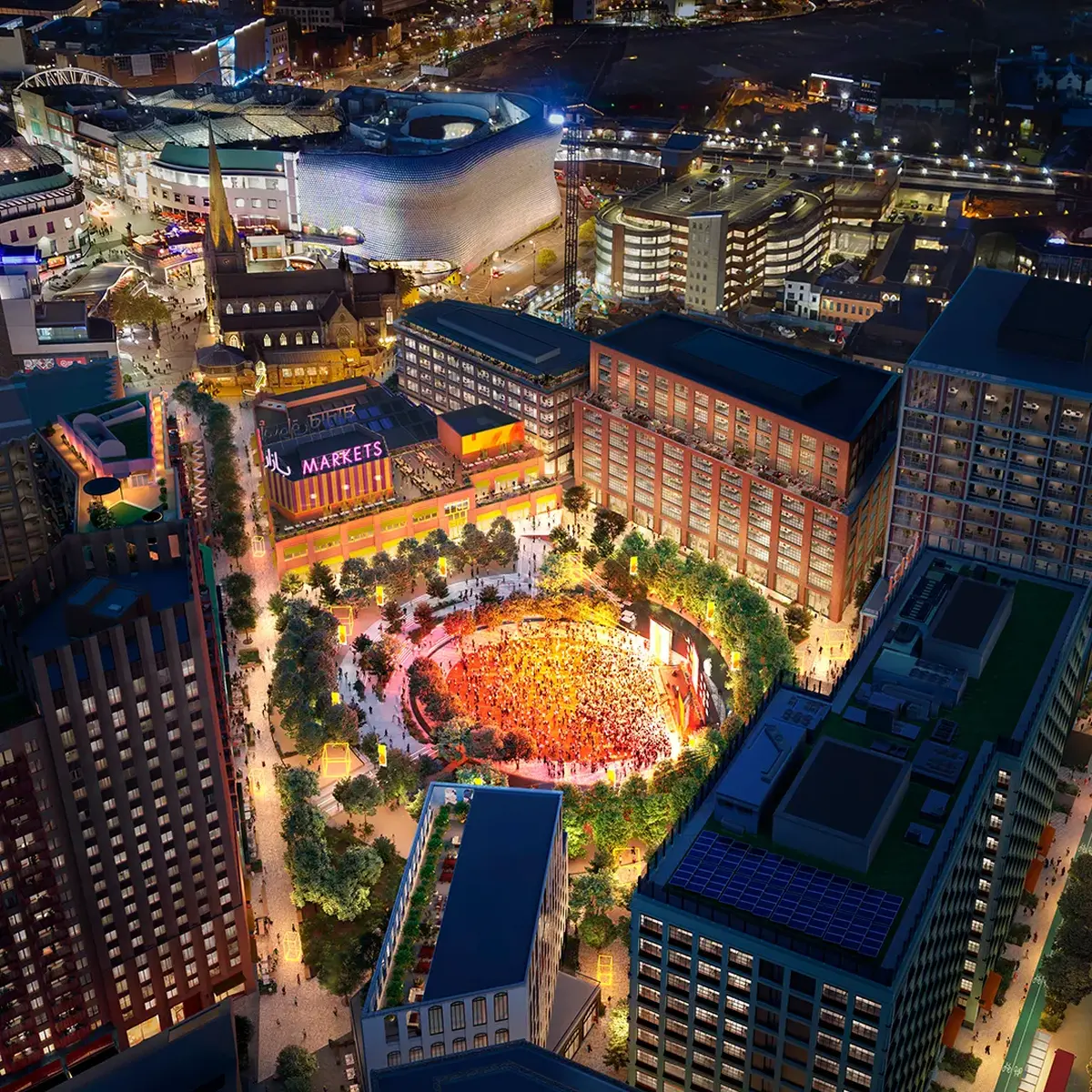
Smithfield, Birmingham for Lendlease and Birmingham City Council with Prior + Partners, Bell Phillips, David Kohn Architects, DP9, dRMM, Field Operations, Haworth Tompkins, Intervention Architecture, Minesh Patel Architects, Ramboll, Speirs Major and WSP
Home to the historic Bullring Markets - the birthplace of the city - Smithfield has a rich history of exchange and innovation. The project celebrates this heritage at the heart of a vibrant mixed-use neighbourhood that redefines the city-centre while unlocking economic, environmental, and social opportunities. With integrated transport, tree-lined streets, and public spaces, Smithfield enables zero-carbon living and working. Spanning 17-hectares, it will deliver 3,500 homes, 9,000 jobs, revived markets, leisure and cultural destinations - a place open to discovery to make your own.
Describe the context of this project, its neighbourhood and people.
Smithfield, Birmingham, holds major historical significance as the city’s birthplace. Established in the 12th century, its medieval market helped shape Birmingham as a thriving trading centre, though little of this legacy is visible today. Post-war development and car-focused infrastructure disrupted historic street patterns, leaving neighbourhoods such as Digbeth, Chinatown, and the Gay Village fragmented and poorly connected. Since the wholesale markets relocation in 2018, the site - without its primary economic activity - has remained largely vacant and inaccessible. The market has long been the heartbeat of the area, with traders at its centre of activity. These traders are central to the redevelopment, and their businesses - and the diverse community of customers they attract - illustrate the role Smithfield has played as one of the few city-centre spaces where Birmingham’s communities come together. Birmingham is one of the most ethnically diverse cities in the UK and the youngest major city in Europe. The Chinese, LGBTQ+, and creative communities, among others, have all been actively consulted to ensure the redevelopment reflects their needs and aspirations. Birmingham also faces a severe housing shortage, particularly in mixed-tenure and family housing within central neighbourhoods. Our scheme will deliver these tenures, including family homes, back to the city centre. More importantly, Smithfield will celebrate its market heritage and strengthen connections between surrounding communities, creating a vibrant, inclusive space where Birmingham’s diversity is visible and its neighbourhoods can come together.
Please describe your approach to this future place and its mix of uses. How will it function as a vibrant place? How does it knit into, and serve the needs of, the wider area?
Smithfield Birmingham is being reimagined as a vibrant, mixed-use urban quarter that blends history, culture, and modern city life. Designed not only for the people who live and work there, the revival of the historic Bull Ring markets creates a lively day and nighttime destination, with culture, cinemas, cafés, restaurants, bars, a hotel and event-based public space, attracting visitors from the city and beyond. With the ambition of positioning Smithfield internationally as a globally recognised market destination. Residential areas, comprising around 3,500 new homes, are embedded within a green, walkable neighbourhood, connected by public squares such as Manor Square, parks, tree-lined boulevards, and rain gardens. These spaces are designed for gatherings, cultural events, festivals, and community activities, creating a place where there is always something happening and residents, workers and visitors will be able to connect with each other and the city. Connectivity is central to the approach. Historic street patterns have been reinstated to link the surrounding neighbourhoods into Smithfield and back to each other, while new walking and cycling routes, a green boulevard, and improved transport links - including three existing stations, and the planned HS2 - ensures the quarter is easily accessible. Flexible workspaces, creative enterprises, and small business opportunities are integrated alongside cultural amenities, supporting local employment and inclusive economic growth. Through this mix of uses and by prioritising accessibility, Smithfield Birmingham actively serves the city’s wider community, strengthening social cohesion, enhancing local opportunities, and connecting this new quarter to the life of Birmingham.
Please explain the governance of the project, such as its viability, purpose, motivation and any consultation and community engagement undertaken.
Smithfield Birmingham’s redevelopment is a cornerstone of the Council’s Big City Plan, a 20-year strategy to expand the city-centre and celebrate its heritage. Following the relocation of the wholesale markets in 2018, Lendlease was appointed to form a joint venture with the Council, leading the masterplan and overseeing a multi-disciplinary team of 13 consultants. Alongside masterplanner Prior Partners, the team established Vision and Strategic Principles through thematic workshops with Council teams, informing a site-specific design brief appended to the Development Agreement. The masterplan has been developed in line with the Master Development Framework, while responding to planning requirements, stakeholder input, and evolving city priorities. Structured governance and phased delivery ensure the project is viable and responsive, with early delivery of site-wide infrastructure prioritised to create flexibility for future phases and allow adaptation to market trends. Each phase establishes a critical mass of development alongside connected public realm, while community assets and meanwhile uses foster engagement, local activity, and a sense of belonging. The strategy maintains business continuity for existing market traders, ensuring Bull Ring Markets remain operational throughout redevelopment. Community and stakeholder engagement has been central. Over 18 months, workshops, Youth Panels, market design sessions, and public events gathered input from residents, schools, traders, and underrepresented populations. Feedback directly informed the masterplan and social value initiatives. BCC’s EZ funding underpins delivery of markets, infrastructure, public realm, and social value from day 1. Through integrated governance, strategic phasing, and engagement, Smithfield Birmingham is financially viable, socially responsive, and community-focused regeneration.
Sign up to our newsletter
Get updates from The Developer straight to your inbox
Thanks to our organisation members
© Festival of Place - Tweak Ltd., 124 City Road, London, EC1V 2NX. Tel: 020 3326 7238