Get updates from The Developer straight to your inbox Yes, please!




Rammed Earth Playscape, Stoke-on-Trent for British Ceramics Biennial with Tuckey Design Studio, Sarah Fraser, Woodcast Designs, Samsoum Studio and University of Staffordshire Design
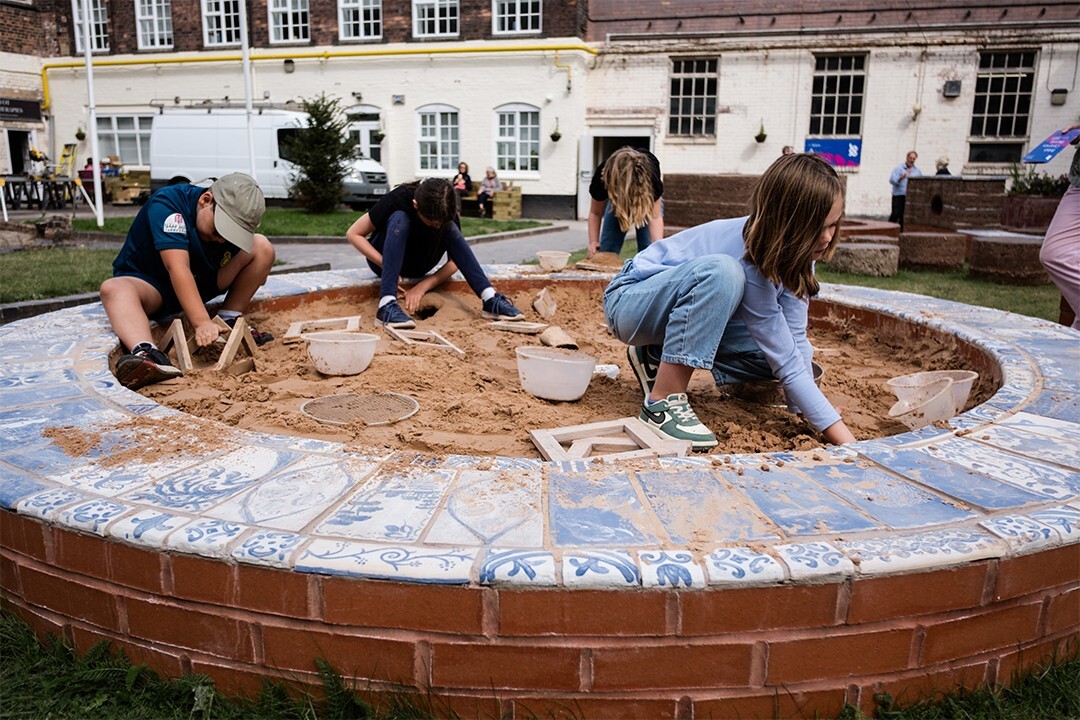
Rammed Earth Playscape, Stoke-on-Trent for British Ceramics Biennial with Tuckey Design Studio, Sarah Fraser, Woodcast Designs, Samsoum Studio and University of Staffordshire Design
Playscape uses rammed earth – a sustainable, ancient construction technique - to explore how clay-rich waste materials can be transformed into a joyful, playful and creative public space. Inspired by the rich provenance of ceramics that Stoke-on-Trent is famed for, the playscape references the ruins of an adjacent old bottle kiln, with glazed tiles made from recycled clay topping the installation.
Describe the context of this project and its neighbourhood and people.
Playscape uses tiles and rammed earth – a sustainable, ancient construction technique – to explore how clay-rich waste materials could be transformed into a joyful, playful and creative public space. Inspired by a lack of play facilities in Stoke-on-Trent centre, this project invited communities to connect through clay, storytelling and design. The installation was unveiled as the centre piece for this year’s British Ceramics Biennial.
Stoke is widely considered the home of ceramics in the UK, with pottery manufacturing an integral industry since the 17th century. Since 2009 Stoke-on-Trent has hosted the British Ceramics Biennial, inviting artists from across the globe to exhibit their work as part of a month-long festival.
Playscape was commissioned by the Biennial to activate a forgotten post-industrial site within the heart of the Spode Works, a former pottery factory now turned creative business hub. Layers of earth were compressed with fragments of brick, pottery and rubble, echoing Stoke-on-Trent’s ceramic heritage. The structure features glazed tiles made from recycled clay, referencing the city’s bone china traditions. Many of these elements were composed by members of the public as part of a deeply collaborative process.
As well as offering a space to play, sit and connect, Playscape asked: What stories can we tell through the materials we discard? It is a celebration of place, people and imagination, and a test bed for the possibility of a permanent rammed earth play space for Stoke town, rooted in Stoke-on-Trent’s people, locality and materials.
Tell us what you did and how it created a child-friendly place. For example, how does it support the rights of the child to rest, relax, play and to take part in cultural and creative activities in a safe and clean environment?
Playscape is a sculptural playground celebrating reuse. From the reuse of construction clay spoil from HS2 and past Biennials, to the recycled aggregates collected from sites across Staffordshire; from the joyful colourful tiles that speak of Stoke-on-Trent’s heritage to the small remnants of pottery embedded into the walls themselves.
People travelled from all over the country to help build the installation, learning about the specialised process of rammed earth construction and hand-making tiles. When complete, children were encouraged to design their own miniature playscape with clay in the adjacent workshop.
The Spode Works site was once a bustling hive of activity and pottery manufacturing, with workers having to work long hours and enter 60 °C kilns continuously for the production of plates, mugs and teapots. This laborious process can still be felt, with remnants of the enormous kilns still visible on site. Following the end of Spode manufacturing in 2008, the Spode Works site was bought by Stoke-on-Trent City Council and incrementally developed and is now home to studios and creative businesses.
Playscape injects a positivity, despite a physically demanding past, to Spode Works and encourages engagement with the area’s unique ceramic provenance. Monkey bars, a sand pit, stepping stones and a window wall offers children (and adults!) an introduction into the history of the Spode site through play. The rammed earth elements were composed from hand-compacted reused clay, with intermittent ceramic ‘checks’ devised to stabilise the structures, with the earth mix easily repaired for future proofing where necessary.
How did the project make a positive social and environmental contribution in the context of child health childhood and wellbeing? If this was a temporary intervention, is there a legacy plan?
Playscape redefined a prominent site within Stoke that was previously underused. It offers a safe outdoor place for play and learning in the city centre, of which there are currently very few examples, while nurturing the evolving creative community within Spode Works, the most affordable in the UK. Workshops ran throughout the construction of the Playscape, educating people about ceramics and pottery, making their own tiles and offering a gateway into the craft. Playscape was designed to be a temporary installation with the hope that Stoke-on-Trent City Council could raise additional funding to find a permanent location nearby. This process is underway to create a lasting legacy for the scheme. Materials from the installation have since been recycled, with the clay being used to level the base of a stairway on a residential development on the Spode site itself. Tiles have been delicately removed and will be used for the public realm.
“Playscape truly embodied what the Biennial stands for – creativity, community and transformation. Built with local clay, using sustainable design, it invited families to play, make and explore. It was wonderful to see so many enjoying the space while discovering the possibilities of clay and connecting more deeply with Stoke-on-Trent’s ceramic heritage.”
Clare Wood, BCB Director
Gallery

Sign up to our newsletter
Get updates from The Developer straight to your inbox
Thanks to our organisation members
© Festival of Place - Tweak Ltd., 124 City Road, London, EC1V 2NX. Tel: 020 3326 7238