Get updates from The Developer straight to your inbox Yes, please!




Porthcawl Waterfront Regeneration Area Masterplan, Porthcawl for Welsh Government and Bridgend County Borough Council with The Urbanists, Feilden Clegg Bradley Studios, Stantec, Blake Morgan and Grasshopper
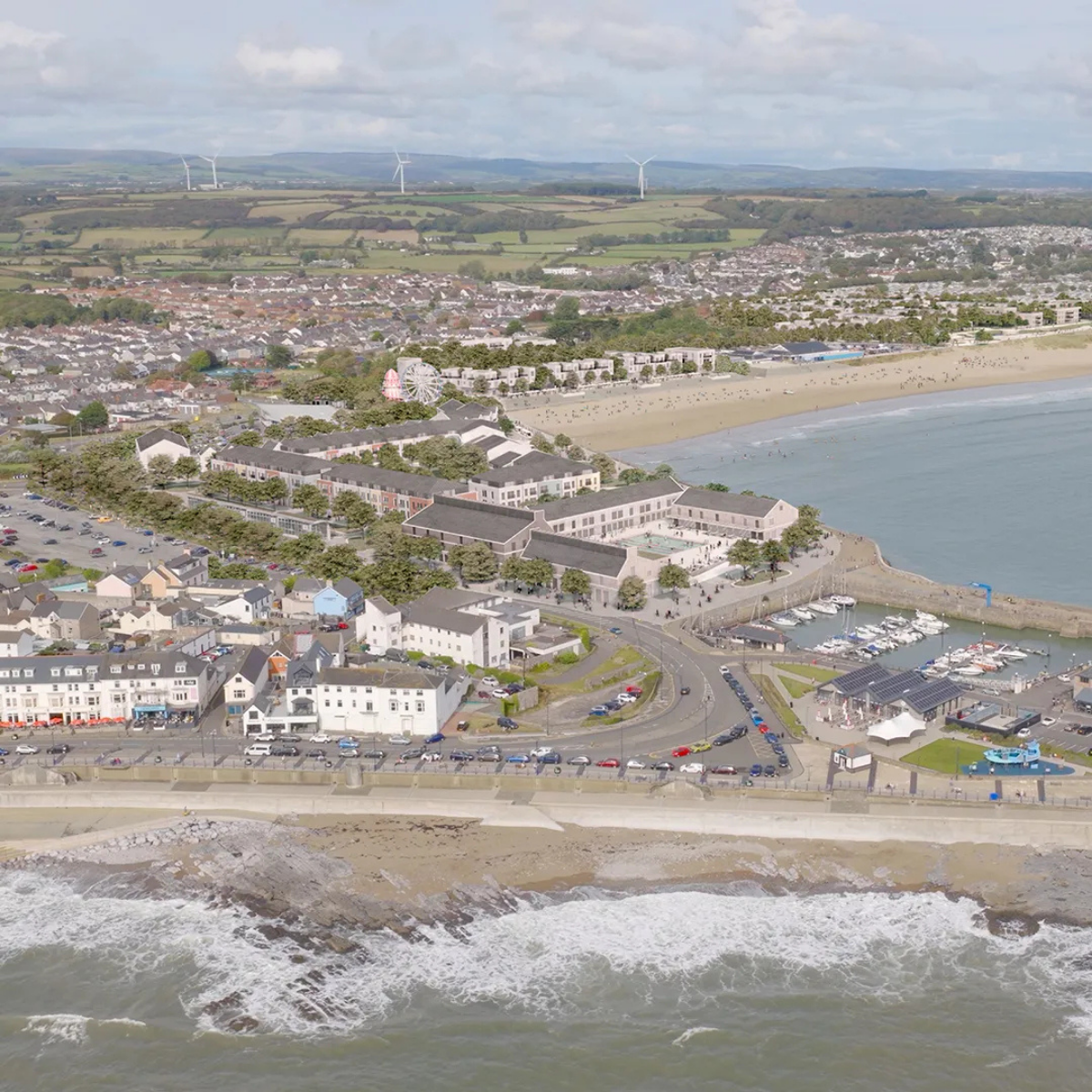
Porthcawl Waterfront Regeneration Area Masterplan, Porthcawl for Welsh Government and Bridgend County Borough Council with The Urbanists, Feilden Clegg Bradley Studios, Stantec, Blake Morgan and Grasshopper
The reshaping of porthcawl seafront has been many years in the making. Driven by community engagement and enabled by a long-standing commitment by the public sector to secure ownership of key sites around the bay. The masterplan establishes a clear and well supported basis for creating new homes, businesses, leisure opportunities. Alongside new open spaces, improved connectivity and community facilities. This is a plan built for the people of Porthcawl where community coastline and culture can come together for generations to enjoy.
Who is on the project?
Project Lead, Masterplanner, Landscape Architect, Planning Consultant - The Urbanists
Architect - Fielden Clegg Bradley Studio
Engineer - Hydrock (now Stantec)
Surveyor / Property consultancy - Savills
QS - Blake Morgan
Consultation and PR - Grasshopper Communications
Describe the context of this project, its neighbourhood and people.
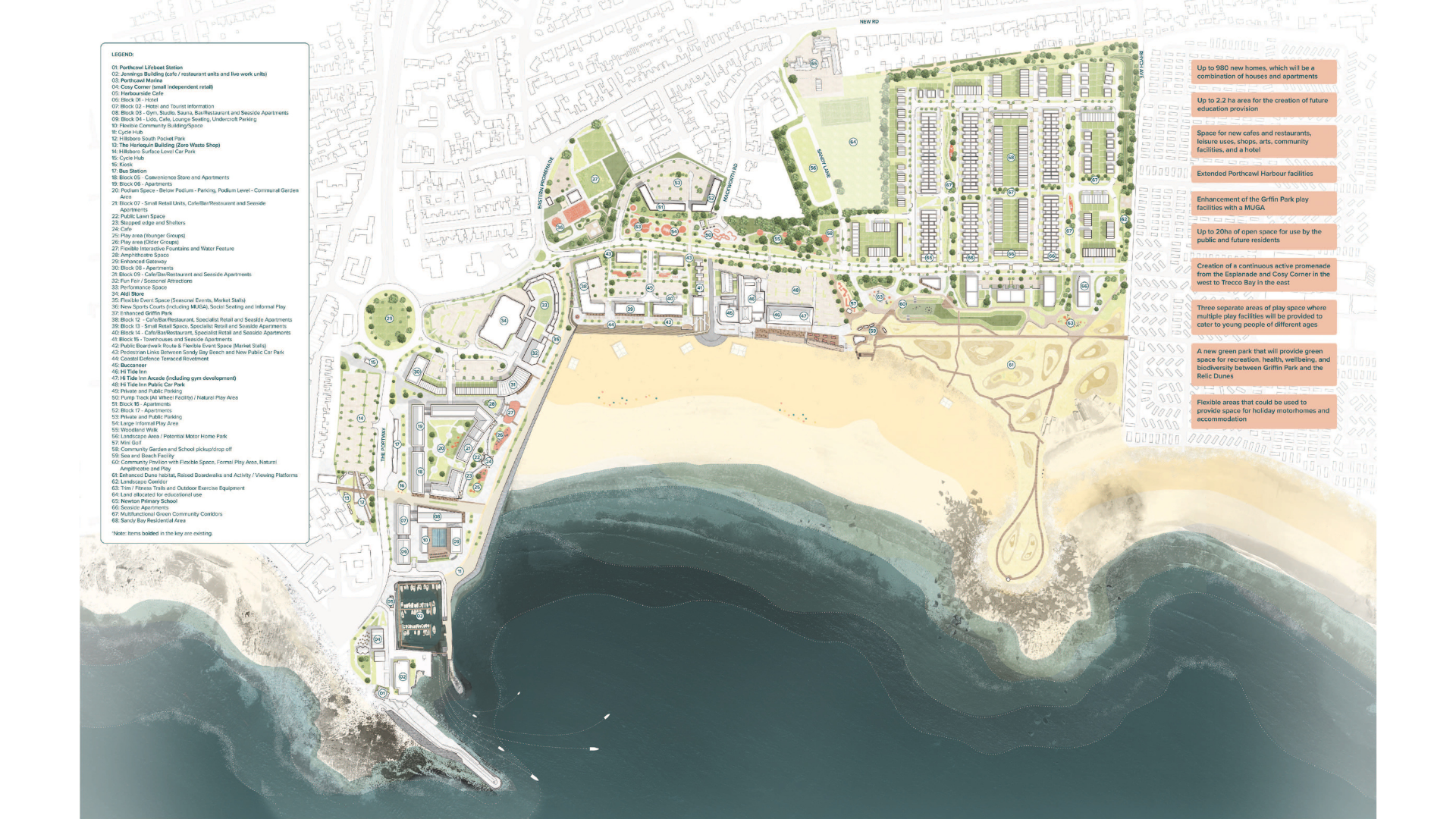
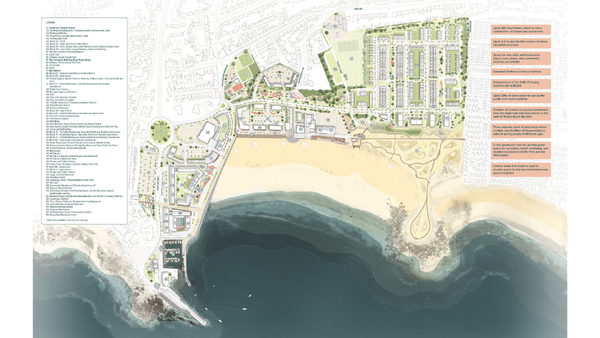
The site is situated within Porthcawl, on the south coast of Wales, between Cardiff and Swansea. It is well-connected, located within five miles of M4 Junction 37 via the A4229. The regeneration area stretches from the historic Harbour in the south and the Portway road in the west, to the ‘Trecco Bay’ holiday park in the east, bordering residential and mixed-use areas to the north. It lies immediately north of Porthcawl’s Sandy Bay beach and the Rhych Point peninsula, approximately 380 metres east of the town centre.
The town’s origins trace back to the early 19th century with the construction of the harbour, which played a vital role in exporting coal. By the mid-19th century, Porthcawl began attracting visitors seeking seaside holidays. After the dock closed, residential streets were developed, and tourism became the town’s primary industry. Today, the town is still strongly characterised by its harbour and tourism industry.
This masterplan aims to transform an area defined by this coastal heritage and strong community ties. The people of Porthcawl have been central to the vision, evidenced by over ten extensive engagement events held with residents, local schools, and interest groups over five years.
The masterplan is a crucial public-sector led initiative, secured by two decades of land assembly by the Welsh Government and Bridgend County Borough Council. This joint ownership ensures the primary focus remains on delivering holistic change and public and social benefit over short-term commercial gain, establishing a vibrant, resilient, mixed-use place built on enduring community aspirations.
Please describe your approach to this future place and its mix of uses. How will it function as a vibrant place? How does it knit into, and serve the needs of, the wider area?
Our starting point was an outdated infrastructure-led masterplan, a planning policy allocation for 1100 homes and a highly engaged community that were nervous of the changes being previously proposed.
Our approach was to simultaneously and carefully balance multiple factors:
Community input: understanding community needs, as well as what they were concerned about
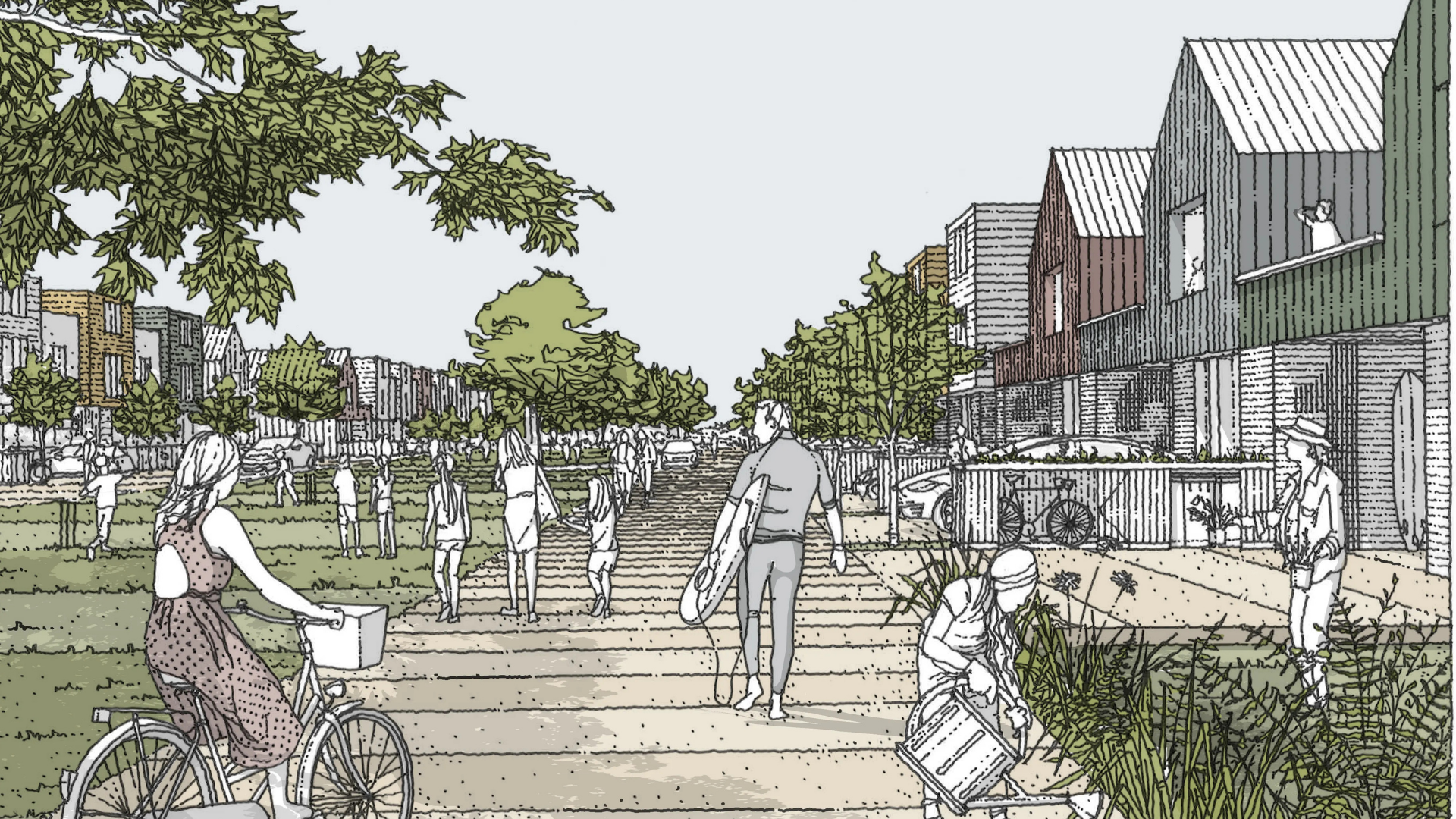
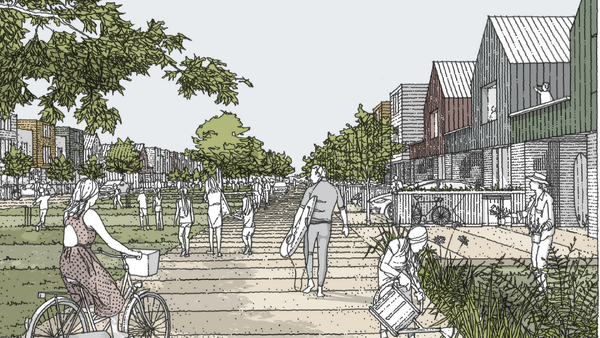
The role of landscape: ensuring a landscape-led masterplan to establish a rich network of routes, habitats and spaces
Designing for delivery: ensuring the process took into consideration viability, density and the influence of high build costs, unproven demand and high planning risk associated with tall buildings
The role of infrastructure: integrating a new highway connection to access a large part of the site, yet without dominating the area
Working with the remaining third party landowner: maintaining their business operation alongside the complete transformation proposed around them
Considering seasonality: planning for seasonal variation and tourism drivers
Low carbon: ensuring that the masterplan relates to completed developments that have achieved the highest standards of low-carbon performance
Business and community opportunities: recognising that the site adjoins the town centre and must therefore not compete with it, while also providing spaces for local groups and businesses
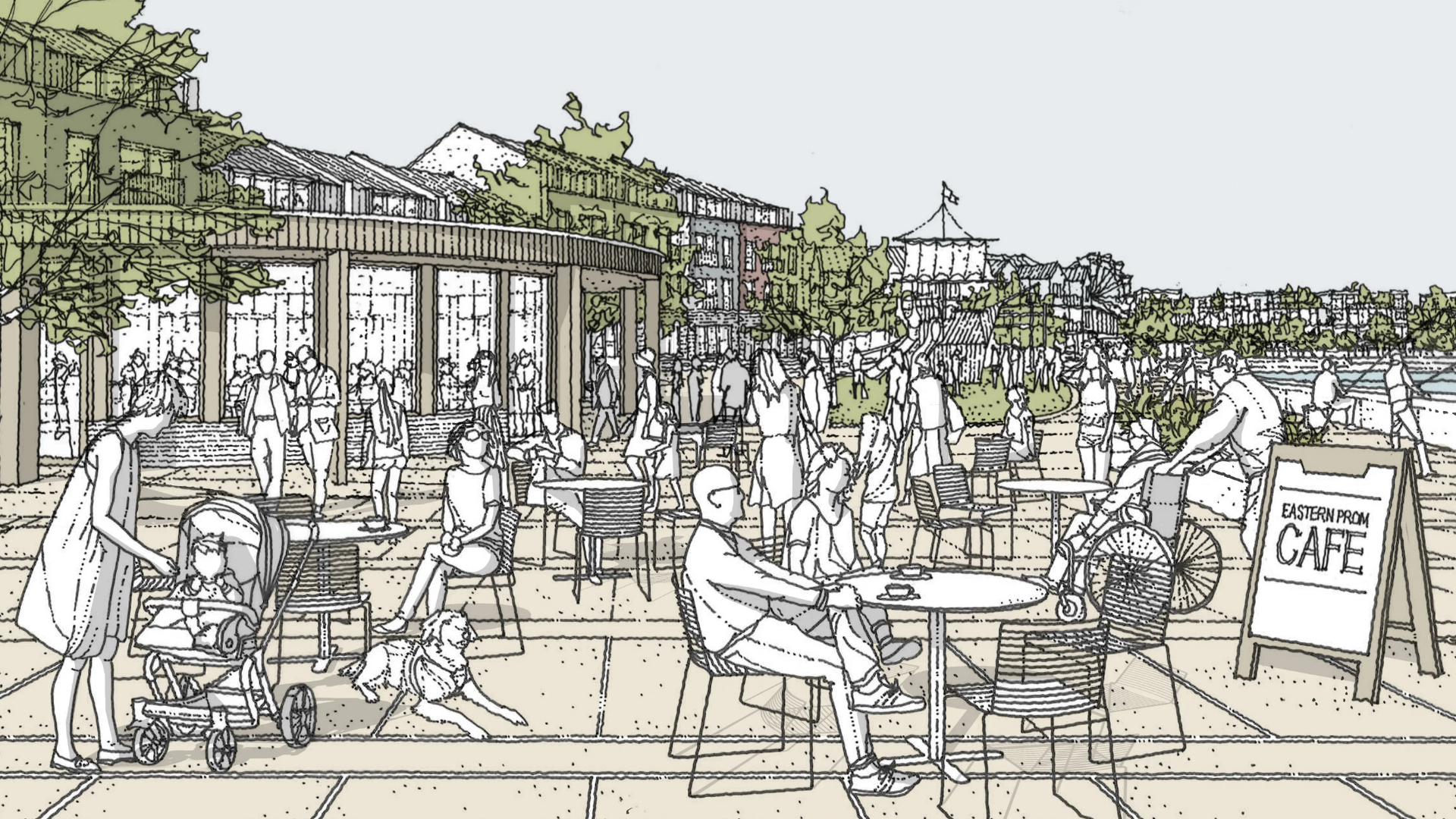
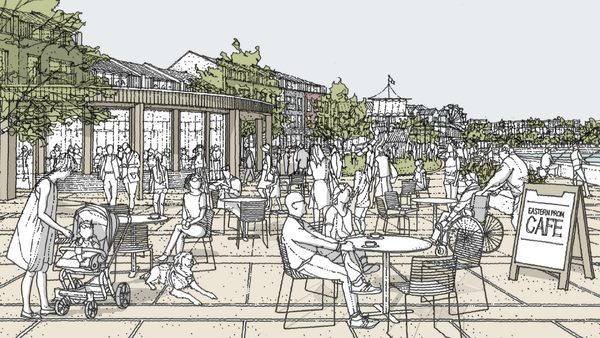
We have balanced the above and taken a whole-place approach. Starting with what will give Porthcawl Waterfront liveability: a Lido. Hotel. Gym. Outdoor play. A school. Community spaces. Workspaces. Civic spaces. Natural spaces. And then ensuring that the residential threshold and infrastructure requirements are matched to the need to create a vibrant place.
What is the social and environmental impact of the project? For example, how will the carbon use and material impact of the development be mitigated? What is the sustainability strategy?
The public sector landowners have made a legally binding commitment to prioritise social, environmental and more holistic economic impacts (such as tourism) instead of the typical commercial approach which is driven by short term cashflow and profit.
The landscape aspects of the masterplan has been designed around ecological considerations to ensure the highest quality habitats, especially the dunes are retained, expanded and enhanced, with increased connectivity between habitats via sensitive raised boardwalks throughout.
BCBC and WG are committed to achieving lower recorded carbon emissions to building regulations by establishing strict procurement criteria when securing a development partner. WG have undertaken this approach previously and this places contractual weight on evidencing actual energy performance of the homes to a development partner.
The clients also recognise the need to deliver the critical public realm infrastructure at an early stage. They are progressing funding options to ensure the typical cashflow approach to development and phasing does not impact on the public sector partners ability to deliver infrastructure including new coastal defenses, promenade, active travel routes and public realm.
Additionally, the planned leisure elements which include a new outdoor Lido and seasonal attractions are due to be delivered at an early stage in order to ensure these act as anchors to the project – marking the start of a new golden era for Portcawl as a tourism and leisure destination, which will not only make good on promises made to the local community but also ensure that positive social outcomes are achieved.
Gallery

Sign up to our newsletter
Get updates from The Developer straight to your inbox
Thanks to our organisation members
© Festival of Place - Tweak Ltd., 124 City Road, London, EC1V 2NX. Tel: 020 3326 7238