Get updates from The Developer straight to your inbox Yes, please!




Surf London, London Borough of Enfield for Crest Experiences with MOOWD, APG Architects, Wrenbridge Sport and BNP Paribas Real Estate
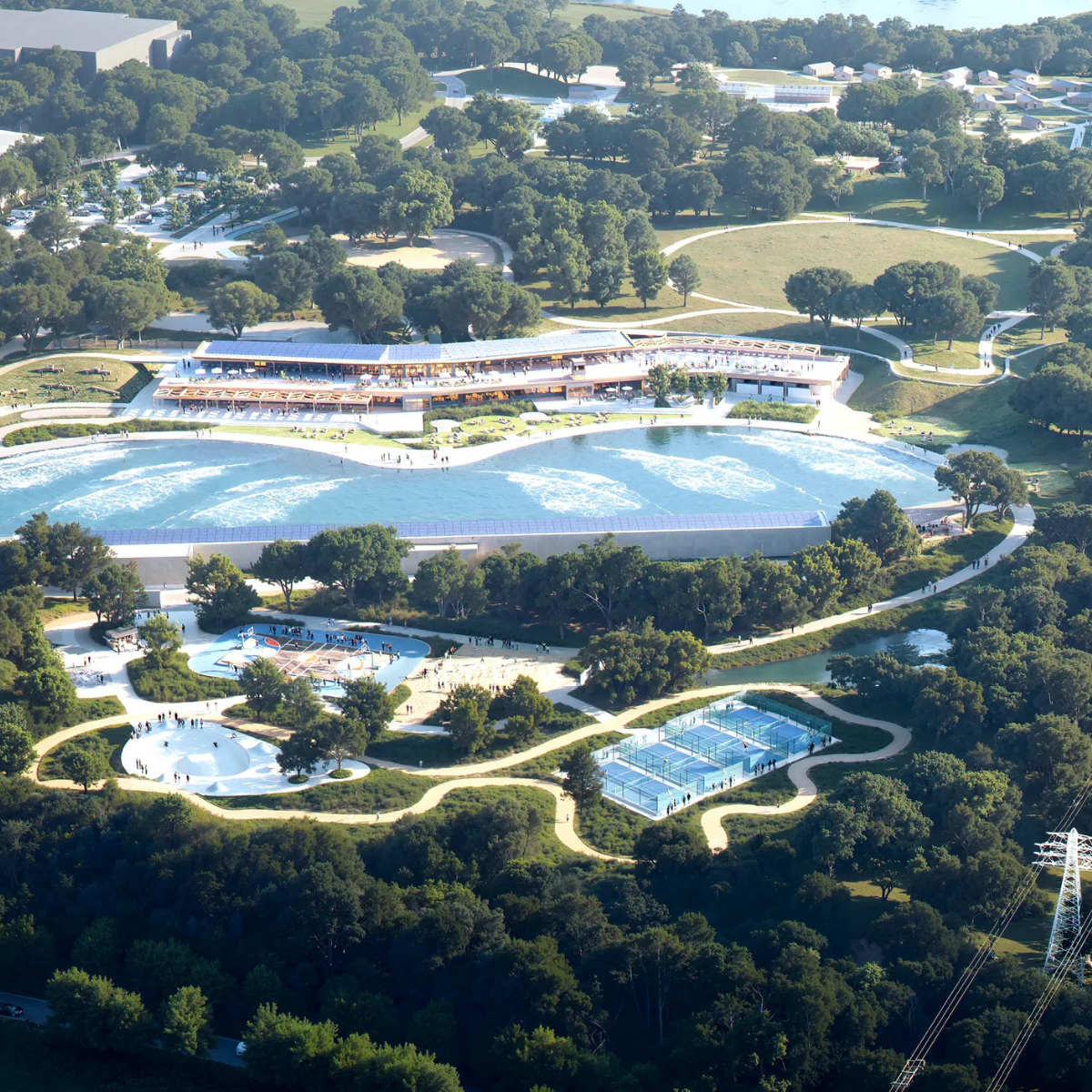
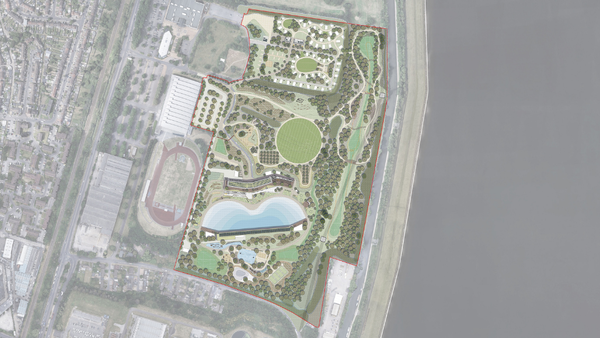
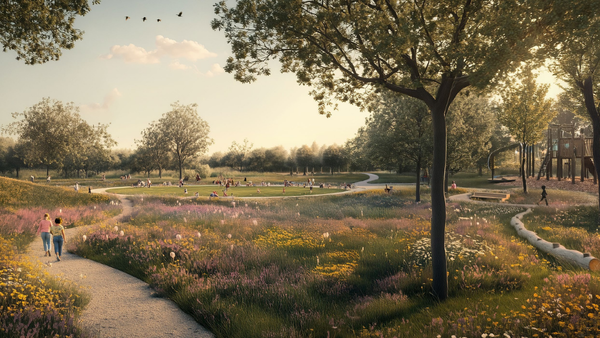
Surf London reimagines 22.6 hectares of underused Green Belt as a landscape-led, mixed-use leisure destination for North London. Anchored by a world-class surf lake capable of hundreds of sessions daily, it opens more than 10 hectares of new public parkland—wetlands, meadows, orchards, play and nature trails—alongside a multigenerational activity park. Enhanced connectivity and an upgraded campsite extend benefits beyond the site, creating a vibrant year-round destination that supports 150 jobs and delivers enduring social and environmental value for surrounding communities.
Who is on the project?
MOOWD, APG Architects, Wrenbridge Sport, BNP Paribas Real Estate, Willis Hazell Engineers, Markides Associate, Griffiths Evans, Omisa Ltd, Water Technology Inc, Endless Surf, Myrtha Pools, Alder Ecology, Ethos Environmental, Green Earth Management, Method Consulting, Tenos, Sharps Redmore, Greenavon, Orion Heritage, and QCIC Group.
Describe the context of this project, its neighbourhood and people.
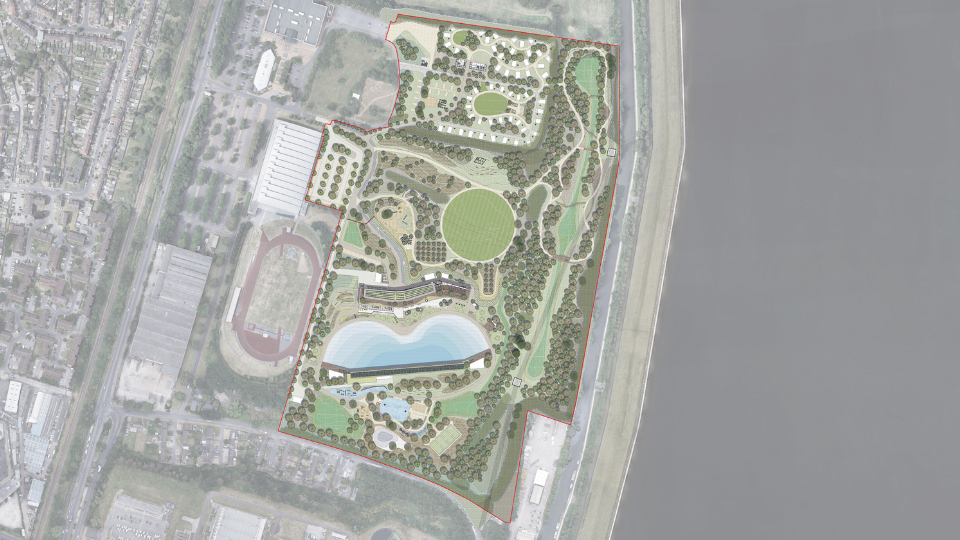
Surf London sits within a 22.6-hectare portion of the Lee Valley Leisure Complex in Enfield, a landscape shaped by recreational uses but long isolated from neighbouring communities. Although outwardly green, the former golf course and campsite operate as private land, offering limited ecological value and no public access. Woodland belts, grassland and wetland margins exist in fragments, their connectivity weakened by single-purpose management.
The surrounding districts, Edmonton, Tottenham and the emerging Meridian Water, are among North London’s most socio-economically varied. Many neighbourhoods experience high levels of deprivation, especially in childhood poverty, health inequalities and limited access to quality green spaces. Despite proximity to Meridian Water Station and good bus connections, residents remain largely disconnected from the wider Lee Valley landscape. This separation, combined with few opportunities for nature-based recreation, creates a clear spatial and social gap.
This context informs the project’s purpose. Surf London will be the first inland surfing and active-leisure destination in a global top-five capital. With a surf lake at its centre and surrounded by sports, wellbeing and recreation, it will celebrate landscape and community year-round. The masterplan opens over 10 hectares of community parkland, wetlands, meadows, orchards, trails and play, releasing land inaccessible for generations. The restored Enfield Ditch becomes an ecological and social spine, reconnecting the site to the regional green-blue network.
By transforming a closed landscape into a place for active leisure, nature and wellbeing, the project reframes the Green Belt as an inclusive, ecologically functional community asset that attracts new visitors to Edmonton.
Please describe your approach to this future place and its mix of uses. How will it function as a vibrant place? How does it knit into, and serve the needs of, the wider area?
The design approach is landscape-first, treating the site as an interconnected ecological and social system. Existing assets, woodland belts, grassland, wetland edges and the historic alignment of the Enfield Ditch, establish the spatial framework. The masterplan works with, rather than against, the site’s inherited landform: buildings and activities are positioned within existing topography, reducing visual impact, minimising earthworks and ensuring that recreation, learning and public access fit seamlessly within the landscape.
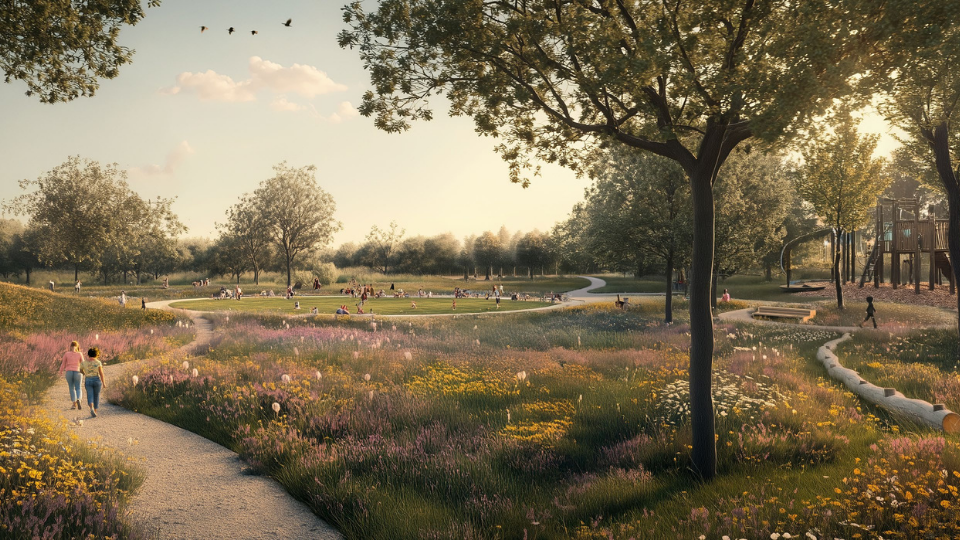
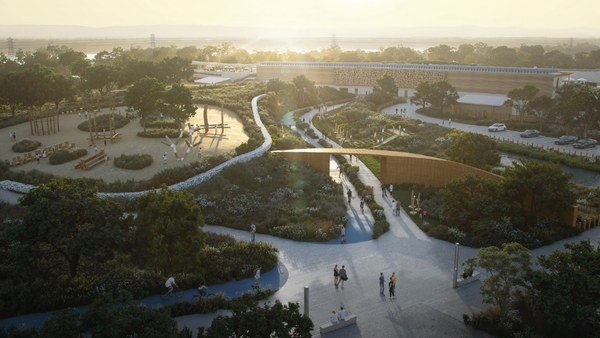
The surf lake, clubhouse and campsite form a focal operational core, enhanced by an extensive activity landscape to the south and east. A network of freely accessible parkland supports year-round activity: multi-age play, community lawns, wetlands, orchard planting and nature-rich trails. Seasonal events, outdoor learning and everyday exploration ensure the place feels active while retaining calm ecological space.
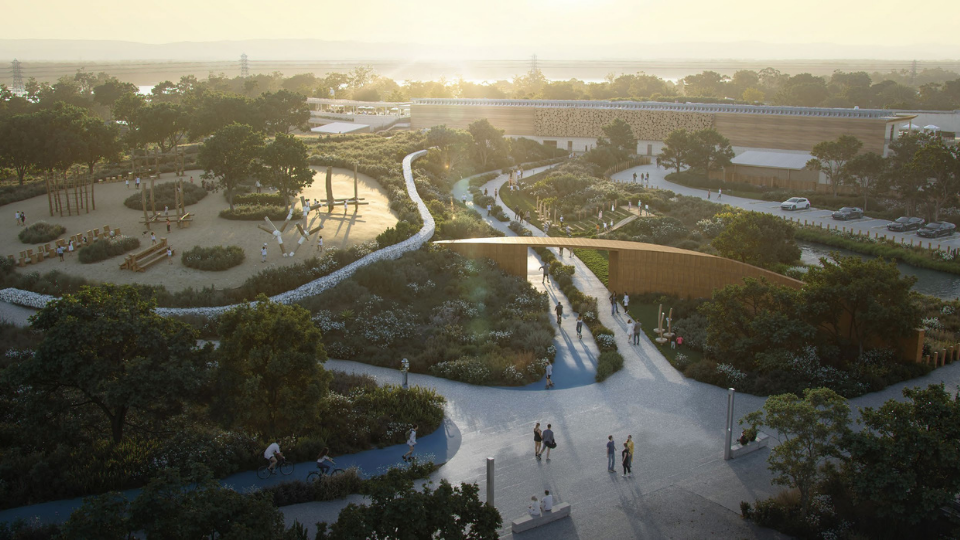
A coherent movement network stitches the site to its wider context. New paths and bridges provide clear north–south and east–west routes, improving permeability across the park and strengthening connections to Meridian Water Station, bus corridors and existing cycle routes. The restored Enfield Ditch becomes both an ecological corridor and a public-realm connector, guiding movement through a water-led landscape.
Beyond the boundary, the project responds to a wider need for inclusive recreation, health and nature access across North London. By opening land previously held in private use, Surf London provides a unique London landmark and addresses missing community infrastructure for nearby neighbourhoods with limited green space. The result is a vibrant, adaptable and environmentally integrated future place.
What is the social and environmental impact of the project? For example, how will the carbon use and material impact of the development be mitigated? What is the sustainability strategy?
Surf London delivers substantial environmental and social gains through a regenerative, water-led masterplan. The reinstated Enfield Ditch creates a continuous ecological corridor, supported by new wetlands, swales, ponds and attenuation basins that improve hydrology, reduce runoff and enhance resilience to climate extremes. These features integrate into a wider Sustainable Drainage System comprising permeable surfaces, green roofs and naturalised basins, agreed in principle with Enfield Council.
The project secures a 25% Biodiversity Net Gain, significantly exceeding the statutory requirement. Post-intervention outcomes include: 126.27 biodiversity units across area habitats; 3.82 hedgerow units (186%); and 5.99 watercourse units (27%). Gains are delivered through woodland expansion, species-rich meadow and orchard planting, wetland creation and a robust tree strategy that ensures net canopy growth.
Embodied and operational carbon impacts are mitigated through circular-economy principles: cut-and-fill earthworks minimise export; existing campsite buildings are retained and adapted; and timber-led, modular structures reduce embodied carbon. Operationally, the clubhouse achieves a 40% reduction in regulated CO₂ emissions against the Part L 2021 baseline, supported by high-efficiency air-source heat pumps, solar thermal systems and a 590m² PV array generating approximately 97,317 kWh annually.
Social value is embedded throughout. More than 10 hectares of new public parkland create inclusive access to nature for local communities with limited green-space provision. The project supports over 100 jobs and enables year-round social programming, outdoor learning, volunteer participation and partnerships with schools and accessibility organisations.
Together, these measures create a climate-resilient, socially equitable and environmentally restorative future place for North London.
Gallery

Sign up to our newsletter
Get updates from The Developer straight to your inbox
Thanks to our organisation members
© Festival of Place - Tweak Ltd., 124 City Road, London, EC1V 2NX. Tel: 020 3326 7238