Get updates from The Developer straight to your inbox Yes, please!




King Street, Manchester for Bruntwood and Trafford Council with Feilden Clegg Bradley Studios, Studio Mutt, Exterior Architecture, Booth King Partnership, Civic and Avison Young
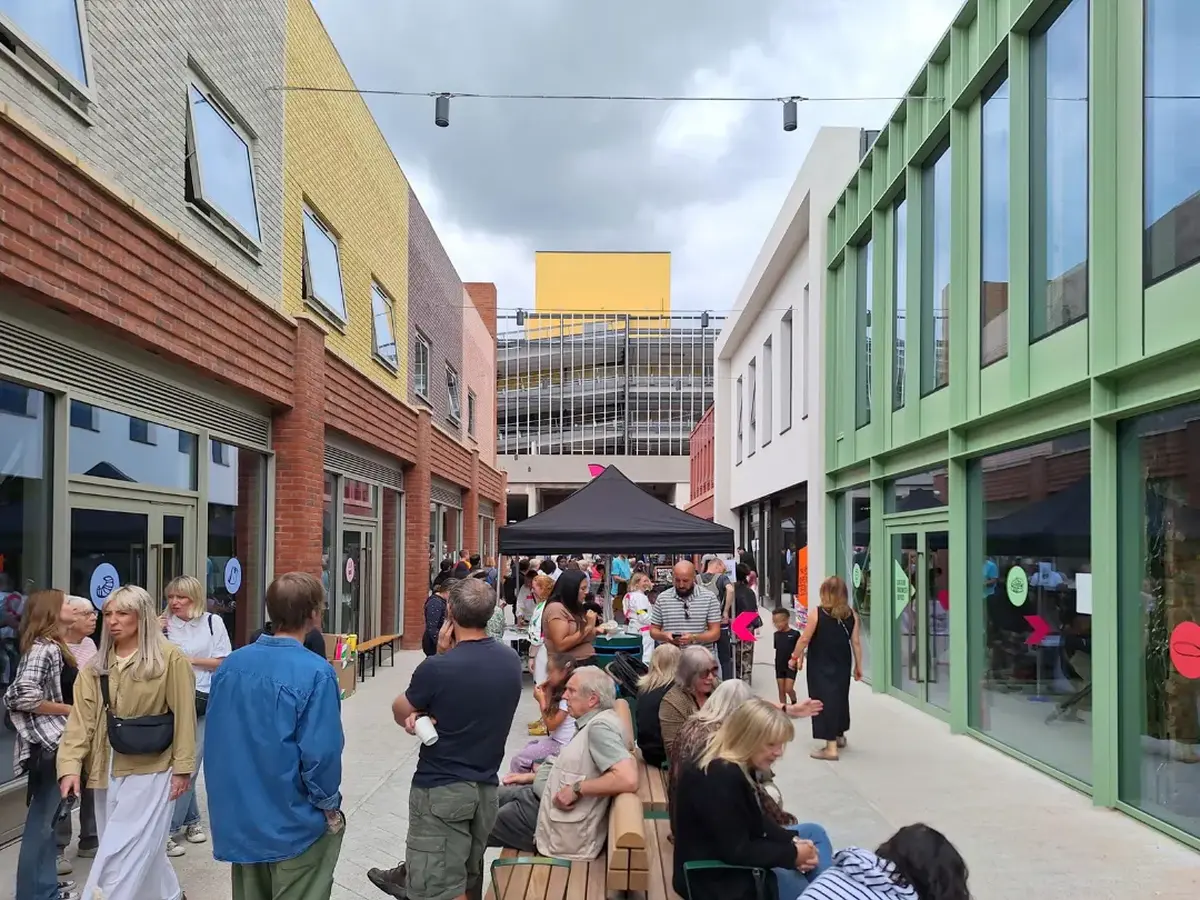
King Street, Manchester for Bruntwood and Trafford Council with Feilden Clegg Bradley Studios, Studio Mutt, Exterior Architecture, Booth King Partnership, Civic and Avison Young
The completion of King Street marks a vital milestone in Stretford’s regeneration. By stripping back the roof of a 1960s mall, Feilden Clegg Bradley Studios and Studio MUTT, with Bruntwood and Trafford Council, have revealed and refurbished a vibrant open-air high street. This first phase has re-established the town’s lively heart. While the wider masterplan continues - integrating new residents, retail parks and cycle routes - this intervention reconnects the community now, standing as a thriving proof-of-concept for the safer, greener Stretford to come.
Describe the context of this project and the point it has reached in its development. Who was there in this place before development, where have they gone, who is there now and who will be there in future? When is the project expected to be complete?
Stretford (population 54,366) is a vibrant Greater Manchester town that lost its high street in 1969. The construction of Stretford Mall severed King Street, engulfing original buildings within a covered structure designed primarily around vehicle access and a large multi-storey car park. Over the last decade, this inward-looking model began to decline, leading to reduced footfall and the depletion of high-street retail.
This project marks a turning point. By removing the roof, the team has not just created a new street but given new life to the former high street. Hidden buildings have been revealed and the historic urban grain reinstated.
As many of the former national chains depart our high streets, a new energy is emerging in Stretford. The reinstated, open-air King Street is attracting a curated mix of independent operators and community enterprises. Crucially, the usage profile is shifting. While the car park has been retained and refurbished, the Mall now draws heavily on local footfall. This shift will be cemented by the wider masterplan, which is set to deliver a new park and enhanced pedestrian links to further connect the town.
The newly created Sir Tony Lloyd Square now anchors the project, serving as a focal point for Stretford’s residents. The public realm - softened with planting and tactile finishes - is already active. This revitalised civic space establishes the amenities that will support the incoming residential community. With Phase 1 complete, the place is alive today. Full delivery is expected in 2028.
How are you seeking to foster community, welcome visitors and attract tenants? How are you responding to changing demographics, behaviour, market context, policy, transport habits and the climate crisis since winning planning?
Since securing planning, we have focused on delivering a community-first, future-ready high street shaped by the people of Stretford themselves. Our approach centres on frequent, collaborative community events that bring together local businesses, artists, makers and community groups. During the disruptive two years of development we ran a Stretford Socials local market, a free and accessible event that encouraged people to gather, celebrate local businesses and stay connected to the transformation taking place. These events have strengthened local pride, welcomed new visitors to the town centre and maintained momentum throughout the redevelopment period.
To attract retailers, we are using this programme to actively demonstrate demand, vibrancy and community appetite for a diverse high street offer. This is supported by our Rooting for Stretford campaign, which showcases the town’s emerging identity and highlights residents’ enthusiasm for a new and improved high street. Together, these efforts build confidence among prospective retailers, hospitality operators and independent traders by positioning Stretford as a place with both strong community backing and clear market potential.
We are responding directly to changing demographics, behaviours and market context by focusing on a strong balance of national and local independent operators and flexible spaces that reflect evolving consumer demands. Our work also aligns with policy shifts towards sustainability and active travel. The new development promotes walking and cycling, encouraging a shift towards more local shopping habits.
By combining consistent engagement, place-led programming and a sustainability-focused approach, we are fostering a welcoming, resilient and community-shaped future for Stretford.
Please explain the governance of the project, such as its viability, purpose, motivation and any consultation and community engagement undertaken.
Extensive public and stakeholder consultation defined our people-focused strategy, creating a place to shop, work, play, and eat. The motivation was to create a town that is greener, healthier, and better connected. Best practice was informed by the University of Manchester’s ‘PLACEHOLDERS’ project, which engaged young people in place-making, alongside targeted sessions with local disability groups.
Over 15 months, three digital and in-person engagement rounds identified consistent themes that shaped the Masterplan:
● A busier town centre with a nighttime economy
● Improvements that benefit local people
● Better pedestrian routes and Metrolink connections
● A greener environment with public open spaces
The goal is a vibrant, walkable, and inviting town. The reconfigured centre now balances civic spaces and work areas, where small independent shops sit alongside major brands.
This community ownership is exemplified by the naming of the new public square: Sir Tony Lloyd Square. Honouring the distinguished local politician, the name was chosen through a process involving 400 suggestions and 1,600 votes cast online and at a pop-up polling booth.
To ensure long-term viability, Stretford’s transformation tackles the structural challenges facing high streets. We are breaking the cycle of decline by diversifying beyond retail into leisure, culture, and work. Future-proofing is embedded through adaptable design and the ‘20-minute-neighbourhood’ model, preserving local identity while creating a resilient new urban experience.
Sign up to our newsletter
Get updates from The Developer straight to your inbox
Thanks to our organisation members
© Festival of Place - Tweak Ltd., 124 City Road, London, EC1V 2NX. Tel: 020 3326 7238