Get updates from The Developer straight to your inbox Yes, please!




Finsbury Circus Gardens, City of London for Corporation of London with Realm, Studio Weave, Potter Raper, Tibbalds, Maylim, Engenuiti, XC02, TMA Environmental Consultants, Kanda
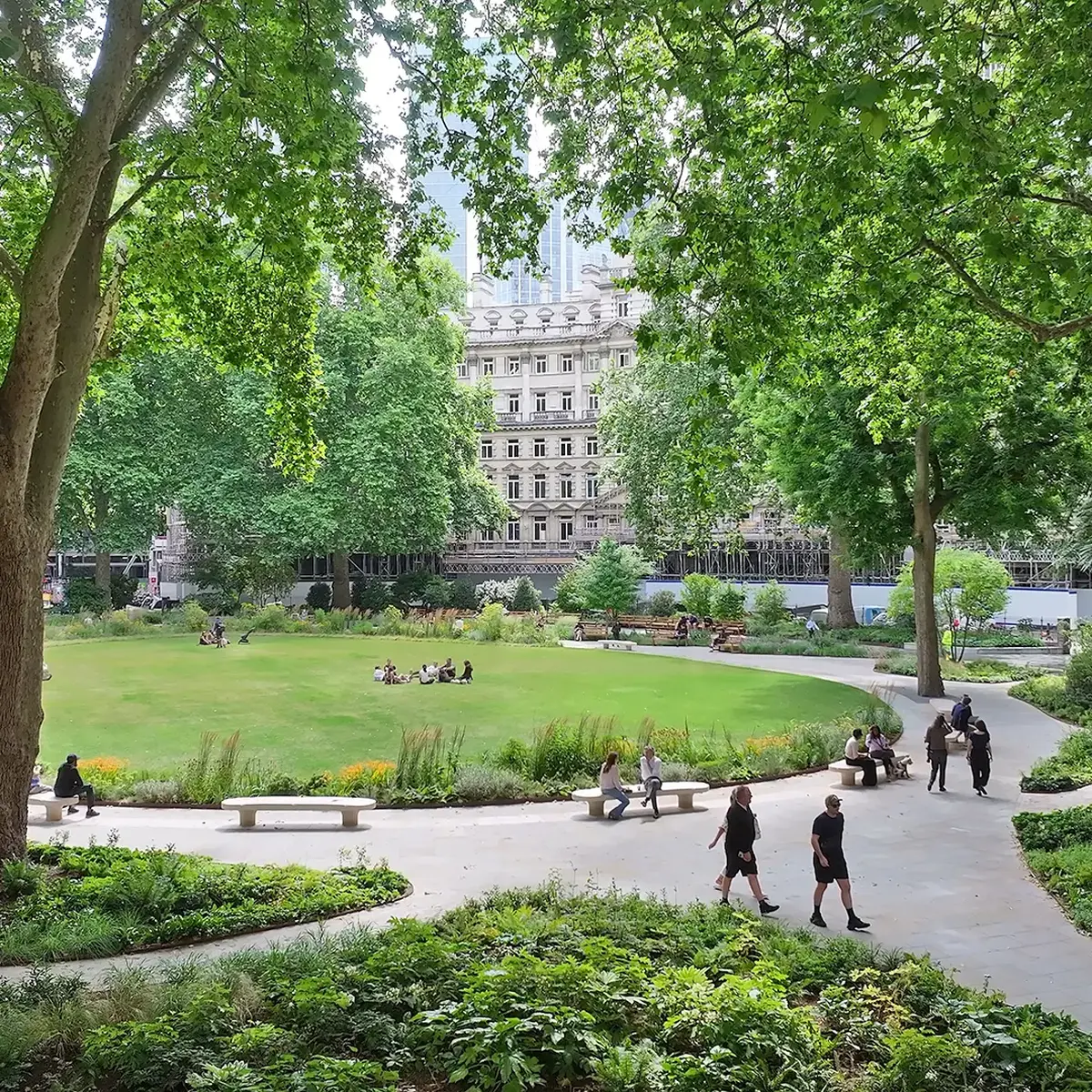
Finsbury Circus Gardens, City of London for Corporation of London with Realm, Studio Weave, Potter Raper, Tibbalds, Maylim, Engenuiti, XC02, TMA Environmental Consultants and Kanda
London’s oldest public park dating back to 1606, and the largest green space in the Square Mile, Finsbury Circus Gardens has a fascinating history, from the natural processes that formed it to the communities that helped shape it. The renewed garden creates a revitalised public space for future generations to enjoy - a tranquil haven for people and nature, with increased equitable space and accessibility, improving biodiversity with new planting palettes and trees selected for climate change and resilience.
Describe the context of this project, its neighbourhood and people.
Finsbury Circus Gardens is one of the UK’s most important park regenerations. Encircled by an oval architectural circus, the Grade II Listed garden is located on the site of ‘Moor Fields’, the oldest public park in London.
The original green space was created through a natural and man-made process, when London Wall partially dammed the River Walbrook, creating a marshy fen, which gave its name to ‘Fens-bury’. For centuries the park has acted as a haven to serve the community, from providing a ground for archery, drying of clothes and walks, to a temporary tented living space for those displaced during the Great Fire of London and Black Death, and was a former site of Bethlem Royal Hospital (also known as ‘Bedlam’) England’s first psychiatric hospital. The site forms part of a key pedestrian network linking Liverpool Street station to the east, Moorgate station to the west, and London Wall to the south, and underfoot presents challenging below ground conditions with the top of the Metropolitan Railway tunnel only 60cm beneath the lawn at the eastern end. This landmark renewal project reflects the City Corporation’s ambition in attracting businesses, workers, and visitors to the Square Mile – ensuring that the City continues to play a leading role in driving both London’s and the UK’s economy. The completed public space supports people’s health and wellbeing, playing a vital role in climate resilience and biodiversity, and delivers upon the City’s vision for a more inclusive, innovative, and sustainable City.
Tell us what you did and how it was designed and delivered. Please explain the governance of the project.
The park was occupied by Crossrail between 2010-2020 for construction of the Elizabeth Line. Following completion, an open global competition was launched to restore and rethink the Grade II Listed 0.75 hectare green space.The winning landscape and public realm design by Realm, who worked with Studio Weave to incorporate a new Parks Office, was procured for RIBA Stages 1-7. Funded jointly by the City of London and the Crossrail Remediation Fund, the £4.2 million scheme was completed in June 2025. Historical research informed both the concept design and material selection. Kentish Ragstone references the Roman Wall, serpentine paths echo the River Walbrook, and an inner Limestone oval reflects the surrounding Portland stone circus. Enhancements include new pathways that improve accessibility, increased seating to encourage increased dwell time, a central lawn for gatherings and events; and new planting to create a more welcoming environment and boost biodiversity. Consultation with Historic England secured consent for an improved setting for the Grade II listed fountain. Other organizations consulted included Transport for London; The London Archives; London Picture Archive; Bethlem Museum of the Mind; RHS Perfect for Pollinators; Api:Cultural.
The engagement strategy brought together statutory and non-statutory stakeholders, residents, neighbours, political voices, local businesses and community groups such as the Friends of City Gardens. Pop-up garden events let people meet the project team, review the proposals and share views directly, ensuring the final design reflected a broad and inclusive dialogue. Community feedback was overwhelmingly positive, reflecting robust proposals and an inclusive, adaptive process.
How does this public space bring people together, encourage inclusivity, and make a positive environmental impact to the wider place?
Since opening in June, the garden has become actively used from 7am to closure at dusk. It provides for a variety of functions from early morning meditation and yoga classes to morning coffee meetings, team lunches around the portable tables and chairs, and evening relaxation. Throughout the day it is a pleasant green link for people moving around the City. There are different seating opportunities for individuals or groups. These include timber benches with backs and armrests, stone benches, boulder seats, portable tables and chairs, as well as gateway wall edges. The lawn also provides flexible space for informal sitting and relaxation during warm weather, with adjacent space for food trucks and coffee carts. Steps at the west gate have been replaced with a gentle DDA compliant ramp and the upstand edge around the lawn has been replaced with level access to provide step-free access throughout. The new layout is legible with a clear hierarchy of paths and spaces to appeal to different users with circular routes that enable self-exploration. The removal of the bandstand and selected vegetation has eliminated visual barriers and opened clear views to the different social spaces to assist visitors with orientation and decision making. Power and water supply are built into the paving to support performances on the lawn, and the larger paved areas can host art installations for Cultural Mile pop-ups or other events. The large number of people using the garden is testament to its value to the local community and other visitors.
Sign up to our newsletter
Get updates from The Developer straight to your inbox
Thanks to our organisation members
© Festival of Place - Tweak Ltd., 124 City Road, London, EC1V 2NX. Tel: 020 3326 7238