Get updates from The Developer straight to your inbox Yes, please!




Loveday Belgravia, City of Westminster for Amazon Property Ltd with Loveday & Co, EPR Architects, MS Safety in Design and Form Structural Design
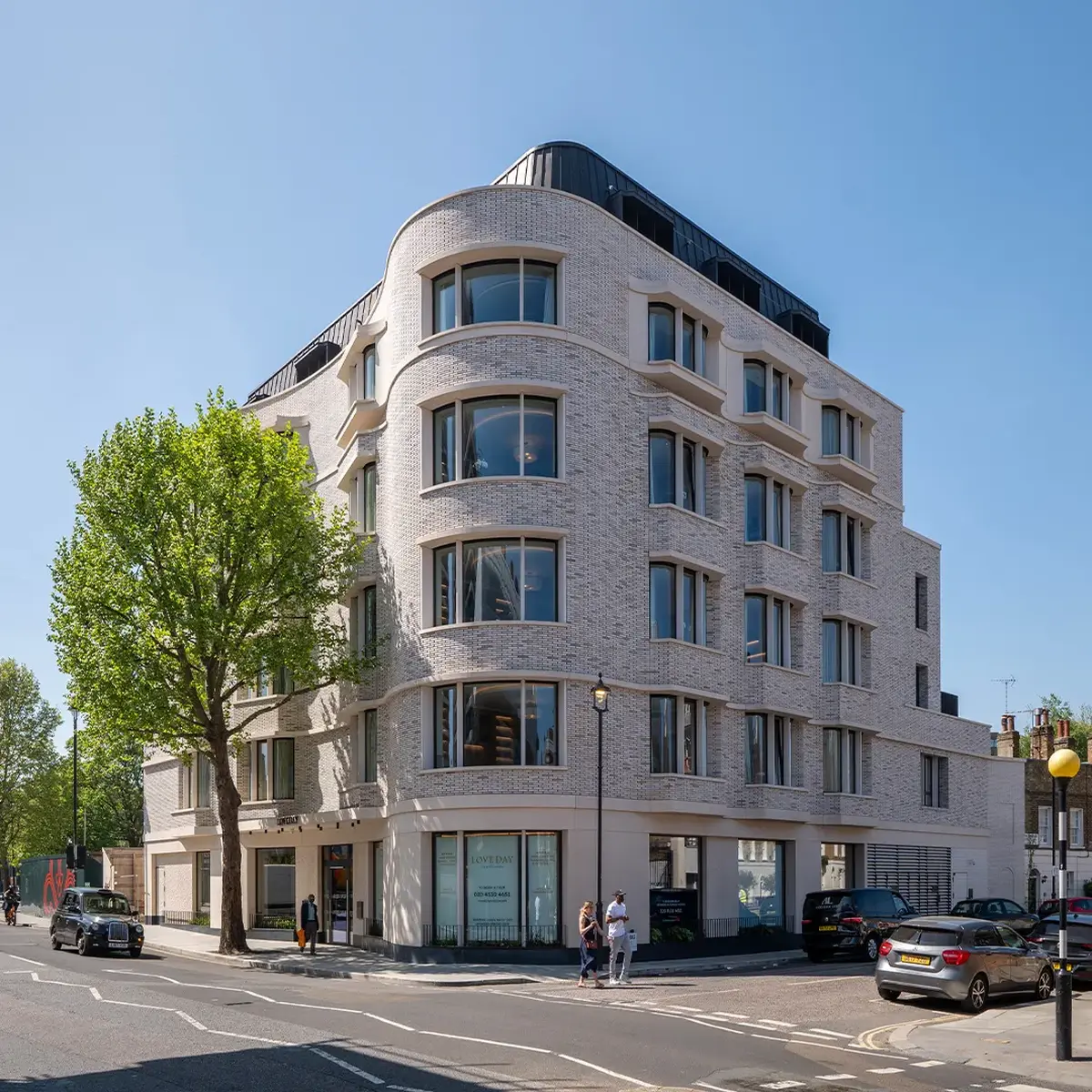
Loveday Belgravia, City of Westminster for Amazon Property Ltd with Loveday & Co, EPR Architects, MS Safety in Design and Form Structural Design
Loveday Belgravia, a partnership between Amazon Property and Loveday & Co, sets a new benchmark for senior living in London. Spanning seven floors and comprising 44 high-quality suites, the new-build care residence delivers the highest standards of comfort, design and clinical excellence, offering residential, nursing, memory and rehabilitation services.
Describe the social and environmental context of this project, its neighbourhood and people. What is the purpose of the building? How does this building make an impact in its community?
Loveday Belgravia responds to a critical social need within Westminster, where an estimated 13,500 residents aged over 65 live with a long-term illness. The Joint Strategic Needs Assessment on Dementia predicts that age-related long-term conditions will rise by 56% between 2013 and 2033, and by 2026 more than 3,000 Westminster residents are expected to be living with dementia. Despite this demand, Westminster has the second-lowest number of registered dementia beds of any London borough, creating a significant shortfall.
Loveday Belgravia directly addresses this gap, providing 44 high-quality care suites and offering residential, nursing, memory and rehabilitation services within a hospitality-led environment. Specialising in dementia care, the building supports long-term health and independence.
The project also has a positive impact on the community. EPR transformed the former fuel station at the junction of St Barnabas Street and Ebury Bridge Road, remediating the contaminated land to revitalise the prominent corner site and return it to active community use. Through close collaboration with Westminster City Council, local forums and key stakeholders, EPR secured planning consent for a change-of-use that aligns with local priorities.
Neighbouring Belgravia Conservation Area, EPR’s design sensitively responds to its surroundings while establishing a confident, contemporary identity. Triple-aspect bay windows with J-curved glazing respect the site’s context while maximising natural light. The building’s form softly undulates around a large London plane tree, placing nature at the forefront and creating a welcoming civic presence. Its brickwork integrates seamlessly with the local streetscape, ensuring the building contributes positively to its neighbourhood.
Is the project innovative or creative in its design or purpose? What does it do well in terms of serving its people?
Loveday Belgravia showcases original thinking by addressing the unique challenges of senior living through innovative design that prioritises dignity and independence.
EPR’s design rejects institutional cues, instead using colour, materiality and technology in subtle, therapeutic ways. Each floor is defined by a distinct accent colour woven through communal spaces, furnishings and finishes. These visual and sensory cues support independent navigation for Members with cognitive impairments, while neutral tones, tactile materials and textured finishes provide gentle contrast that enhances visual accessibility and intuitive wayfinding.
Innovative lighting and technology are integrated throughout. A smart lighting system adjusts light levels and temperature throughout the day to support circadian rhythms, improve sleep and promote wellbeing. Assistive technologies, including induction loops, speaker systems and monitoring systems, are discreetly integrated, creating a dignified environment where care feels supportive rather than intrusive.
Members and families consistently praise the quality of the environment. One Member’s wife described Loveday as ‘a lovely place where you feel at home…with many great lifestyle experiences.’ Another relative noted that ‘the detail, thought and care which has gone into the design of this beautiful home’ is matched by exceptional care and management.
Loveday Belgravia is a considerate neighbour. Its curved brick façade sits gracefully within the Belgravia streetscape. By replacing a former fuel station with a sensitive and community-serving building, Loveday Belgravia enhances the character of its neighbourhood while providing a dignified place for its Members. To ensure the scheme aligned with its wider context, EPR engaged with local forums and key stakeholders.
Please describe the programme of the building, and how its design serves this use. Please also explain whether the future viability of this use has been considered. How might the building be repurposed to other uses?
Loveday Belgravia delivers the highest standards of comfort, design and clinical excellence, combining world-class hospitality with expert care across residential, nursing, memory and rehabilitation services.
EPR’s design directly serves this programme, offering Members a true home-from-home. Spanning seven floors, Loveday Belgravia incorporates 44 high-quality suites alongside communal lounges, dining areas, wellness facilities and therapy spaces, offering opportunities for socialisation and relaxation.
The layout is designed to reduce anxiety, enhance independence and support intuitive wayfinding, with clear sightlines, domestic-scale spaces and abundant natural light. Accessibility is integral, with level access to entrances and terraces, wide corridors, wheelchair-friendly circulation and passenger lifts. The circular floor plan eliminates dead ends, helping residents with dementia navigate safely. Operational efficiency is supported through carefully considered back-of-house spaces such as clinical stores and equipment rooms, ensuring workflows are functional and minimise disruption.
Future viability has been considered through durability, adaptability and circular economy principles. The façade incorporates mechanical fixings, allowing elements to be demounted and replaced, while the windows have been designed for in-situ replacement. Robust materials, including granite plinths in high-traffic areas and a strong external façade finish, contribute to the building’s durability and long design life.
The building can also be adapted for other care-related uses. Systems such as CCTV, Nurse Call and safety systems can be easily installed or removed, 25% of suites have small power points for flexible bed layouts and softspots between rooms allow potential interconnection. A hotel conversion could also be possible given the presence of guestrooms with en-suite facilities.
Gallery

Sign up to our newsletter
Get updates from The Developer straight to your inbox
Thanks to our organisation members
© Festival of Place - Tweak Ltd., 124 City Road, London, EC1V 2NX. Tel: 020 3326 7238