Get updates from The Developer straight to your inbox Yes, please!




Liveable Neighbourhoods Tranche 3, Glasgow for Glasgow City Council and Transport Scotland/Sustrans with Arcadis and Collective Architecture
Liveable Neighbourhoods Tranche 3, Glasgow for Glasgow City Council and Transport Scotland/Sustrans with Arcadis and Collective Architecture
Firmly rooted in people and place, Liveable Neighbourhoods is Glasgow City Council’s approach to 20-minute neighbourhoods.
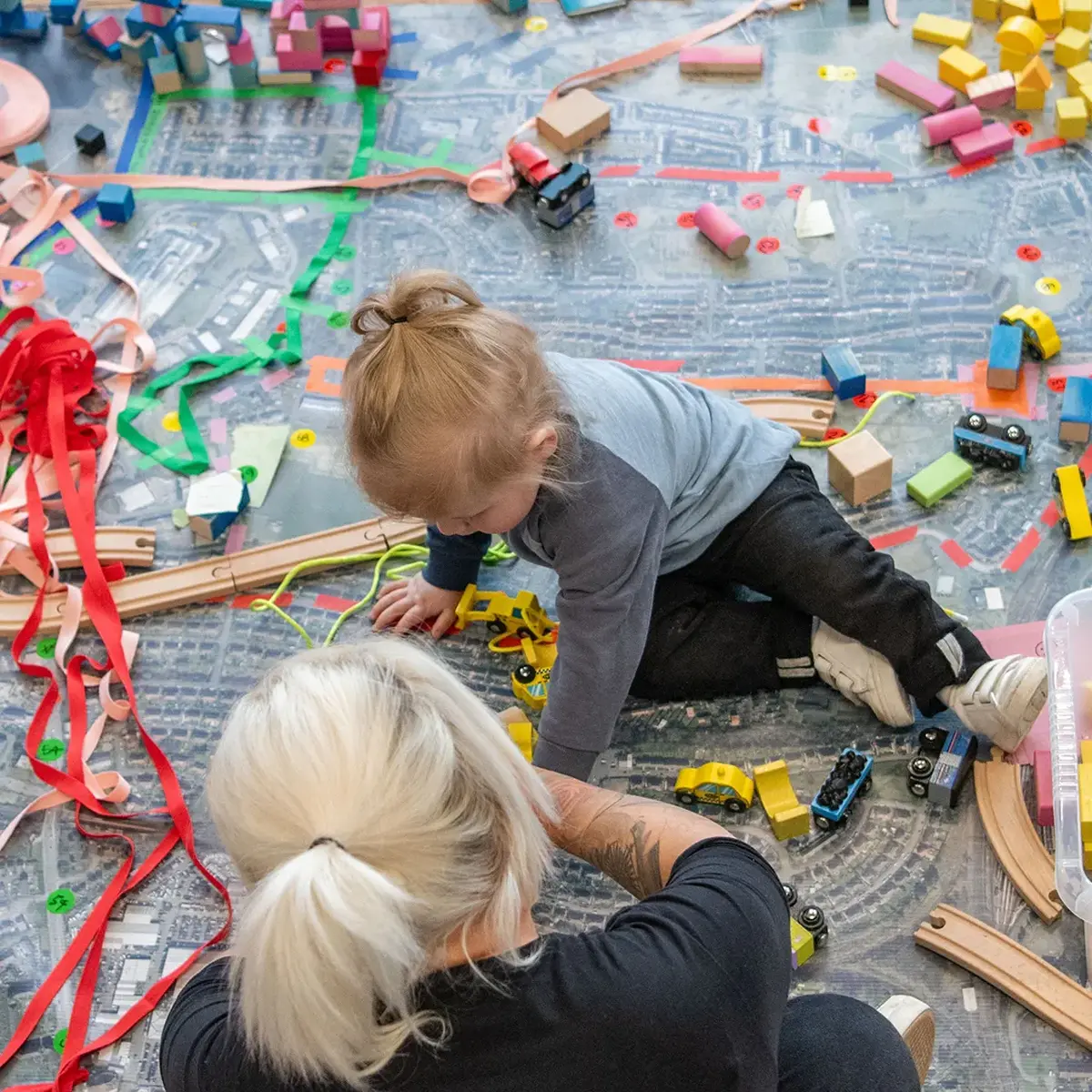
The engagement saw delivery of 60 community workshops, co-design events and online activity with 1,200 participants over 12-months. Working directly with communities, the project sought to build a collective vision of their future places built on a deep understanding of local needs and aspirations. The resulting neighbourhood plans contribute to a bottom-up placemaking approach, furthering Glasgow’s ambition of creating the conditions for a fairer, more equitable and accessible city.
Describe the context of the community engagement. Why did the engagement take place?
Liveable Neighbourhoods is Glasgow City Council’s approach to 20-minute neighbourhoods and is rooted firmly in people and place. Meaningful engagement is central to developing robust Neighbourhood Plans for communities across the city that reflect the aspirations and needs of the people who live there. This work is being undertaken in a phased roll-out, with the latest activity covering RIBA Stages 1-2 across four neighbourhoods on the periphery of the city. Containing some of Scotland’s most economically disadvantaged communities these neighbourhoods face many socio-economic and spatial challenges, with many suffering from engagement fatigue and cynicism borne out of inaction.
Engagement was firmly rooted at the heart of the process, with an approach to placemaking that started with the communities that the programme was there to serve. Our approach to engagement drew on best practice whilst embedding innovative approaches to place, such as Glasgow’s leading position on Gender Sensitive Planning. The scope of the engagement asks communities to consider change from the macro to the micro – providing an intergenerational space for creative exchange and co-design which looks at active travel infrastructure, local centres, play, accessibility and climate resilient place-making. Whilst the identified project outcome was a set of holistic plans to support the council’s climate ambitions, we pushed to expand our role, deepening the engagement process and establishing a system of exchange and dialogue between the council and the areas it represents, to further their ambition of creating the conditions for a fairer, more equitable and accessible city.
Who did you engage with and how?
The engagement started before our appointment, with council officers identifying key local organisations and anchors who know their communities better than anyone. This resource was invaluable. Day-long walks around each neighbourhood (some covering over 10km) allowed us to understand the geography and gave us time to ‘drop-in’ to say hello to the key local champions – some whilst they were hosting regular events, such as community clubs. Stakeholder and area mapping set out a programme of 60 events, on-street pop-ups, community walks and co-design workshops across the two work-stages over a period of 6 months. All events were fully accessible, well-advertised and where possible aligned with community activities to drive a broad-demographic base – we had Friday Pizza Night in Milton, Knitting group in Knightswood, Neighbourhood Natter in Cardonald and Soup and Bingo in Easterhouse. A staged process allowed us to return to communities, testing emerging proposals and developing an iterative and responsive approach. Proposals were then filtered through a robust scoring mechanism and reviewed with officers and elected members resulting in a range of transformative neighbourhood-level project plans. A range of formats were used for the sessions (see attachments) – ensuring broad reach was balanced with opportunities for more focused testing of emerging proposals. Co-design was key to this, and project specific tools and methods were developed for the second stage of engagement that reflected the outcomes from Stage 1, with specialist sessions organised with A Place in Childhood (APiC) which took us into key schools in each area.
Have you continued the conversation? Will the community stay involved?
The scale of the work undertaken, across four neighbourhoods with many communities means activity is being filtered through various cross-cutting council portfolio workstreams.
Whilst funding for major capital projects remains challenging, there is space beyond the council for conversations to continue. Rather than relying solely on change coming from the top-down, Liveable Neighbourhoods fosters agency so that projects can emerge from the ‘bottom up’ too. Through relationships built during our engagement activity we are now working with one local Community Council in Easterhouse, supported by a partnership with the council and Seven Lochs Wetland Park. Working with them we are co-designing and delivering improvements on a long-term vacant site, with funding from the Scottish Government’s Vacant and Derelict Land Fund. This builds on the community council’s own Local Place Plan, developed by Icecream Architecture, and the opportunities and issues identified by our Liveable Neighbourhoods work. This project is community-driven, with new local engagement looking at the specifics of an unloved 1-hectare site in the middle of their community. The project has secured funding to develop a ‘masterplan’ approach, allowing the community to shape a strong vision whilst delivering an initial phase of works. These will improve safety, accessibility and create a sense of identity, setting in motion a community-driven approach to placemaking at Craigend. This will allow the dynamic community council to deliver further phases as funding becomes available, further supporting the aims of the council to create the vibrant, resilient local centres imagined in their Liveable Neighbourhoods programme.
Sign up to our newsletter
Get updates from The Developer straight to your inbox
Thanks to our organisation members
© Festival of Place - Tweak Ltd., 124 City Road, London, EC1V 2NX. Tel: 020 3326 7238