Get updates from The Developer straight to your inbox Yes, please!




Leathermarket Gardens and Tyers Estate, London Borough of Southwark for Leathermarket JMB and London Borough of Southwark with NOOMA Studio, Churchman Thornhill Finch, Simple Works, Velocity and Open Accessame
Leathermarket Gardens and Tyers Estate, London Borough of Southwark for Leathermarket JMB and London Borough of Southwark with NOOMA Studio, Churchman Thornhill Finch, Simple Works, Velocity and Open Accessame
Leathermarket Gardens and Tyers Estate have been transformed through a family of small but deeply meaningful interventions co-designed with the community over four years. Each element contributes to a shared narrative shaped through NOOMA Studio’s “collective personal storytelling” methodology, where many parts make a whole. A new accessible entrance, crafted social thresholds, a reimagined pergola, a community-led grow garden and climate-resilient greening now bring safety, dignity and belonging back into Bermondsey—showing how careful, human-centred design can reshape everyday life.
Describe the context of this project and its neighbourhood and people.
Leathermarket Gardens sits at the centre of a close-knit Bermondsey neighbourhood framed by three estates, a well-used Village Hall, Bermondsey Street businesses and routes serving Snowfields school. Though socially vibrant, its public realm historically fell short: inaccessible entrances, unsafe corners, car-dominated yards and spaces treated as thoroughfares rather than places to inhabit. Residents spoke of affection for their neighbourhood but limited opportunities to gather, rest or feel welcome outdoors.
The project began with Southwark Council’s appointment of NOOMA Studio through the LHC ADS1.1 Framework, which aims to increase representation and diversity in public-sector design teams. As an emerging, diverse practice appointed to the public realm lot, the project became an opportunity to demonstrate how inclusive procurement can influence inclusive design.
The brief was co-written with the community, reflecting NOOMA Studio’s approach of Collective-Personal-Storytelling, in which many voices form a shared narrative of place and identity. Over 35 consultation and co-design events with TRAs, JMB, Southwark Parks, Regeneration and Highways teams, Team London Bridge BID, local businesses, Village Hall operators, young people and Snowfields schoolchildren shaped the vision.
Residents expressed a desire for inclusive entrances, sociable thresholds, interpretative play opportunities, ecological richness and spaces that reflect their identity. These insights led to a family of interventions—each modest in scale but collectively transformative—designed to support belonging, imagination, intergenerational use and community authorship of place.
Tell us what you did and how it created a child-friendly place. For example, how does it support the rights of the child to rest, relax, play and to take part in cultural and creative activities in a safe and clean environment?
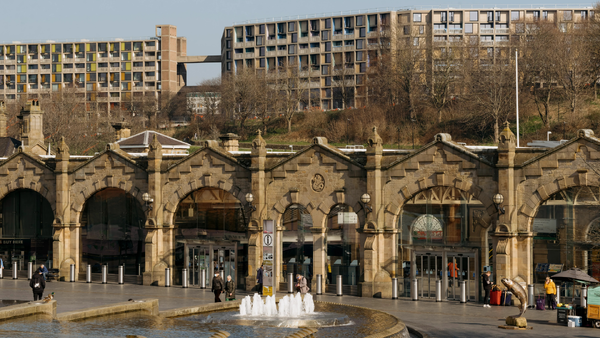
The project comprises a series carefully crafted intervention zones, each developed through a four-year co-design process - listening to individual experiences and translating them into a shared, place-based narrative. More than 35 engagement events ensured each element responded to lived realities. A fully accessible entrance now welcomes people with dignity. Its crafted brick-and-granite wall encourages human inhabitation—somewhere to sit, lean, meet and play—and the patterned granite carpet, co-designed with Snowfields schoolchildren, embeds local imagination into the landscape. The Village Hall planter forms an informal “outdoor living room,” inviting intergenerational gathering through ergonomic edges that double as seats.
The reimagined pergola opens views for safety while functioning as a sculptural stage-like element—an echo of NOOMA’s interest in theatre and public performance—offering a place to pause, observe and be part of the life of the park.
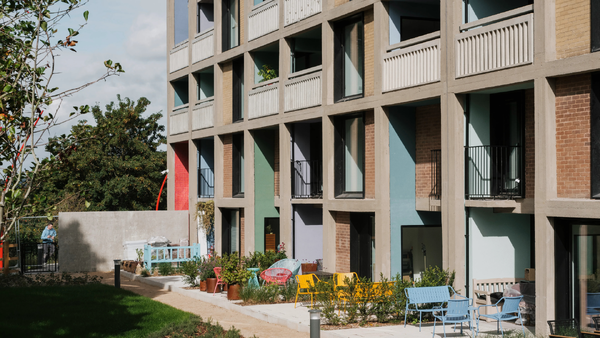
Across Tyers Estate, resurfacing and gateways clarify movement and identity, while rain gardens and gravel planting introduce ecological depth. These interventions are modest individually, but collectively they shift how people experience the estate: slower, safer, more social. A community co-designed with residents and now supports a thriving allotment committee. Collaboration with Southwark teams and local partners ensured upgrades reached beyond the park boundary into everyday routes, reinforcing the idea that many small moves, coordinated well, can deliver meaningful change.
How did the project make a positive social and environmental contribution in the context of child health childhood and wellbeing? If this was a temporary intervention, is there a legacy plan?
The project spans a 1.8-hectare redline boundary, and its impact is already visible in daily life. Residents report feeling safer crossing the estate due to clearer separation between pedestrian and vehicular movement. The once-neglected rear entrance is now lively: children regularly play on the painterly ground surface, transforming a former cut-through into a shared neighbourhood space.
At the main entrance to the gardens, the crafted brick-and-granite wall has become a valued social marker. Older residents use it for sun-warmed seating, while the planter and pergola now host quiet gatherings, informal conversations and moments of pause. The co-designed community grow garden continues to flourish, with three adult and six child members forming the inaugural allotment committee. A well-attended planting day strengthened local stewardship and pride. Environmental gains are significant. Across Tyers Estate, 360 sqm of new green and ecological space has been created. In Leathermarket Gardens—where no new beds could be added—over 300 sqm of resilient planting has replaced dead or failing species, boosting biodiversity and reducing long-term maintenance. SuDS planters are designed to capture rainwater from over 725 sqm of hard roof surface. Three bespoke bee posts contain more than 500 nesting holes, supporting a diverse community of solitary bees.
Engagement has been extensive: consultation events over four years, involving over 15 stakeholder groups, 300 individuals and more than 35 schoolchildren, who contributed directly to key design elements. Southwark Council has praised the scheme, noting that “a lot has been achieved with very little,”
Gallery

Sign up to our newsletter
Get updates from The Developer straight to your inbox
Thanks to our organisation members
© Festival of Place - Tweak Ltd., 124 City Road, London, EC1V 2NX. Tel: 020 3326 7238