Get updates from The Developer straight to your inbox Yes, please!




Hull City Centre Vision, Hull for Hull City Council with Planit, Greengage, Deloitte, shedkm, Counter Context and Yeme Tech
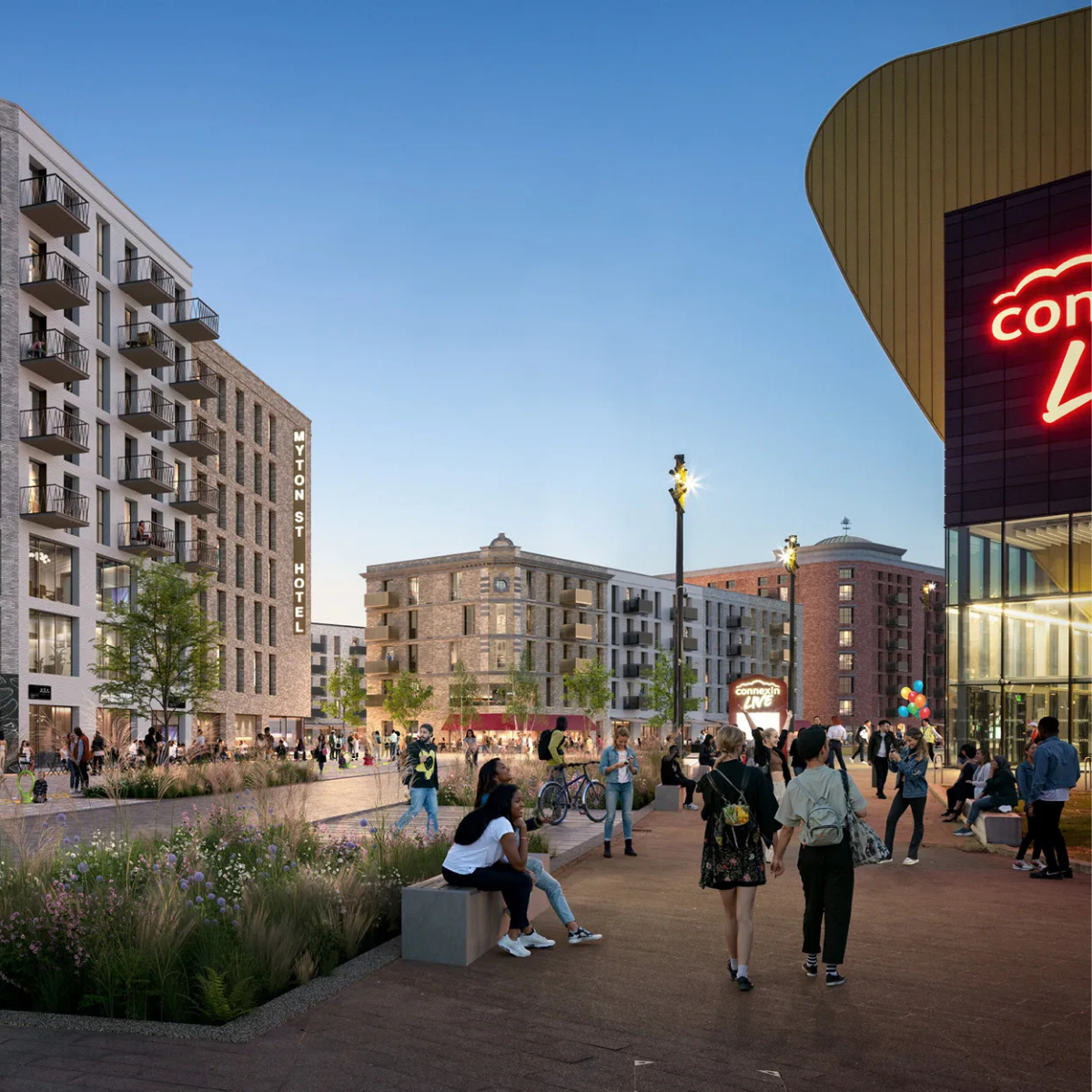
The Hull City Vision sets out a bold 20-year vision for the long-term regeneration of the city. Since its maritime heyday, Hull has faced a wide range of significant socio-economic and infrastructure challenges, and suffers from a lack of green spaces, abundance of car parking, and significant risk of flooding. However, within these challenges lies a city with tremendous potential; incredible heritage and cultural assets, riverside setting and maritime history.
Who is on the project?
Planit, Greengage, Deloitte, Counter Context, Yeme Tech, and Shedkm
Describe the context of this project, its neighbourhood and people.
Since its maritime heyday, Hull has faced a wide range of significant socio-economic and infrastructure challenges. The city is dealing with a loss of population density, changes in employment sectors, a decline in retail, anti-social behaviour, congestion, and childhood obesity. It also suffers from a lack of green spaces, an abundance of car parking across the city centre, and significant risk of flooding from the River Humber. Within these challenges lies a city with tremendous potential; incredible heritage and cultural assets, riverside setting, maritime history and resilient, loyal and entrepreneurial residents and businesses.
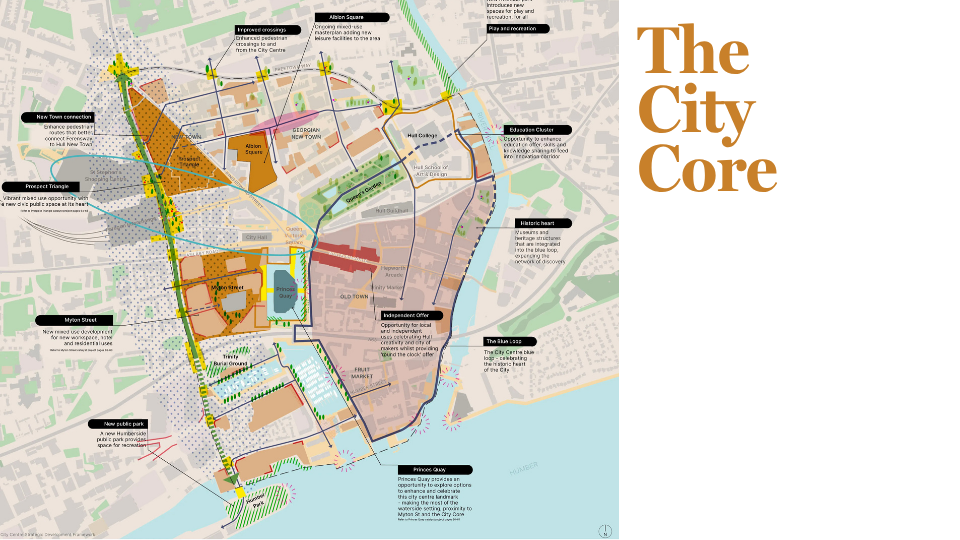
To create an ambitious, sustainable and viable development strategy for the city, Hull City Council has unveiled a bold new 20-year vision for the long-term regeneration of its city centre and surrounding neighbourhoods. Supported by a suite of strategic documents, its successful delivery will leverage the city’s existing unique assets with a strong collective desire to build a city for the future – one that is prosperous, resilient, connected, and inclusive.
Hull’s East Yorkshire and North Sea location, strong community spirit, independent and creative talent, local and regional business strength, cultural assets, welcoming nature, and maritime heritage have been clearly demonstrated through an inclusive engagement process to develop the City Centre Vision. The City Council is clear in its aspiration to deliver a sustainable, resilient and inclusive city centre to support the wider East Yorkshire region.
Please describe your approach to this future place and its mix of uses. How will it function as a vibrant place? How does it knit into, and serve the needs of, the wider area?
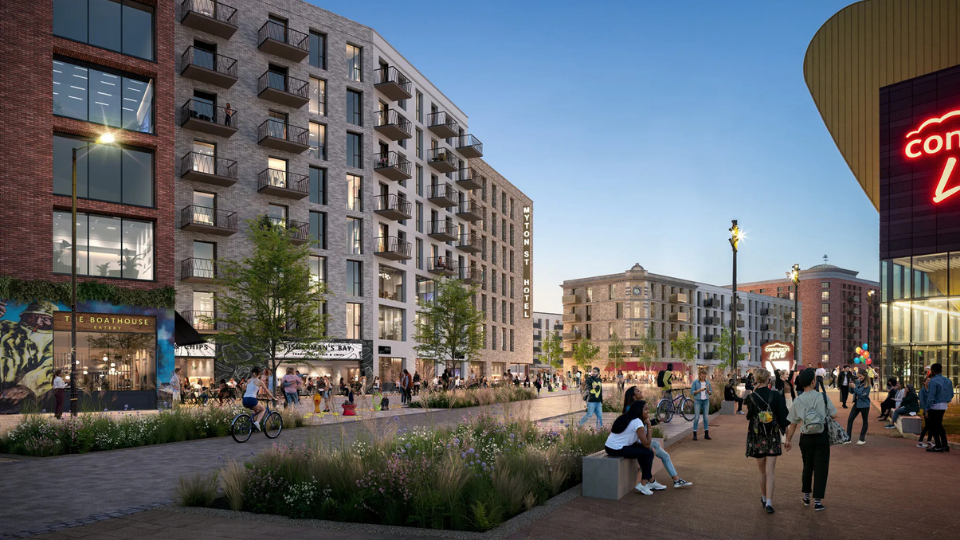
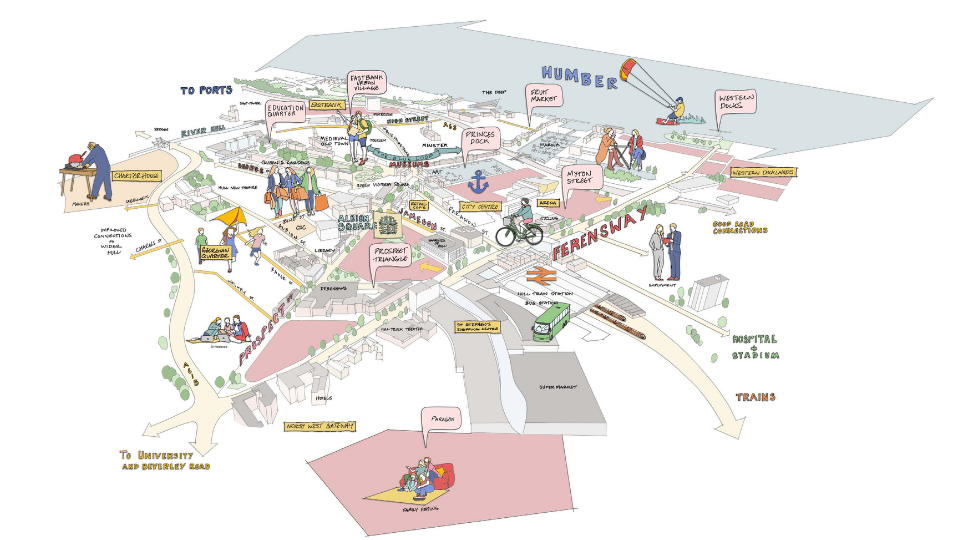
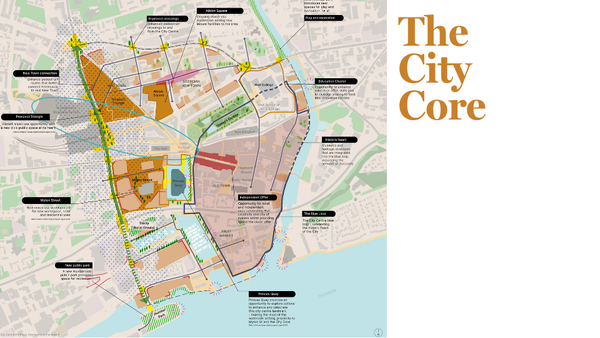
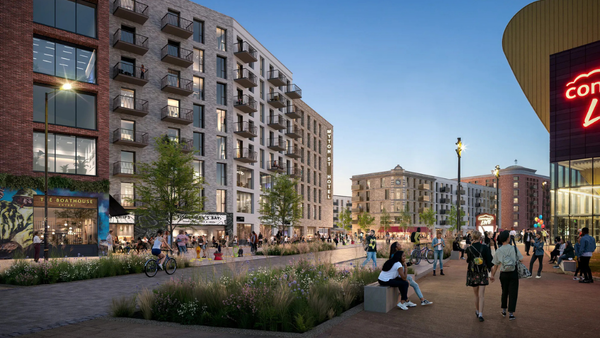
In 2024, Planit was commissioned by Hull City Council to lead a team who could develop a City Centre Vision (CCV) that reimagines it by 2045. One that builds a strong and inclusive City Centre that is liveable and active with vibrant neighbourhoods, with enhanced shopping, entertainment, quality housing, healthy and playful green spaces for all, and fosters culture and creativity. This distinctive hub for locals and visitors alike will celebrate Hull’s rich historic maritime cultural and visitor heritage.
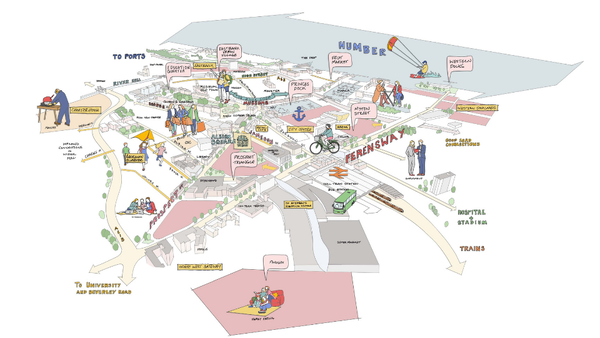
The wide-reaching spatial plan provides a 20-year roadmap for investment and prioritisation underpinned by a handful of key strategic drivers - innovation, resilience to climate change, health, productivity and re-establishing a residential population and strong workforce within the city centre. The CCV will support economic growth, innovation and business growth, visitor numbers and talent retention, as well as sustainable development though targeted investment in: placemaking, brownfield housing delivery, development of new high-quality neighbourhoods and creation of new employment opportunities.
It will benefit both the city and wider region - particularly within the context of the newly established Hull and East Yorkshire Combined Authority (HEYCA). Areas beyond the city hold huge potential for promoting key growth sectors and creating high quality jobs. They provide important strategic connections to surrounding communities, key destinations, and employers, and include major green and blue infrastructure corridors – vital ingredients in the long-term sustainability and liveability of the city centre.
What is the social and environmental impact of the project? For example, how will the carbon use and material impact of the development be mitigated? What is the sustainability strategy?
Sustainability is embedded throughout the vision. From climate resilience and carbon reduction to green infrastructure and active travel, it forms a unifying thread that supports thriving communities and nature. Using Planit’s Regenerative Design tool, we identified the most impactful interventions to shape the vision’s key drivers.
The vision promotes environmentally sustainable development aligned with its net zero carbon strategy, addressing climate and biodiversity emergencies through targeted, positive interventions. It proposes new neighbourhoods that bring people back into the city, creating connected, cohesive communities with diverse facilities.
A thorough socio-economic and environmental baselining exercise informed wider community engagement. A Social Value Framework enables Hull City Council to set clear expectations, measure project impacts, and empower stakeholders in shaping the city’s regeneration.
Key interventions include enhanced streetscapes, a sustainable transport hierarchy, mobility hubs linking places with active-travel routes, and improved public transport. These measures help reduce transport emissions, increase climate resilience, improve air quality, and make the city centre more inclusive and accessible, supporting Hull’s Child Friendly City ambition.
Significant new public green space is planned, with waterside parks and play areas vital for wellbeing, activity, and cohesion. A nature-rich, accessible public realm will connect these spaces and strengthen biodiversity along active-travel routes.
The vision supports Hull’s net zero carbon strategy through reduced vehicle use, EV public transport and mobility hubs, retrofitting buildings to retain character and reduce carbon, applying new-build carbon standards (UKNZCBS), increased planting for carbon sequestration, and neighbourhood densities that enable district heating expansion and renewable energy use.
Gallery

Sign up to our newsletter
Get updates from The Developer straight to your inbox
Thanks to our organisation members
© Festival of Place - Tweak Ltd., 124 City Road, London, EC1V 2NX. Tel: 020 3326 7238