Get updates from The Developer straight to your inbox Yes, please!




Design Principles for Socially Adaptable Housing & Built case-study START-Ivry, Greater Paris, for SOGEPROM Realisations with STAR strategies + architecture
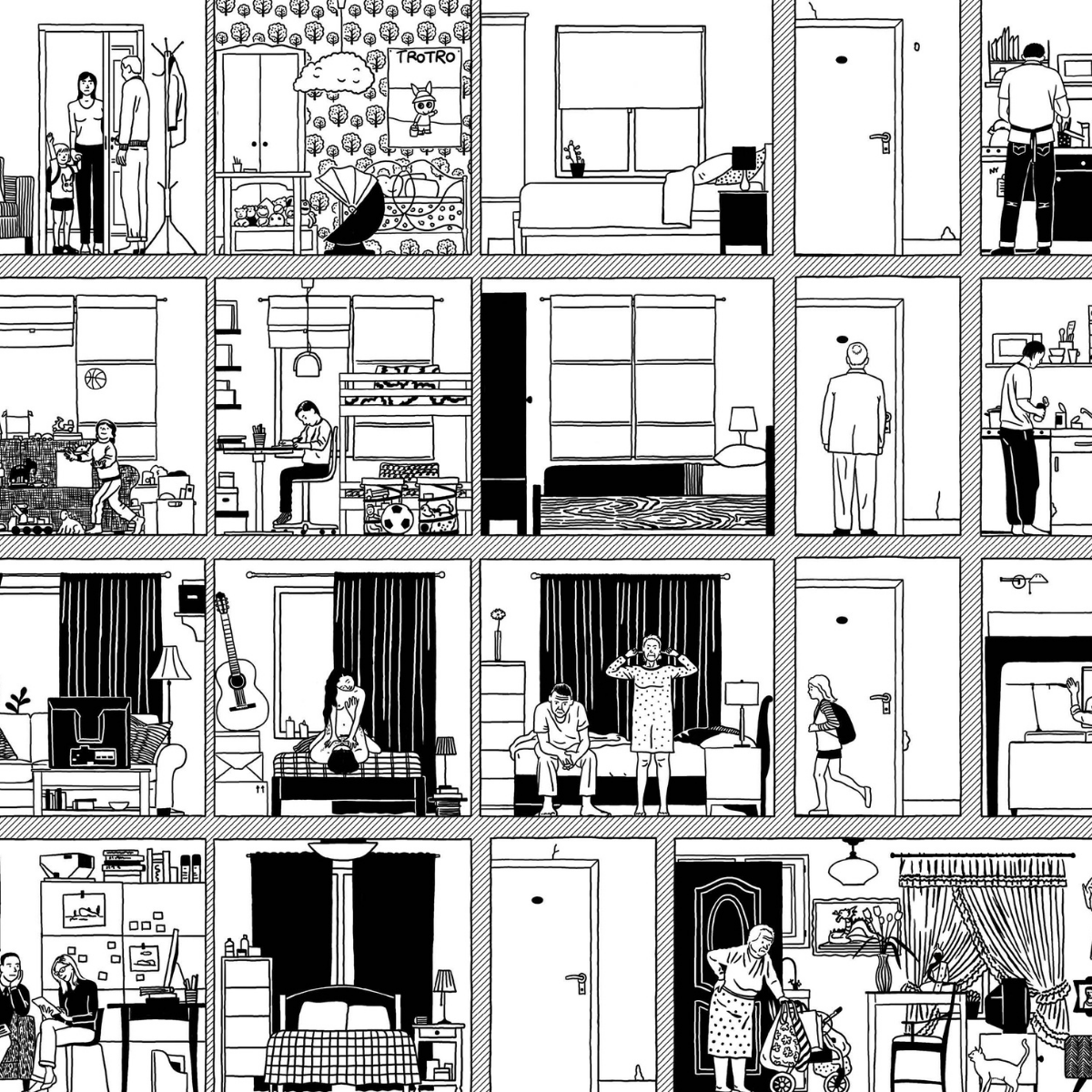
Design Principles for Socially Adaptable Housing & Built case-study START-Ivry, Greater Paris, for SOGEPROM Realisations with STAR strategies + architecture
The project proposes a research-driven approach to housing that truly adapts to people’s lives. Based on STAR’s extensive study of contemporary households and their evolving needs, it challenges standardised housing that often fails to fit diverse realities. The Design Principles are materialised in START-Ivry, an avant-garde collective housing pilot project demonstrating flexible dwellings that respond to evolving household needs while remaining economically and technically feasible. The forthcoming Guide to Adaptability will translate these principles into a practical tool for municipalities, developers, and housing corporations.
Describe the context of the strategy, research or policy. What need does it serve? What questions does it answer? What is its social and environmental impact?
The housing crisis today is not only quantitative but qualitative. Households have become increasingly diverse—single-parent families, blended families, “boomerang” children, homeworking, remote workers, elderly requiring support, and non-family cohabitations—yet housing production remains standardized, driven mainly by regulations and developers’ financial logic. STAR strategies + architecture developed the Design Principles to address this paradox, placing inhabitants at the centre of design and developing design principles to build adaptable, resilient, and socially inclusive housing that adapts to their current situations and their evolving needs.
Drawing on over thirteen years of research into household diversity, spatial needs over time, and life transitions, STAR analysed contemporary households, conducted interviews, and developed spatial solutions to meet their changing requirements. These were synthesised into a policy framework: 10 Adaptability Principles and 8 Quality Principles.
The START-Ivry pilot project in Ivry-sur-Seine translates these principles into practice. START’s 288 dwellings demonstrate that much better housing can be achieved without increasing surface areas and within constrained budgets. Solutions such as divisible units, modular living rooms, and super-adaptable apartments allow spaces to evolve with residents’ lives, supporting the most vulnerable and enabling households to remain in place as needs change.
Adaptable layouts also reduce resource use and create circularity at the scale of the apartment: the most sustainable square metre is one that does not need to be rebuilt. By integrating social and environmental considerations, START proves that socially inclusive, environmentally responsible, and economically viable housing is achievable today, even within existing regulatory and budgetary constraints.
Did you consult key stakeholders or the community in the creation of this document or policy? How did you select participants? Was the final strategy shared with the community? Is this engagement ongoing?
From the outset, the research underpinning the Design Principles was rooted in continuous collaboration. STAR carried out extensive interviews with inhabitants from a broad household spectrum, and organised workshops/ateliers with residents of Ivry-sur-Seine to test hypotheses, confront critical situations, and refine spatial solutions. Participants were selected to reflect contemporary household diversity and to ensure the relevance of the principles to real lived experience.
The research was deepened through STAR’s role on the scientific committee of the Atelier International du Grand Paris (AIGP, 2012–2016), through analysis of statistical data from Apur (Paris Urban Planning Department), and through ongoing dialogue with key institutional actors—including municipalities, social housing corporations, developers, the Ministry of Housing, and PUCA (Plan-Urbanisme-Construction-Architecture). These stakeholders represented the full spectrum of housing production—design, construction, management and long-term operation—ensuring technical viability, economic feasibility, and replicability. Since 2012, STAR has presented and debated this work widely across architecture schools, professional organisations, conferences, and working groups, sharing results across educational, professional, and institutional circles. Engagement remains continuous. STAR maintains regular contact with START-Ivry residents and its property manager (FONCIA) allowing ongoing feedback on the activation of the design principles. Forthcoming outputs—an in-depth book (research case study), the ‘Guide to Adaptability’, and further critical articles— will extend dissemination to municipalities, housing corporations, and professionals.
Through this collaborative, iterative engagement, STAR ensures the Principles remain inclusive, evidence-based, and grounded in real urban contexts, offering a robust framework for adaptable, socially inclusive, and sustainable housing.
How will the research or strategy be taken forward or implemented? Please describe any accountability, metrics or enforcement built into the process to encourage meaningful change.
The Design Principles move into implementation through a gradual and continuous process grounded in research, built evidence and long-term observation. Early on, our research has been shared publicly through lectures and debates, while START-Ivry, as the materialisation of our theories and Housing Principles, demonstrates that adaptable housing is both technically feasible and socially meaningful within standard surfaces, budgets and regulations.
Today, the strategy is reinforced through non-stop lecturing, interviews, and the writing of critical and pedagogical articles, which ensure that the Principles circulate among academic, professional and institutional actors. Regular contact with the inhabitants of START-Ivry and its property manager—via emails, WhatsApp groups, interviews, questionnaires, meetings, and annual updates—provides continuous feedback on the activation and implementation of the adaptable layouts and principles: divisible and groupable dwellings, movable kitchens, closable balconies, etc. These observations form a concrete metric that keeps the Principles dynamic, relevant and grounded in real-life conditions. This long-term monitoring creates enforcement built into the process to encourage meaningful change, ensuring that lived experience continually feeds back into the strategy. Looking ahead, implementation will expand significantly. An in-depth book will present both the research and the built case-study START-Ivry, providing a complete reference for professionals. The forthcoming Guide to Adaptability will transform the Principles into an operational, easy tool for municipalities, housing corporations, developers, designed to be annexed to competition briefs and planning instruments.
Together, these actions ensure that the strategy becomes practical, scalable, and capable of guiding future housing towards socially adaptable, resilient and truly sustainable models.
Sign up to our newsletter
Get updates from The Developer straight to your inbox
Thanks to our organisation members
© Festival of Place - Tweak Ltd., 124 City Road, London, EC1V 2NX. Tel: 020 3326 7238