Get updates from The Developer straight to your inbox Yes, please!




Coney Street Riverside, York for Helmsley Group with brown & company, O'Neill Planning Associates, Gillespies and Montagu Evans
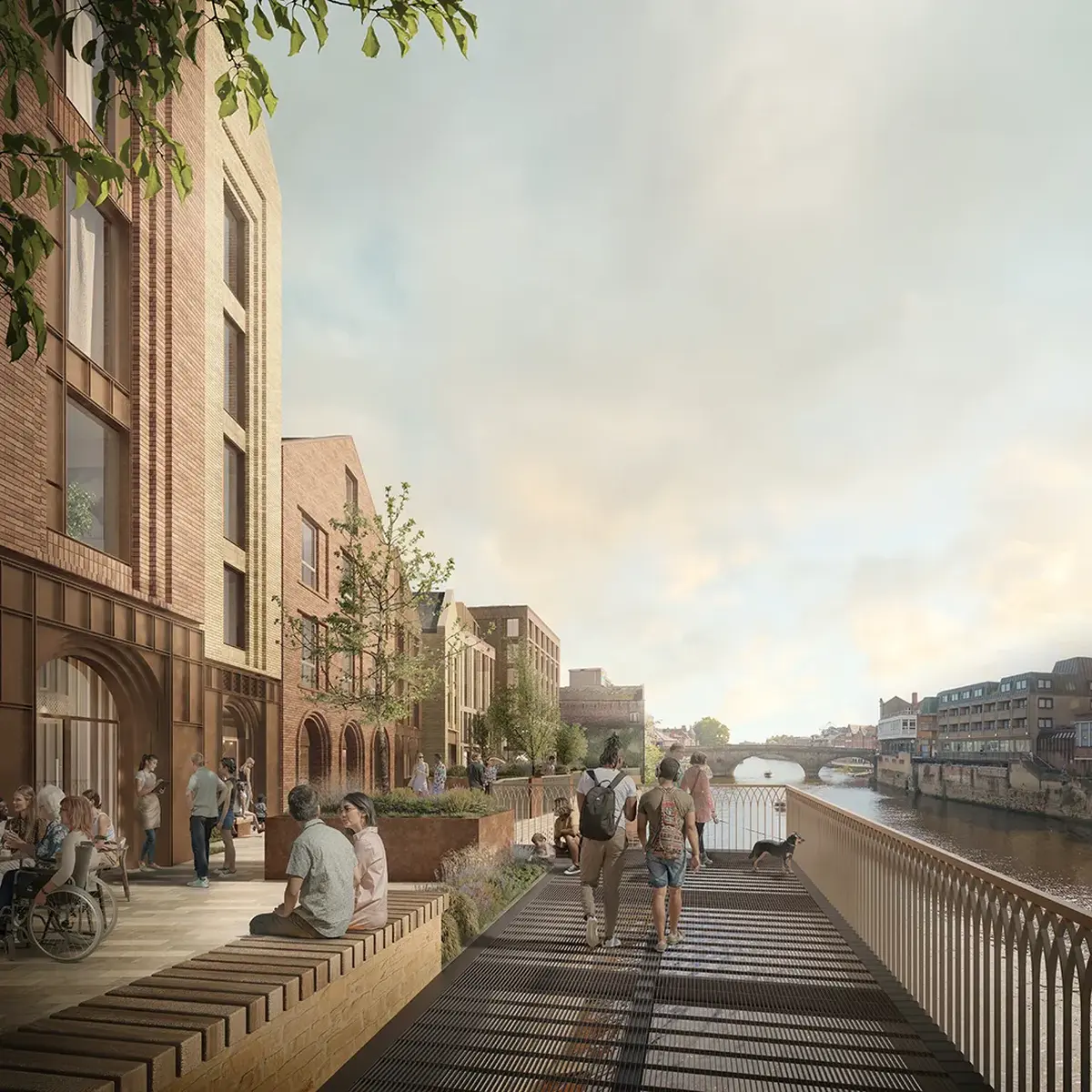
Coney Street Riverside, York for Helmsley Group with brown & company, O’Neill Planning Associates, Gillespies and Montagu Evans
Coney Street Riverside creates a welcoming and vibrant city centre destination through the regeneration of one of the most important historic streets in York, Enhancing York’s unique character by creatively linking the riverside to Coney Street and opening up access for public use. This is an ambitious comprehensive mixed use masterplan incorporating extensive public realm, retail, leisure and student accommodation.
Describe the context of this project, its neighbourhood and people.
The scheme lies within York’s Central Historic Core Conservation Area. Over several years, local developer Helmsley Group acquired nine adjoining properties on Coney Street, York’s main shopping street. Like many high streets across the UK, Coney Street is undergoing a transition. The rise of online retail has led national brands to depart, leaving behind neglected shopfronts and vacant upper floors.
Seven of the nine buildings within the site boundary hold historic significance—either listed or locally listed—but extensive alterations made to suit former retail tenants have compromised their character. Large, open-plan ground floors were prioritised, while upper floors were left unused. As a result, many spaces now stand empty and in poor condition. Behind these properties runs the eastern bank of the River Ouse, once a vibrant centre of trade and leisure but now inaccessible to the public.
In 1968, Lord Viscount Esher’s York: A Study in Conservation set out influential recommendations for the city’s future, including the creation of a public riverside walkway along the Ouse’s eastern edge. Piecemeal private ownership, however, prevented this ambition from being realised.
This proposal finally enables that vision. It removes years of unsympathetic additions and brings the historic buildings back into use, creating flexible, attractive retail spaces and high quality student accommodation on the upper floors. The scheme introduces new pedestrian routes leading to a generous riverside public realm and walkway. Carefully designed new buildings complete the riverfront, providing leisure units and further student accommodation while respecting the site’s historic context.
Please describe your approach to this future place and its mix of uses. How will it function as a vibrant place? How does it knit into, and serve the needs of, the wider area?
The proposal enhances access to the riverside by introducing two new pedestrian links that connect Coney Street with the Riverside, each designed to respect the conservation area’s hierarchy. Outdated riverside structures are replaced with high-quality buildings that follow historic plot patterns and draw on the area’s industrial past.
The proposals delivers an inclusive and vibrant riverside with active cafés and restaurants, flexible outdoor spaces for events and exhibitions, and landscaped gardens designed for play and relaxation. Together, these features create a dynamic, accessible public realm for a wide range of users and establish Coney Street Riverside as a distinctive new destination.
The project will re-establish Coney Street as York’s leading retail destination. Large retail units are reconfigured to support independent businesses, while worn façades and outdated shopfronts are restored or replaced to better reflect the street’s historic character.
The first route to the river reinstates a historic waterlane (Waterloo Place) once used to bring goods into the city. The route will become a destination in its own right with new shop frontages, generous planting, and ample seating, creating a lively, welcoming passage for all.
The second route takes inspiration from York’s traditional snickleways. Removal of intrusive modern extensions allows the formation of the courtyard midway along the snickleway and reveals previously concealed historic structures. Animated by shops and cafés with outdoor seating, the courtyard reflects the area’s tight urban grain and deepens public appreciation of its heritage.
Please explain the governance of the project, such as its viability, purpose, motivation and any consultation and community engagement undertaken.
The project is being delivered by local developers Helmsley Group in partnership with City of York Council. Recognising that Helmsley’s vision would have a major impact on the city centre, meaningful community engagement was considered essential. This was achieved through several initiatives.
Working with the University of York and the Civic Trust, we supported Street Life, a pop-up exhibition held in one of the buildings within the development area. The exhibition invited residents to explore Coney Street’s history and share their ideas for its future. Group workshops, facilitated by the university and attended by the design team, provided an open platform for listening directly to the community. Key themes consistently emerged: Tthe need for better riverside access, a more inclusive public realm with seating and greenery, opportunities for local retailers, and the protection and celebration of the area’s heritage.
As part of a detailed consultation process, we also collaborated with access consultants Jane Simpson Access, Access Included and local disability groups. Through a series of workshops, we reviewed the public realm design in depth, aiming to exceed standard Building Regulations and ensure an environment that is genuinely inclusive and accessible.
In parallel, the architectural design underwent extensive consultation with the city’s design and heritage officers, Historic England, the Civic Trust, and the Conservation area advisory panel. Given the site’s prominence and complexity, careful coordination was required to develop proposals that respect and enhance both the conservation area and the historic buildings on site.
Sign up to our newsletter
Get updates from The Developer straight to your inbox
Thanks to our organisation members
© Festival of Place - Tweak Ltd., 124 City Road, London, EC1V 2NX. Tel: 020 3326 7238