Get updates from The Developer straight to your inbox Yes, please!


Common Walls International Mural Festival, Rochdale for Rochdale Development Agency and Rochdale Borough Council with Aylo and The Butterfly Effected
Common Walls International Mural Festival, Rochdale for Rochdale Development Agency and Rochdale Borough Council with Aylo and The Butterfly Effected
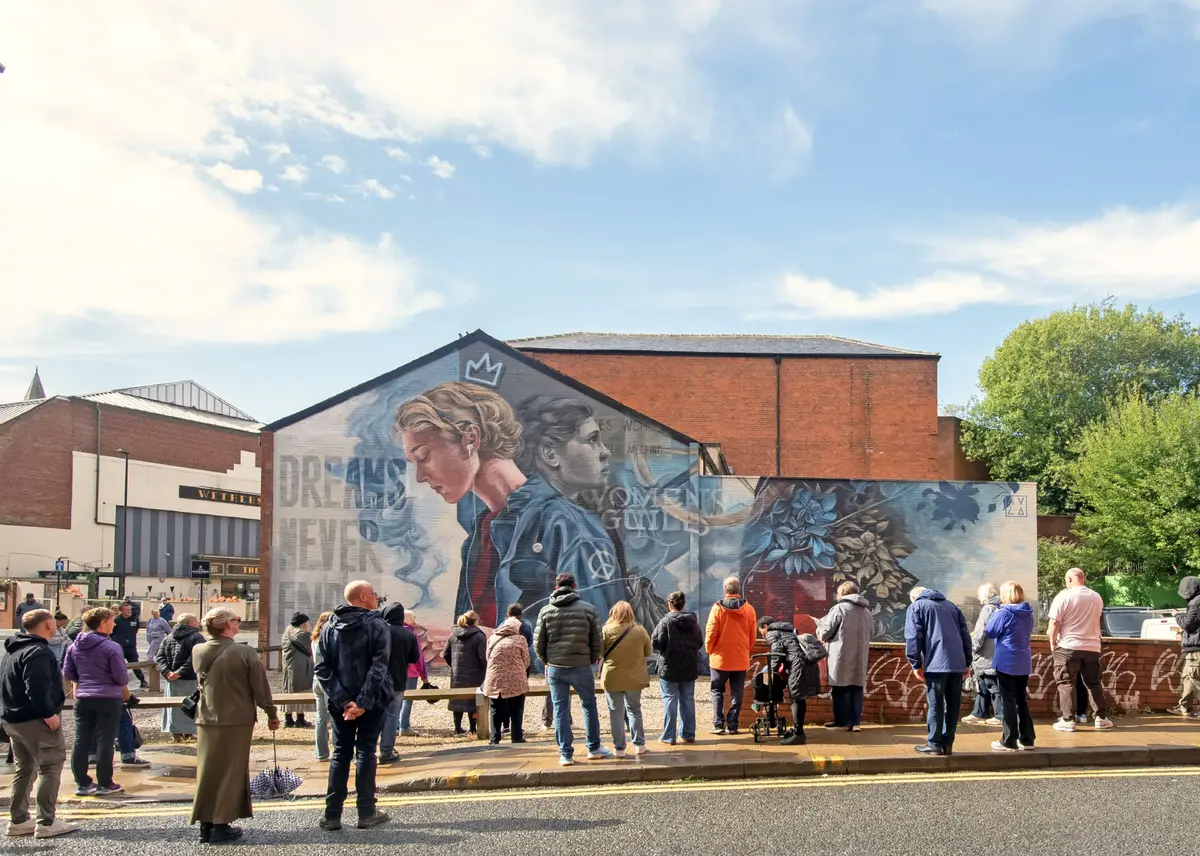
Common Walls International Mural Festival transformed Rochdale town centre through creative activation. As part of Rochdale’s year as Greater Manchester Town of Culture, the week-long festival (7–14 September 2025) celebrated local stories through twelve striking murals from local and international artists, complemented artist talks and tours. The festival showcased wider urban artforms including a hip-hop night, and displays featuring BMX, skateboarding, and parkour. Designed to surprise and engage communities and visitors, the festival boosted arts participation, strengthened Rochdale’s cultural identity, and delivered wider socio-economic benefits.
youtu.be/mT8JVe3HGNI?si=wtFUhzV92aC9D9m2&t=4444
Describe the context of this project, its neighbourhood and people.
Rochdale is the birthplace of the global Co‑operative Movement, with a proud tradition of radical collaboration for collective benefit. This spirit underpinned our successful bid to become Greater Manchester Town of Culture (ToC) 2025–26, shaping a year-long programme that builds on our heritage to support a positive, shared narrative.
Rochdale has a long history of welcoming diverse communities, and its strength lies in this diversity. Rochdale town, the largest and most diverse conurbation, is home to 111,261 residents: 57.2% White, 34.3% South Asian, 3.4% Black.
However, challenges persist. Rochdale ranks as the 15th most deprived borough in England, with high levels of economic inactivity, and many from low significant socio-economic backgrounds. Negative national headlines have damaged Rochdale’s reputation, overshadowing Rochdale’s many positive stories.
Historically, cultural engagement and investment were low, limiting opportunities for audiences and artists. Since 2019, when an initial mural festival was tested through the Heritage Action Zone, local authority and cultural partners have worked to reverse this through research-led strategies, and bold partnership approaches to attract investment and deliver programmes, culminating in ToC – an exciting, inclusive and accessible programme placing creativity at the heart of regeneration. Common Walls took place in Rochdale town centre, a mix of heritage assets and newer developments. Like many high streets, it faces high vacancy rates, poor building conditions, and viability gaps caused by economic pressures. Against this backdrop, the festival activated public space and reimagined the town centre as a vibrant canvas that celebrates local identity.
Tell us what you did and how the project, event or installation enlivened the place in a creative way?
Common Walls transformed Rochdale town centre into a vibrant canvas, celebrating local identity and creating a positive narrative that drew audiences into the town. At its core was a striking mural programme: 12 large-scale artworks curated by internationally renowned Rochdale artist Hayley Garner. Installed progressively during the festival week, the murals generated anticipation and publicity, including a BBC News feature – attracting 18,000 visitors.
Each site was carefully chosen, with RDA collaborating with planners, Rochdale BID, building owners, and Hayley. Hayley curated a mix of local and international artists from varied styles, pairing them with themes informed by community engagement to ensure murals reflected Rochdale’s diverse population and stories. Two were co-created with communities, facilitated by Culture Coop and Cabasa – organisations specialising in creating meaningful art with under-engaged groups.
To amplify the experience, the final four days featured urban arts activations appealing to different demographics: artist talk, hip hop night, tote-bag workshops, guided mural tours, paint jam featuring nine additional artists, and extreme sports displays including BMX, parkour and skateboarding. These dynamic experiences animated streets, increased dwell time, and invited audiences to explore every corner of the town centre.
The festival guide - distributed by volunteers and QR panels - encouraged movement across sites, while partnerships with Rochdale BID ensured local hospitality venues thrived instead of relying on external vendors. Common Walls didn’t just decorate walls; it enlivened public space, forged partnerships, sparked pride and conversations, and delivered cultural and economic benefits through a creative celebration of local identity.
We have also provided a new route between Suffield Road and Seven Sisters Road improving access to the the Tube station.
Did the project make a positive social and environmental contribution? If it was a temporary intervention, is there a legacy plan? What happened to its tenants, users, materials and programming?
The festival created a striking open-air gallery that celebrates Rochdale’s people, history, and culture, leaving a lasting visual impact on the town centre. Surveys show 96.2% of attendees agreed it improved Rochdale’s image, and 89.8% felt it enhanced community cohesion.
To encourage continued engagement and promote sustainable mobility, a mural map has been launched, with further planned guided walking tours - supporting active travel and local exploration. The project also shifted perceptions of unloved buildings, demonstrating how existing assets can contribute to placemaking - reducing reliance on new development and its associated embodied carbon.
Environmental responsibility was embedded: temporary boards from the paint jam were repurposed to activate site hoardings, and waste materials recycled in partnership with council services.
Social impact extends into education and skills. Local schools, and arts clubs have integrated the murals into arts teaching, and a legacy programme with the lead artist is training young muralists to create new works for March’s youth arts festival.
Demand for future activity is clear: 98% of attendees want more murals. In response, a ‘Mural Support Programme’ bringing together artist and local planning department advice is being developed, and the team has already supported 2 further murals. Partners are already scoping funding opportunities to recreate the festival elsewhere in the borough. The festival was temporary in delivery but permanent in effect – 7 murals were nominated for ‘global mural of the month’ and continue to attract visitors, inspire talent, change perceptions, raise Rochdale’s profile, and embed creativity across the town.
Gallery

Sign up to our newsletter
Get updates from The Developer straight to your inbox
Thanks to our organisation members
© Festival of Place - Tweak Ltd., 124 City Road, London, EC1V 2NX. Tel: 020 3326 7238