Get updates from The Developer straight to your inbox Yes, please!




Chrisp Street Market, London Borough of Tower Hamlets for Telford Living and Poplar HARCA with JTP, AND London and Intrepid
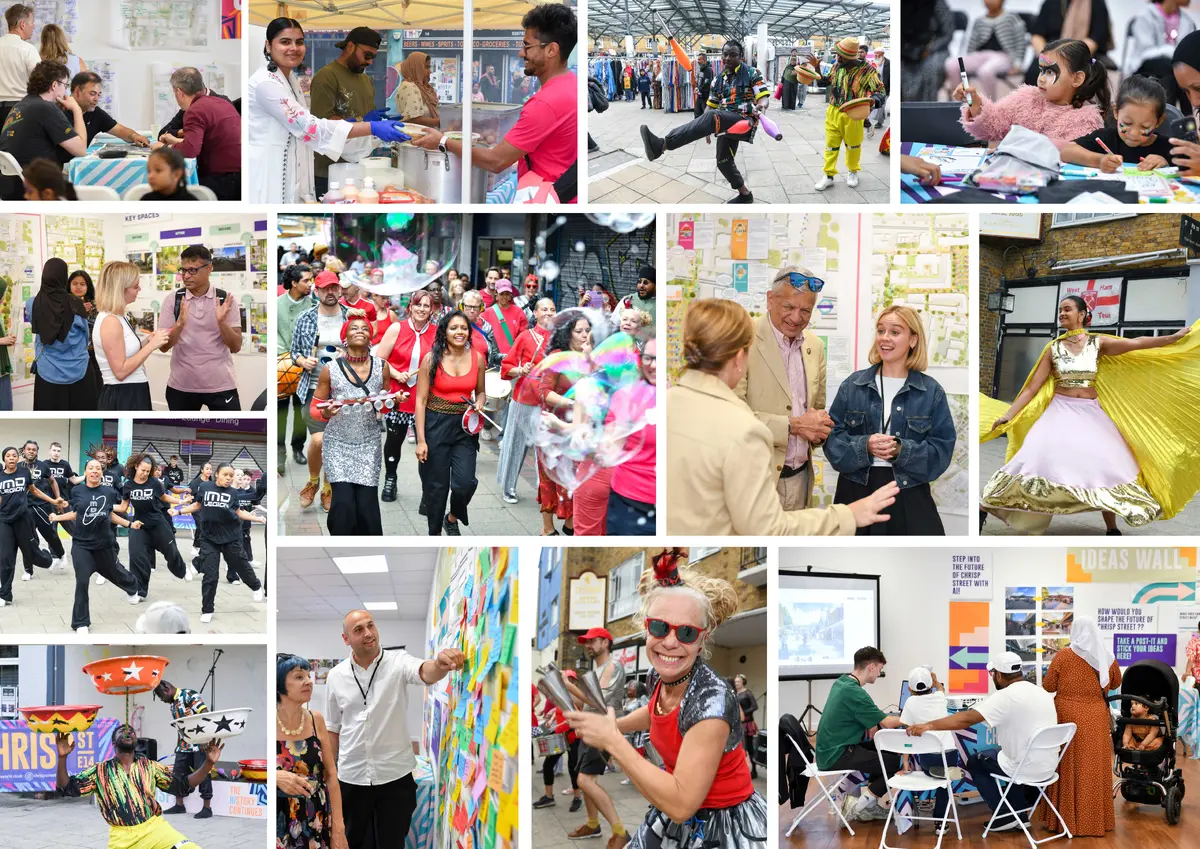
Chrisp Street Market, London Borough of Tower Hamlets for Telford Living and Poplar HARCA with JTP, AND London and Intrepid
With momentum to take a fresh look at the site after previous stalled development plans, Telford Living and Poplar HARCA appointed JTP and place consultants AND London to engage with the community to co-create a new vision for the comprehensive, mixed-use redevelopment of Chrisp Street. A layered process, moving from early conversations and site walkabouts to intensive co-design days, youth workshops, digital engagement and structured report-back events has allowed both breadth and depth with thousands of people sharing views through exciting, accessible and inclusive ways.
Describe the context of the community engagement. Why did the engagement take place?
Chrisp Street sits at the heart of Poplar, serving one of the youngest and most diverse boroughs in the country. As the only designated District Centre across four wards of Tower Hamlets, serving a population of over 100,000, it’s critical to daily life but the area continues to change with thousands of new homes planned along the River Lea meaning the centre’s importance is magnified. Yet, like many long-standing town centres, it has felt the strain of wider pressures: declining footfall, a poor pedestrian environment and the outcomes of a stalled redevelopment that have left derelict and vacant sites and worn away hope. For many, Chrisp Street isn’t just a market, it is the focus of their community and for some their livelihood. The fear of losing that identity was real, and rebuilding trust became the foundation of our approach. With a direction to take a fresh look at the site to respond to today’s issues and a deliver a sustainable future for the town centre, Telford Living appointed JTP and AND London to work with the community to co-create a new vision for the mixed-use redevelopment of Chrisp Street. We thought it was important for the engagement to be fun, inclusive and be designed to respond to the diverse local community but we were also conscious that local people were industrious and had limited time to get involved, so that we should go to them. We therefore designed a bespoke process to build confidence and increase involvement.
Who did you engage with and how?
JTP implemented a multi-platform engagement campaign, to ensure broad community involvement and target the inclusion of underrepresented voices. Data was used to understand who was ‘local’ and the attributes of the community, for example, there’s a higher-than-average number of entrepreneurs and sole-owner businesses in the area. A comprehensive outreach campaign launched the process, targeting civic groups, younger audiences, businesses and local decision-makers. Co-design events were promoted through Instagram, generating 17,500 views, over 3,400 flyers were distributed door-to-door and digital updates were sent to 70 key stakeholders. A dedicated project website and a bespoke interactive map all created by JTP, provided ongoing opportunities to contribute. Central to the engagement were guided walks, opening up the site and people were amazed to experience the lake, mature trees and empty office buildings, increasing interest, understanding and prompting conversation. Over two co-design days on site, more than 500 people took part in hands-on workshops, design activities, a giant ideas wall, children’s table and AI image generation with free coffee and snacks to create a welcoming environment. In partnership with youth social enterprise 2-3 Degrees, JTP attended a six-week youth-focussed, paid engagement programme designed to ensure young people living or studying near the site had a meaningful voice in shaping its future. Through weekly workshops, seven participants (aged 17-21) contributed directly to the co-design process by sharing their perspectives and ideas and in return, learnt important presentation and career skills. 992 comments across all formats provided ideas and insights to inform Pentland Group’s evolving thinking.
Have you continued the conversation? Will the community stay involved?
Our commitment is long-term. One of the strongest messages from early engagement was the need for visible progress, clear communication and ongoing accountability, after years of stalled redevelopment. In response, the refurbished shop unit now acts as an ongoing community space and information point, remaining a place where residents can meet, challenge and influence the project. Displays in the windows change regularly, and a weekly craft group enjoy the new facility. We also continue to meet the local resident group keeping them informed of the progress and challenges related to the emerging design. Communication channels stay active: regular on-site drop-ins, a refreshed project website, dual-language materials including flyers, an active Instagram account, a freephone line and an interactive map allow for continuous comment. People know where to find us, and when. At our first report-back, 88% supported the plans for regeneration. Several people said they felt genuinely included for the first time. One person told us, “I gave you a hard time last time, but what you’ve shown us today is really great.”
Sign up to our newsletter
Get updates from The Developer straight to your inbox
Thanks to our organisation members
© Festival of Place - Tweak Ltd., 124 City Road, London, EC1V 2NX. Tel: 020 3326 7238