Get updates from The Developer straight to your inbox Yes, please!




Chillizens Play Pocket, Newcastle upon Tyne for Newcastle City Council with Layer.Studio, Harper Perry, Chillingham Road Primary School and Molly Bland Art
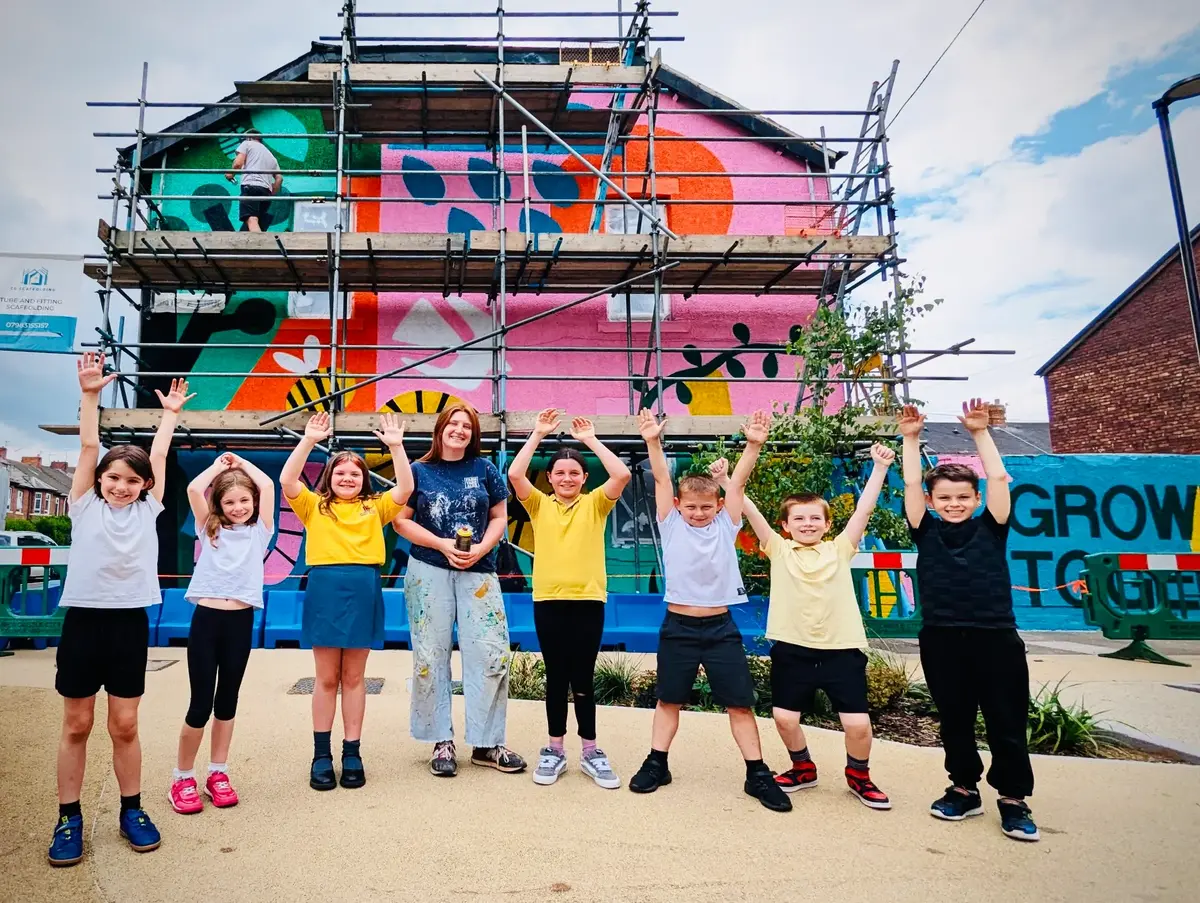
Chillizens Play Pocket, Newcastle upon Tyne for Newcastle City Council with Layer.Studio, Harper Perry, Chillingham Road Primary School and Molly Bland Art
Chillizens Play Pocket transforms an overlooked corner beside Chillingham Road Primary School into a safe, green and joyful space for children and families. Co-designed with pupils, it introduces rain gardens, playful routes, sociable seating and a vibrant mural created with the school’s Chillizens. The space encourages walking and cycling, improves air quality, supports wildlife and creates a calmer, healthier school arrival experience. As a permanent pilot, it will shape four further play pockets planned across Newcastle East, strengthening children’s wellbeing across the neighbourhood.
Describe the context of this project and its neighbourhood and people.
Chillingham Road sits at the centre of Heaton in East End of Newcastle. It is a friendly and diverse neighbourhood shaped by its local shops, strong community networks and the daily life of Chillingham Road Primary School. The project site is a small street end at Ninth Avenue that was once a paved dead end used each day by pupils, parents, carers and residents moving through the area.
Although it was close to the school and the high street, the space offered very little for people passing through. It often flooded, had little greenery and felt separate from the life of the neighbourhood. It lacked ownership and felt like an empty gap rather than a welcoming school entrance. There was nowhere to sit, rest or play, so children and families had no reason to stay. Children crossed it on the way to school, waited to be collected or met friends, but the space supported none of these activities.
Heaton is a young and walkable neighbourhood where the school plays a major role in local life. Children shape the area through their daily movement and presence.
Newcastle East High Streets Project aims to create healthier and more inclusive places. As the first in a planned series of play pockets, this pilot responds to the needs of the people who use the space most. It provides a safe and green place for daily activity, builds neighbourhood pride and creates a space where children feel seen and valued in their surroundings.
Tell us what you did and how it created a child-friendly place. For example, how does it support the rights of the child to rest, relax, play and to take part in cultural and creative activities in a safe and clean environment?
The space offers small prompts that encourage playful exploration: talk tubes for shared whispers and laughter, weaving routes between planting, low-level habitat features to discover, and places to perch with friends before and after school. These elements allow children to pause, move and imagine in their own way, creating a calming micro-landscape at the edge of a busy high street. A key part of the project’s identity is the mural created with the school’s “Chillizens”, celebrating the children who bring life to the neighbourhood each day. Their ideas, drawings and character suggestions helped shape a colourful, friendly artwork that signals the space as theirs whilst addressing the issues of a previously graffiti burdened unloved and unclean environment. The distinctive mural makes the play pocket feel joyful rather than forgotten. The design supports children’s rights to rest, relax and play by offering a safe, clean and sociable environment that balances independence with comfort. It provides moments of delight on the walk to school, places to wait with friends or carers, and small opportunities for creative expression woven into the everyday landscape. Together, these features create a child-friendly space that fosters confidence, growth and a sense of shared neighbourhood pride.
How did the project make a positive social and environmental contribution in the context of child health childhood and wellbeing? If this was a temporary intervention, is there a legacy plan?
The play pocket brings clear social and environmental benefits to children by transforming the gateway to Chillingham Road Primary School into a safe, green and playful space. It creates a pedestrian priority area at a busy school entrance giving children a healthier and calmer environment to arrive, wait and meet friends. By improving the walking and cycling experience around the school, the project encourages more active travel and helps children feel confident and independent as they move through their neighbourhood. Trees and shrubs help filter the air, creating cleaner breathing conditions at peak times. Planting softens noise and makes the approach to school more welcoming. Children and families now spend more time outdoors in this space, supporting physical activity and strengthening social interaction. Nature has a proven effect on mood, and teachers note that the gateway feels calmer, happier and more positive than before. Biodiversity is another important outcome. Rain gardens, habitat features and seasonal planting attract birds, bees and butterflies, giving children daily opportunities to spot wildlife and learn about nature through observation. These environmental improvements also build resilience, reducing standing water, soaking up rainfall and helping to cool the area during warmer months. This project is a permanent pilot designed to test ideas on neighbourhood high streets, learn directly from children and families and support an ongoing conversation about creating healthier school streets. Insights gained here will shape four more play pockets for another high street in Newcastle., extending these wellbeing benefits to many more children and families.
Gallery

Sign up to our newsletter
Get updates from The Developer straight to your inbox
Thanks to our organisation members
© Festival of Place - Tweak Ltd., 124 City Road, London, EC1V 2NX. Tel: 020 3326 7238