Get updates from The Developer straight to your inbox Yes, please!




Canning Town and Cody Road Strategic Regeneration Framework, London Borough of Newham for London Borough of Newham with We Made That, Useful Projects, Steer and Cushman and Wakefield
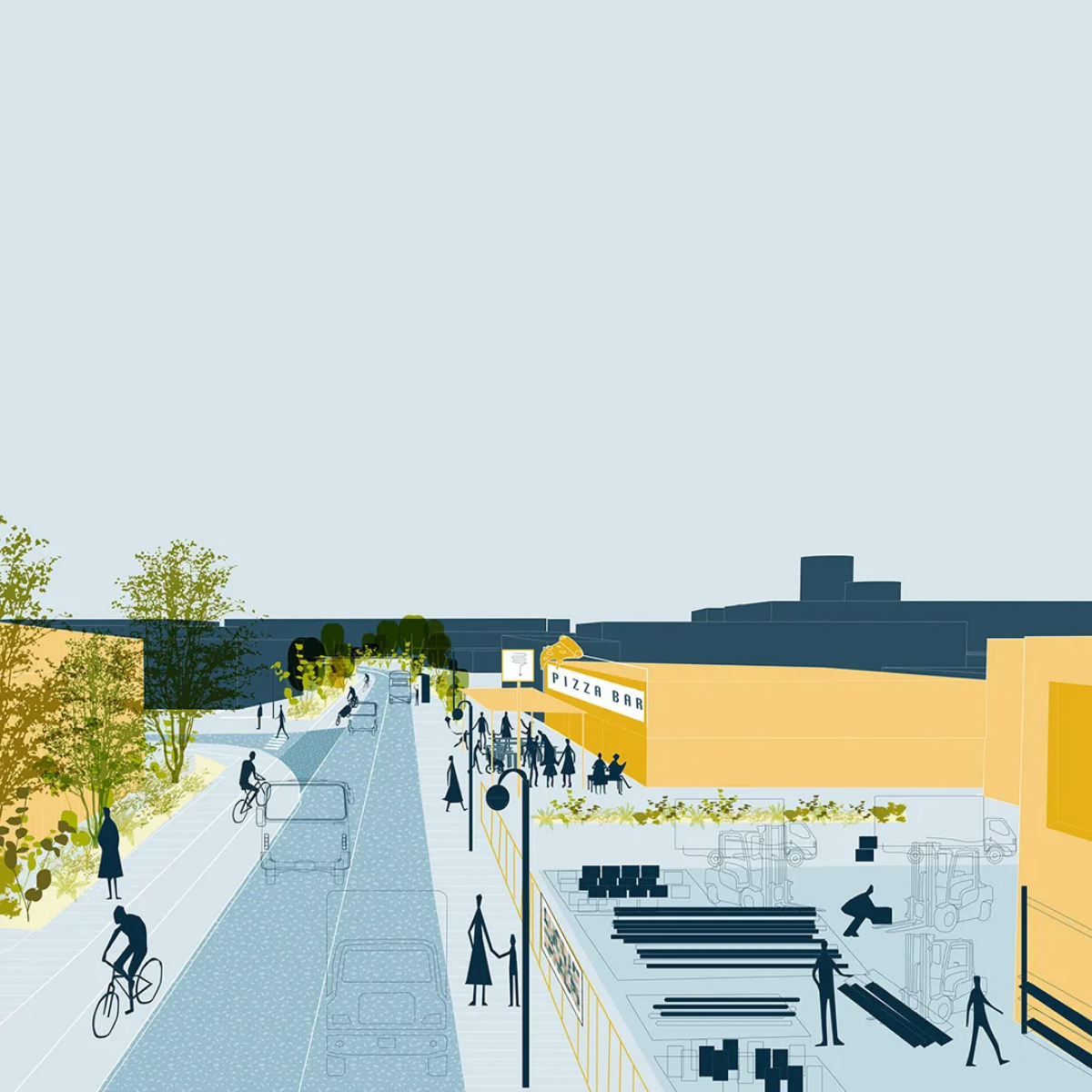
Canning Town and Cody Road Strategic Regeneration Framework, London Borough of Newham for London Borough of Newham with We Made That, Useful Projects, Steer and Cushman and Wakefield
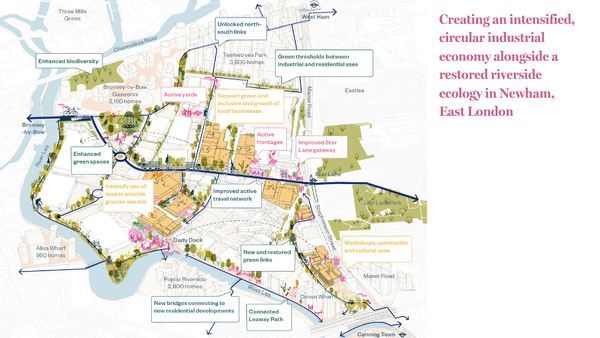
This strategy provides Newham Council with a long term delivery plan that can enable a wider variety of public realm, intensification and business engagement to increase inclusive employment and catalyse a green economy. Focusing on partnerships and health outcomes to guide change in this future place is much needed. Over 11,000 homes are coming forward in the immediate surroundings, so the riverside industrial area must work harder in the coming years to become an integrated piece of the city.
Who is on the project?
Team - We Made That, Useful Projects, Steer, Cushman and Wakefield.
Client - London Borough of Newham
Describe the context of this project, its neighbourhood and people.
The Canning Town and Cody Road industrial area sits at the confluence of the River Lea and Thames, forming part of the wider Lower Lea Valley and Thames Estuary industrial innovation corridor. This riverside location houses diverse businesses from construction and manufacturing to waste management, creating a complex industrial ecosystem that has evolved alongside the river valley’s natural heritage.
The area faces future change with over 11,000 new homes planned in the immediate surroundings.
Within the neighbourhood, local businesses range from established family-run enterprises to large scale logistics companies and emerging green technology companies, many already engaged in resource sharing and collaborative practices that form the foundation of circular economy potential. Cultural uses that are vital to Newham’s and London’s night life and community uses, clustered around Cody Dock, also benefit from the area’s special riverside location.
These new residential neighbourhoods are highly constrained due to the industrial legacy and environmental challenges from major transport infrastructure, despite the unique ecological backdrop of the Lower Lea Valley. Poor connectivity between new residential areas and existing employment creates barriers to accessing both jobs and green space.
The future of Canning Town and Cody Road needs to restore natural habitats at scale while supporting industrial activities through a just transition. This context presents both challenge and opportunity: how to intensify employment uses to serve growing residential populations while protecting industrial functionality, restore a flourishing riverside ecology, and ensuring local communities benefit from economic growth.
Please describe your approach to this future place and its mix of uses. How will it function as a vibrant place? How does it knit into, and serve the needs of, the wider area?
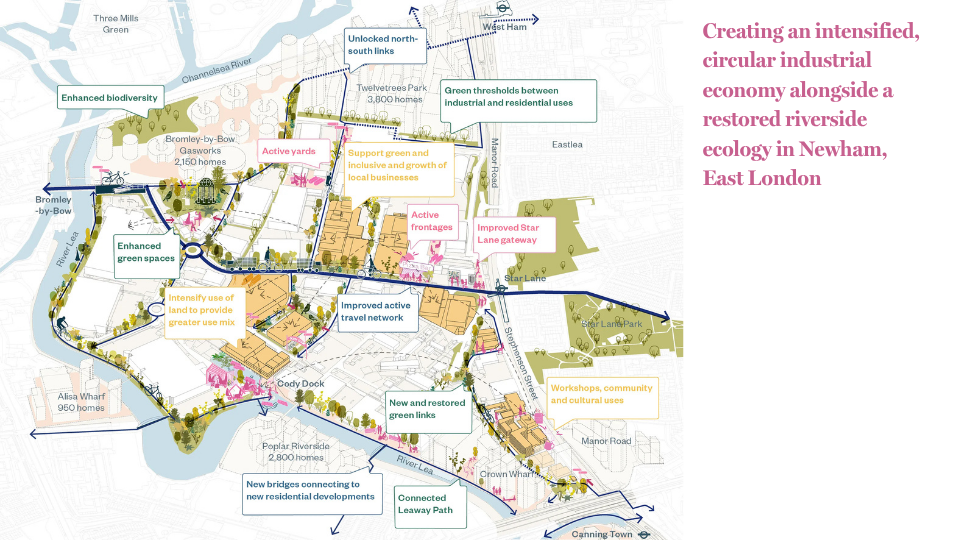
Our approach to this future neighbourhood centres on industrial intensification that co-evolves with ecological restoration, creating an enterprise hub where businesses, communities, and nature thrive together. The area’s position within Newham reflects broader patterns of industrial displacement and needs to align with community wealth building priorities outlined in the borough’s Community Wealth Building Agenda and Just Transition Plan.
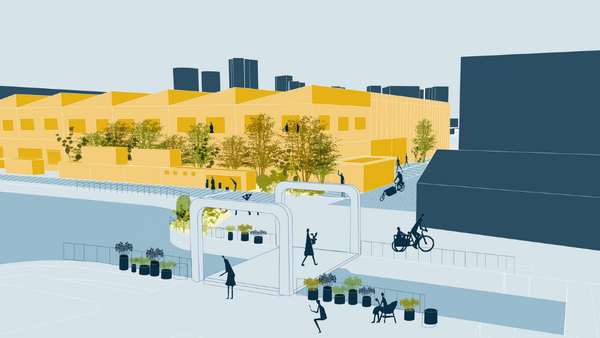
Rather than conventional mixed-use development, this framework demonstrates how industrial areas can become lively, accessible places while maintaining their essential economic function.
The mix of uses includes intensified employment space, space for the night time economy, restored natural habitats, improved transport infrastructure, and enhanced public realm. Industrial activities are diversified to support emerging green technologies alongside traditional construction and manufacturing, creating opportunities for knowledge exchange and circular resource flows between businesses.
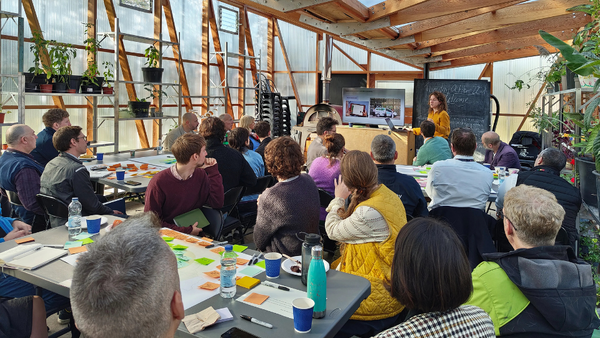
Vibrancy emerges through connectivity — both physical and economic. New cycling infrastructure and riverside walkways link industrial sites to surrounding residential neighbourhoods, making jobs and green space accessible to over 11,000 new residents. Business forums have facilitated knowledge sharing and collaborative projects, creating networks that extend beyond individual sites. The framework and business network knits into the wider Thames Estuary industrial innovation corridor through its focus on circular economy.
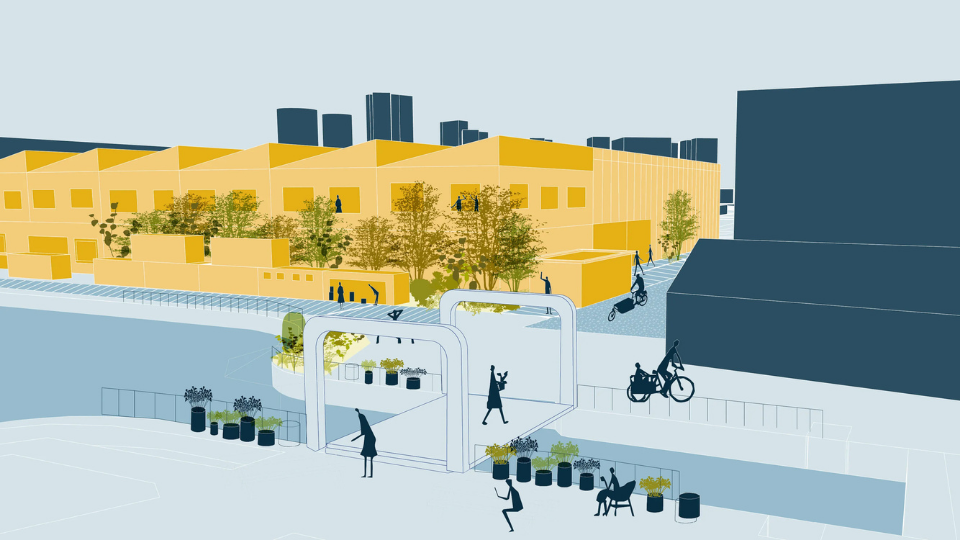
Integration with wider area occurs through strategic infrastructure delivery: green corridors that connect to borough-wide ecological networks, transport improvements that serve both industrial and residential users, and public realm that transforms the river from a barrier into a connective space. This approach ensures industrial areas contribute to future neighbourhood health and wellbeing.
What is the social and environmental impact of the project? For example, how will the carbon use and material impact of the development be mitigated? What is the sustainability strategy?
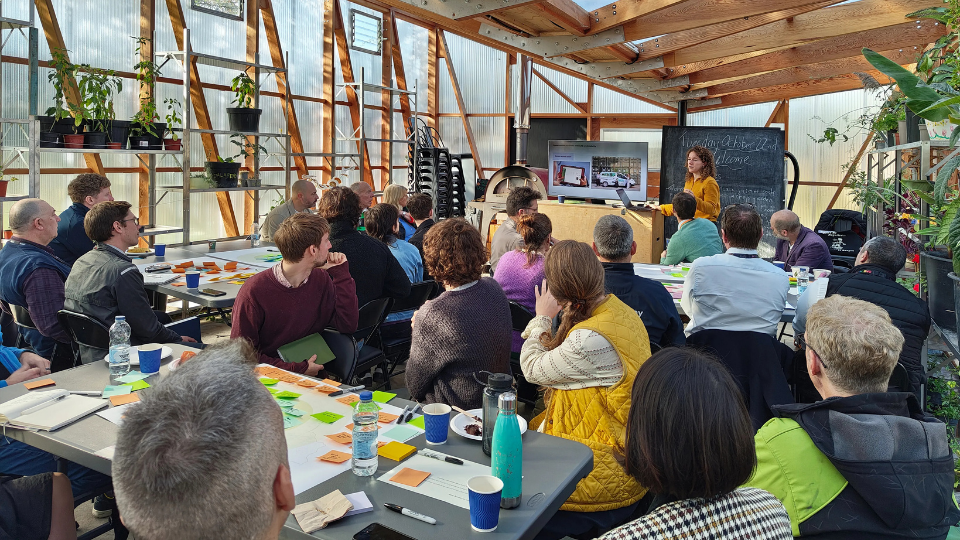
The environmental strategy focuses on circular economy principles that keep materials at their highest value for as long as possible, directly addressing carbon use and waste reduction. Through engagement with businesses and local organisations, 30+ priority projects have been identified to create cycles of energy, water and waste materials between companies, reducing transport needs and resource consumption.
Ecological restoration forms a core component, with actions to increase biodiversity, adapt maintenance regimes to support wildlife, and improve water management along the River Lea. These interventions create cooler, greener spaces while rebuilding habitat complexity that has been formerly degraded by industrial activity.
Carbon mitigation is delivered through multiple pathways: reduced material transportation via local circular supply chains, modal shift to cycling and walking through 2km of new infrastructure, and support for green technology businesses developing climate solutions. Industrial intensification reduces land use pressure while maintaining jobs at greater employment density.
Social wellbeing benefits include access to 500m of new riverside walkway and 1.3km of green corridors, connecting residents to expansive green spaces previously inaccessible. The framework prioritises inclusive employment, ensuring local communities can access well-paid, secure jobs in emerging green sectors.
Economic wellbeing is supported through business network development, with forums creating partnerships that strengthen local supply chains and reduce operational costs. The approach aligns with Newham’s Community Wealth Building Strategy, keeping economic value within local communities.
Gallery

Sign up to our newsletter
Get updates from The Developer straight to your inbox
Thanks to our organisation members
© Festival of Place - Tweak Ltd., 124 City Road, London, EC1V 2NX. Tel: 020 3326 7238