Get updates from The Developer straight to your inbox Yes, please!




Beckenham Place Park East, London Borough of Lewisham for London Borough of Lewisham with BDP, Metis, ADAS, Ian Farmer Associates and T Loughman & Co Ltd
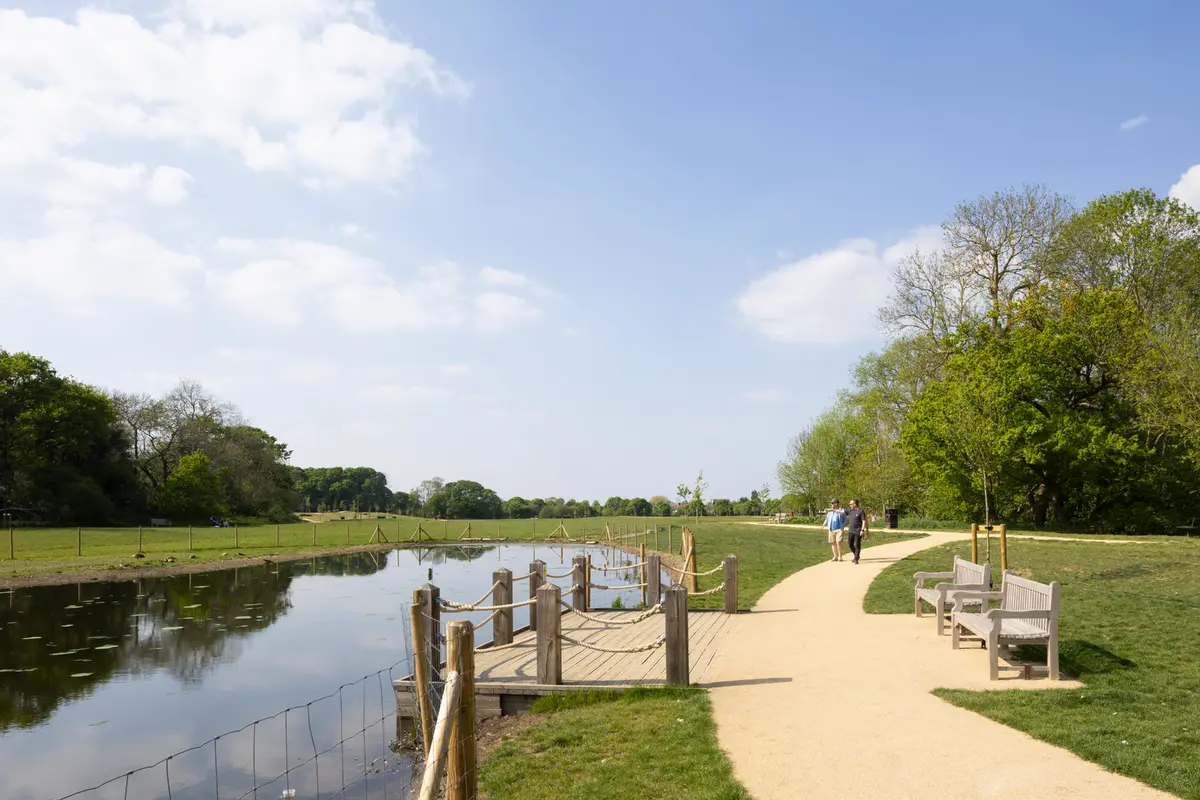
Beckenham Place Park East, London Borough of Lewisham for London Borough of Lewisham with BDP, Metis, ADAS, Ian Farmer Associates and T Loughman & Co Ltd
Beckenham Place Park East is a transformative regeneration project that turned 17 hectares of flood-prone parkland into a resilient, multifunctional landscape. The design integrates flood attenuation, biodiversity enhancement, and circular construction—over 99% of demolition materials and redundant footpath subbase were reused on-site, while excavated soil formed a new bike trail, reducing embodied carbon. River corridor improvements bring light, views, and access to water, enriching ecology. The park delivers a 22.86% Biodiversity Net Gain and protects 400 homes through innovative flood storage.
Describe the context of this initiative or project, its neighbourhood and the community it serves.
Beckenham Place Park East is a 17-hectare site in Lewisham that historically suffered from persistent flooding, fragmented paths, and outdated play areas, limiting its ecological and recreational value. Its redundant pitches and poor drainage made the space underused and disconnected from the River Ravensbourne, despite its potential as a vital green link in Southeast London. The park occupies the eastern edge of the recently regenerated western side and serves as a critical connector between contrasting neighbourhoods. Lewisham is the 31st most deprived local authority in England. To the north and east lies Downham, a community with higher flood risk, lower income levels, and limited access to quality green space. In contrast, neighbouring Beckenham is more affluent, with greater resources and recreational provision. This socio-economic disparity highlights the park’s importance as a shared green space, promoting equity in access to nature, play, and leisure for all. Lewisham Council, in partnership with BDP, the Environment Agency, and the Greater London Authority, developed a masterplan that integrates climate resilience, biodiversity enhancement, and inclusive public space. The design introduces wetlands, natural play areas, and improved connectivity to the River Ravensbourne, transforming the site into a multifunctional landscape that mitigates flood risk while enriching ecological value. Extensive consultations with residents, youth groups, and targeted groups shaped the design, ensuring it reflects diverse needs. The result is a resilient, biodiverse, and inclusive park that reconnects people with water and nature, strengthens social cohesion, and addresses climate challenges while celebrating Lewisham’s green and blue infrastructure.
Describe the intervention you’ve made, including its purpose and motivation. How will it contribute to climate resilience?
The project transformed Beckenham Place Park East from a flood-prone, underused site into a climate-resilient landscape. Central to the intervention is a 25,000 m³ flood basin, tested during the September 2024 Ravensbourne flood, which protects over 400 homes while creating sunken lawns, riparian scrapes, and habitat ponds. Climate-adaptive planting, accessible play, and inclusive routes deliver resilience alongside social equity. Over 28,000m² of native meadow and 236 drought and flood-tolerant trees, and 2000 native species whips were introduced, while 99% of materials from demolished structures were reused on-site. Contaminated soils were safely encapsulated to form landforms and bike trails, with a clay-core bund providing additional flood defence. Hydrological modelling and ecological surveys informed a design that achieves 22.86% Biodiversity Net Gain and a 331% increase in linear habitats, exceeding statutory requirements. Community engagement has shaped the project, with 1,300 online questionnaires, followed by further engagement and on-site displays. The process was proactive and inclusive, reaching under-18s and BAME communities via webinars and face-to-face sessions with youth groups. Feedback showed strong support for the proposals. BDP worked closely with the park’s Community Gardeners, who played an active role in supporting engagement as plans progressed for the east side. During construction, regular coordination meetings brought together BDP, council officers, contractors, and Thames21 through river-care programmes, habitat enhancement, and public events. Tangible results: visitor numbers have risen to over 1.5 million annually from only 200,000. The project demonstrates how urban landscapes can combine ecological innovation, social inclusion, and climate resilience in a scalable model
Explain the environmental and social impact of the project.
The project delivers significant environmental and social impact by embedding climate resilience, biodiversity enhancement, and community benefit into every stage of design and delivery. Over 99% of materials from the former changing block and redundant footpaths were crushed and reused on-site, reducing imported sub-base by 80%. Excavated material from the flood attenuation basin was repurposed to form new landforms and a bike trail, significantly lowering embodied carbon and construction transport impacts.
Ecological gains are substantial. The project achieves a 22.86% Biodiversity Net Gain, delivering 28,000 m² of native meadow increasing soil quality, 5,500 m² of woodland, and 236 trees (80% native; 20% climate-adaptive species). River BNG increased by 10.55%, further strengthening an already high-quality riparian corridor. The new 25,000 m³ flood basin protects over 400 homes, its performance validated during the September 2024 flood when the Ravensbourne reached its highest level in a decade.
Social impacts are equally transformative. Inclusive design, accessible play, sensory surfaces, varied seating, communal play and quiet zones, addresses the needs of girls, neurodiverse users, and those with limited mobility. Community engagement generated thousands of volunteer hours across the east and west, alongside apprenticeships and environmental education programmes delivered with Thames21. Local businesses now operate from restored buildings and creating employment opportunities and supporting a resilient local economy. Park use has soared: annual visitors rose, and visitors’ demographics also better reflect the age profile and ethnic diversity of the park’s catchment area from a highly imbalanced position prior to works.
Sign up to our newsletter
Get updates from The Developer straight to your inbox
Thanks to our organisation members
© Festival of Place - Tweak Ltd., 124 City Road, London, EC1V 2NX. Tel: 020 3326 7238